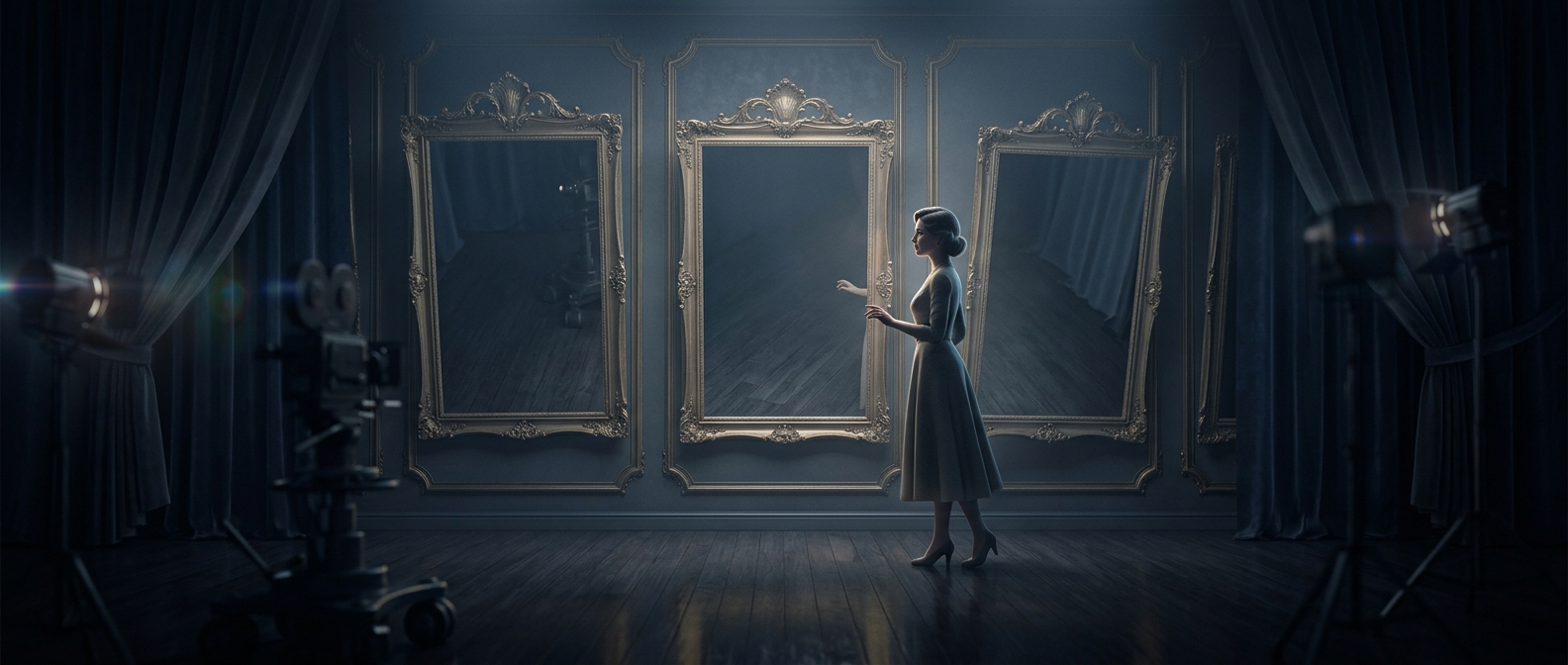
The angle sends the reflection elsewhere
A mirror does not simply show whatever stands in front of it. Light bounces off its surface at the same angle it arrives, so changing the mirror’s tilt changes where the reflected image goes. In a film set, that small adjustment can direct the camera’s view toward the actor while sending the reflection of the camera and crew out of frame.
The trick is especially useful when a scene needs the audience to see an actor looking into a mirror without seeing the equipment that would ordinarily appear in it. The mirror, camera, actor, and lights have to be placed as a coordinated setup; a slight change in angle can reveal the crew or lose the reflection the shot depends on.
A mirror shot changes the actor’s eyeline
Tilting the glass also changes where the reflected image appears. To look as though they are meeting their own eyes, actors may need to aim their gaze lower than they would at a level mirror. Their eyes can seem directed toward the floor even though the intended target is their reflection in the angled glass.
That makes the shot a practical compromise: the mirror is positioned not just for how it looks to the actor, but for what the camera can see. The convincing reflection is often the result of carefully redirecting light—and adjusting the actor’s gaze to match.