How a Sponge Turns Paint Into a Bruise
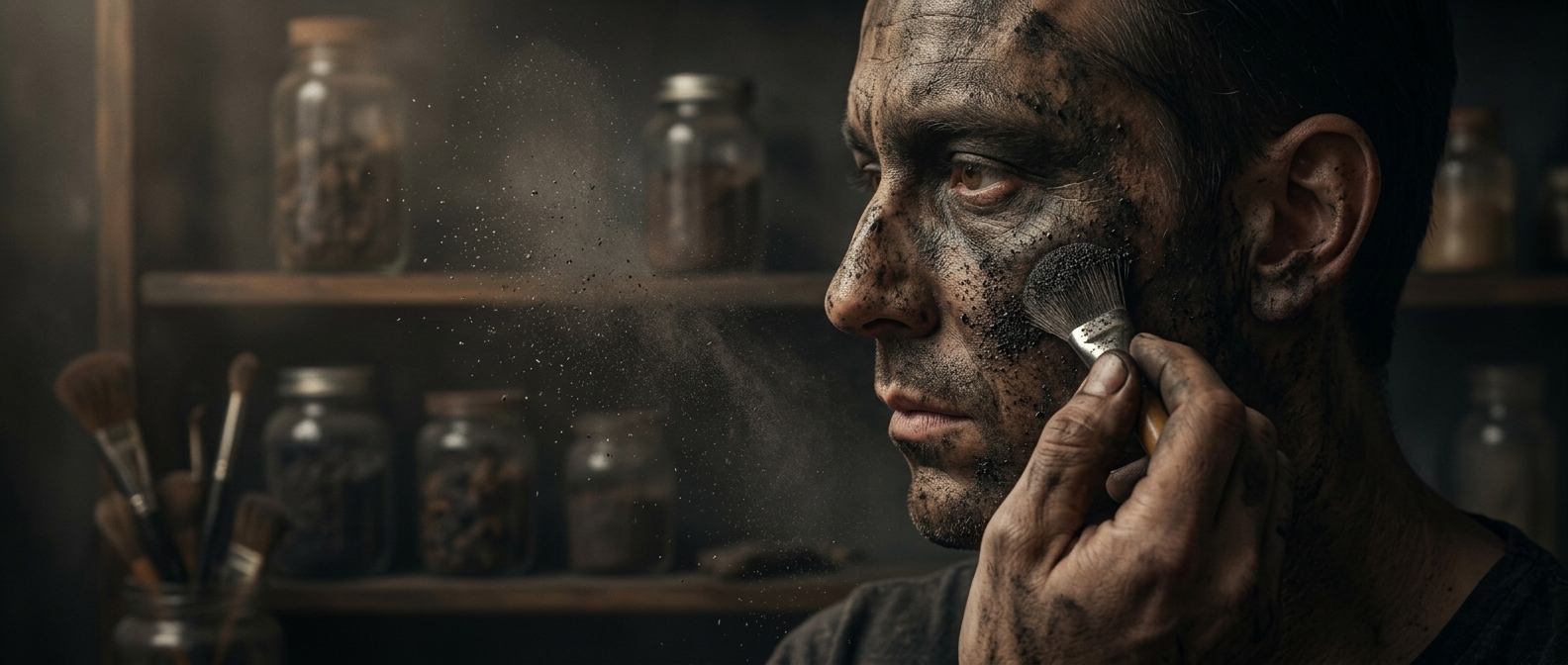
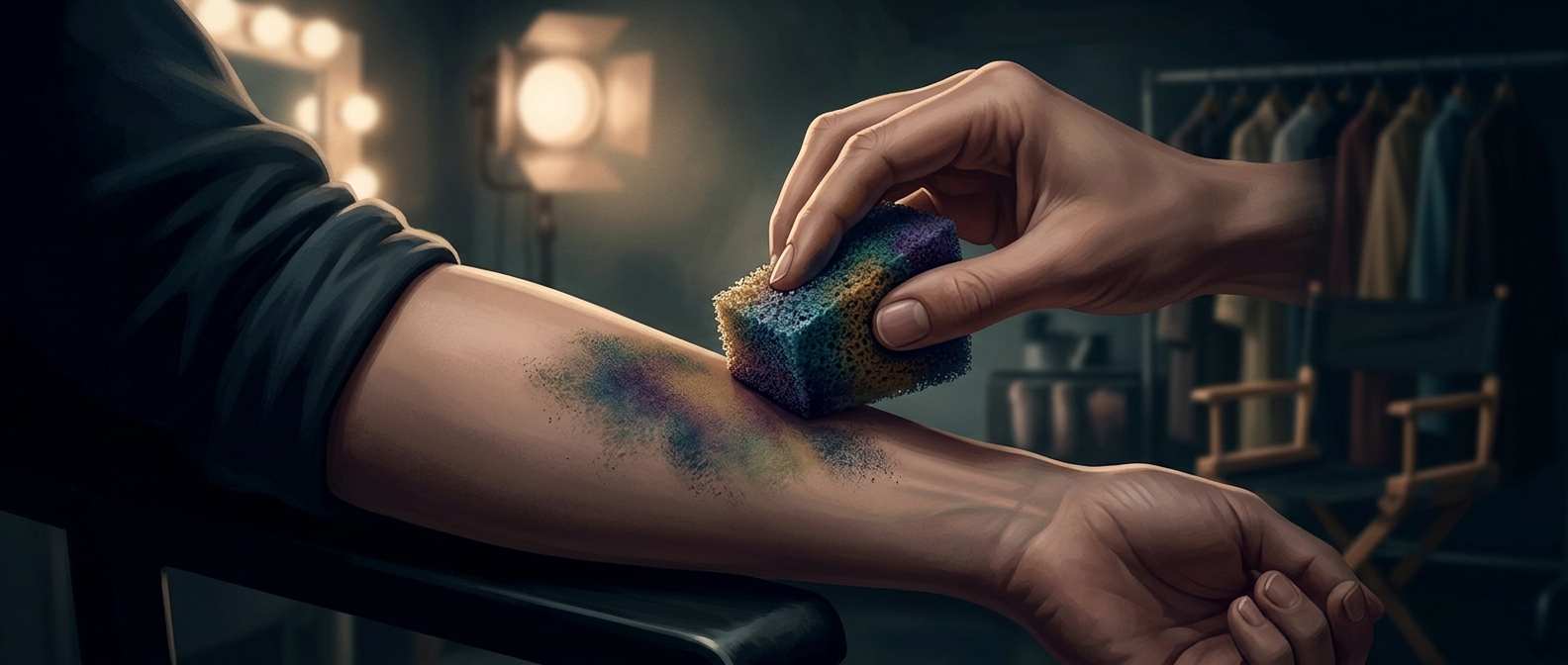
A bruise is not a neat patch of color. Blood leaking from tiny damaged vessels spreads unevenly beneath the skin, so its visible edges and tones vary. To suggest that effect, a makeup artist presses a stipple sponge—one with a porous, irregular surface—against pigment and then lightly onto the skin. Its little ridges and gaps leave scattered marks rather than the smooth stripe a brush tends to make.
Building Irregular Color
Artists usually work in thin layers, shifting among bruise-like hues instead of filling the area with one solid purple. Dabs can overlap while leaving small breaks of natural skin visible. Those gaps, soft edges, and uneven concentrations help the mark look as if it lies under the skin rather than sitting on top of it. Yellow or other lighter tones can soften parts of the pattern and suggest color variation as a bruise changes.
The pressure matters: a firm press makes denser marks; a lighter touch leaves a faint speckle. The artist can also vary the sponge’s angle and the placement of each dab, so the result does not repeat like a stamped design.
Made for the Camera
The goal is not anatomical accuracy in every detail but a convincing impression at the distance and under the lighting where the scene will be seen. A bruise that looks subtle in a makeup chair may disappear on camera, while a strong mark can look exaggerated up close. The sponge supplies the irregular texture; controlled layering makes that texture read as injury.