The Creature Had to Be Played, Not Just Seen
The Amphibian Man in The Shape of Water was a practical costume worn by Doug Jones, so the character’s movement came from an actor working inside the creature’s physical limits. A suit that restricts vision and makes ordinary movement difficult changes the performance itself: gestures have to be deliberate, and the actor must rely on practiced movement rather than freely looking around or adjusting his stance.
That constraint matters because the character’s presence is conveyed largely through body language. Small turns, pauses, and reaches can carry emotional meaning when a creature cannot speak like the humans around him. Jones’s work was not simply to appear in the suit; it was to make its movements feel like the choices of a living character.
A Costume Shapes the Workday—and the Scene
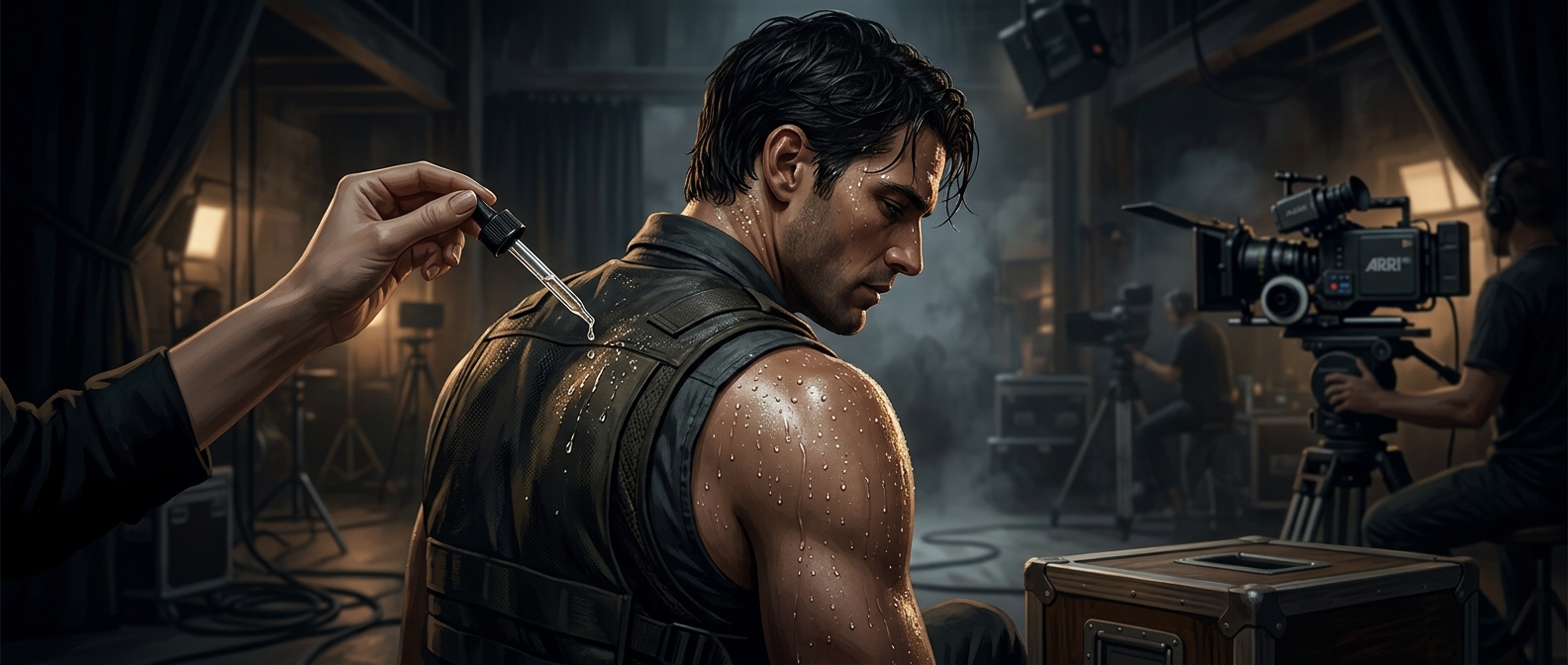
A costume that cannot be sat in or removed quickly makes even routine production tasks complicated. Long stretches in it require the day’s schedule to accommodate basic needs, while restricted sight makes moving safely and hitting a mark—arriving at the right place for the camera—more demanding. The suit is therefore part of the filmmaking logistics, not just the creature’s appearance.
The tradeoff is a physical performance anchored in the same space as the other actors. Rather than creating every motion afterward, the production could film Jones’s body interacting directly with the set and cast. The price of that immediacy was that the performer had to spend hours adapting his movements—and his working day—to the creature’s form.