The cat’s “performance” may begin off-camera
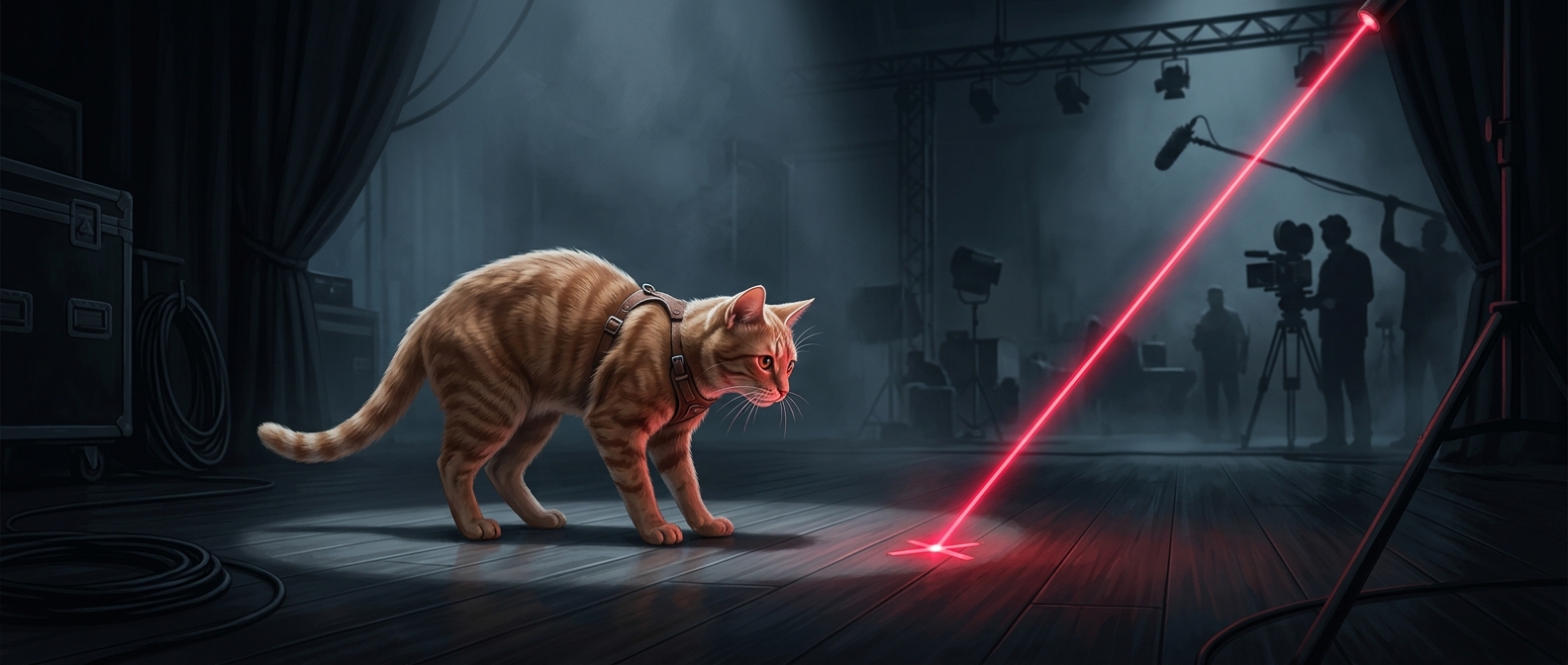
A cat’s gaze is easy to redirect because it naturally follows small, moving targets. On a set, an animal wrangler can use that instinct to create a precise-looking reaction: move a laser pointer or another visual cue just beyond the camera’s view, and the cat may turn its head or fix its eyes where the scene needs them.
That can make a shot look as if the animal has noticed a person, threat, or sudden movement. The cat is responding to the cue, not necessarily to the story. The camera records only the visible result, leaving the source of the stare outside the frame.
A mark is a target, not a command
Actors and cameras are positioned carefully so that a glance lands in the right part of the image. A cue can help line up the cat’s eyeline—the direction its eyes appear to be looking—with another character or an object. A wrangler may also guide the cat toward a particular spot, but a cat’s movement is less predictable than a human performer’s, so the crew works with its attention rather than relying on it to follow a complicated sequence of instructions.
The shot can then be built around the moment the cat gives: a focused look, a turn, or a pause. Editing can connect that reaction to the supposed cause, making the exchange feel intentional even when the animal was following a simple moving stimulus.
The trick is in what the audience can’t see
The pointer is useful only if it stays outside the frame and does not distract from the scene. The result is a small example of screen performance being shaped by camera placement and timing: the cat supplies the look, while the crew supplies its destination.