A dog doesn’t know the scene is sad
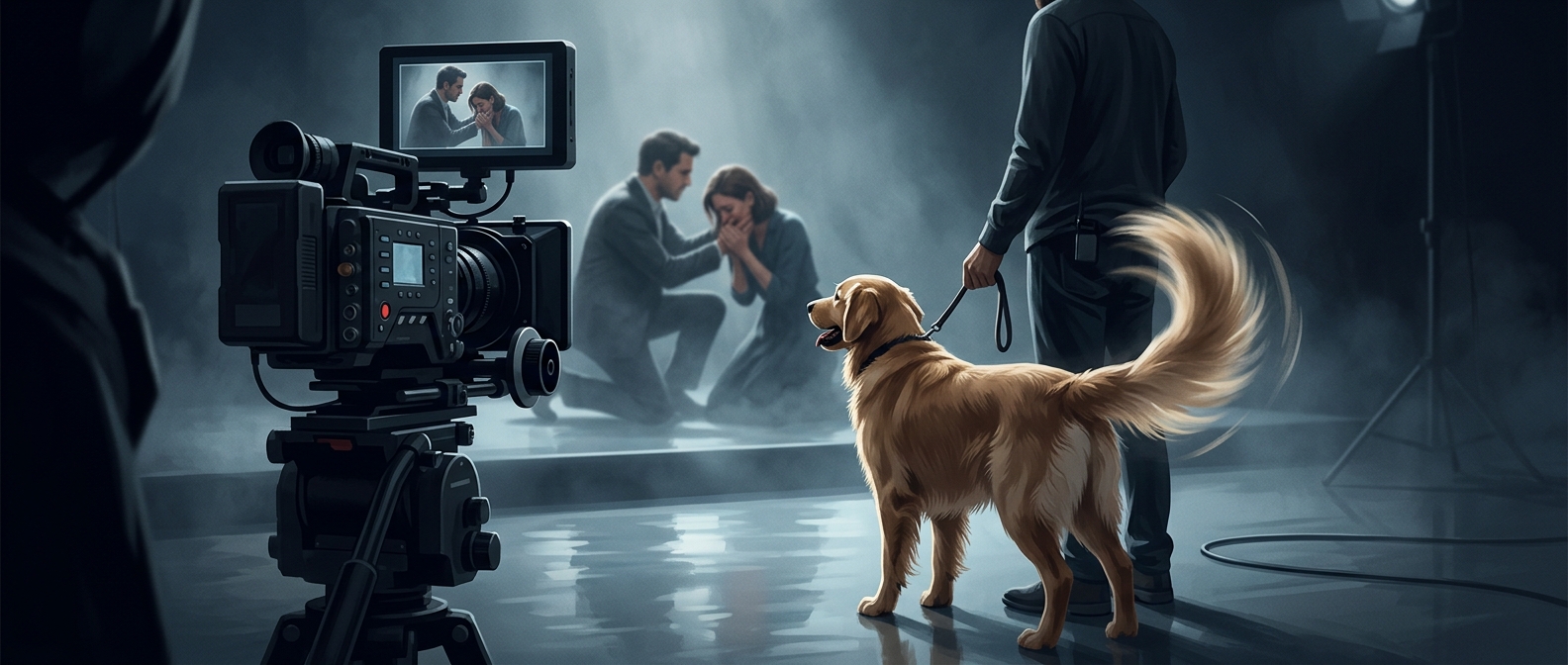
A film dog responds to what is happening around it—not to the story the audience will see. A quiet, sorrowful scene may still put a dog among attentive people, unfamiliar equipment, and a trainer offering cues or rewards. That stimulation can prompt a wag even when the human characters are grieving.
A wag is a sign of arousal or engagement, not a reliable translation of “happy.” But a lively tail can still clash with the scene, especially if it repeatedly knocks the floor or a nearby prop.
The wrangler gives the dog another focus
The wrangler—the person responsible for guiding the animal on set—can redirect the dog’s attention with a familiar cue, an object, or a reward. The goal is to help the dog settle or look where the scene requires, rather than react to every movement around it. If the tail keeps striking the floor, its taps may also be picked up by microphones, making the take harder to use.
This is one of the small mismatches filmmaking has to manage: the audience sees a carefully shaped emotional moment, while the animal experiences a busy working environment. A wrangler helps bridge that gap, keeping the dog’s behavior workable without expecting it to understand the drama.
The quiet detail behind the performance
A convincing sad scene depends on more than the actors’ expressions. It can also require a dog to remain calmly in place while people and equipment move nearby—and to do so without adding an unintended rhythm of tail-thumps to the soundtrack.