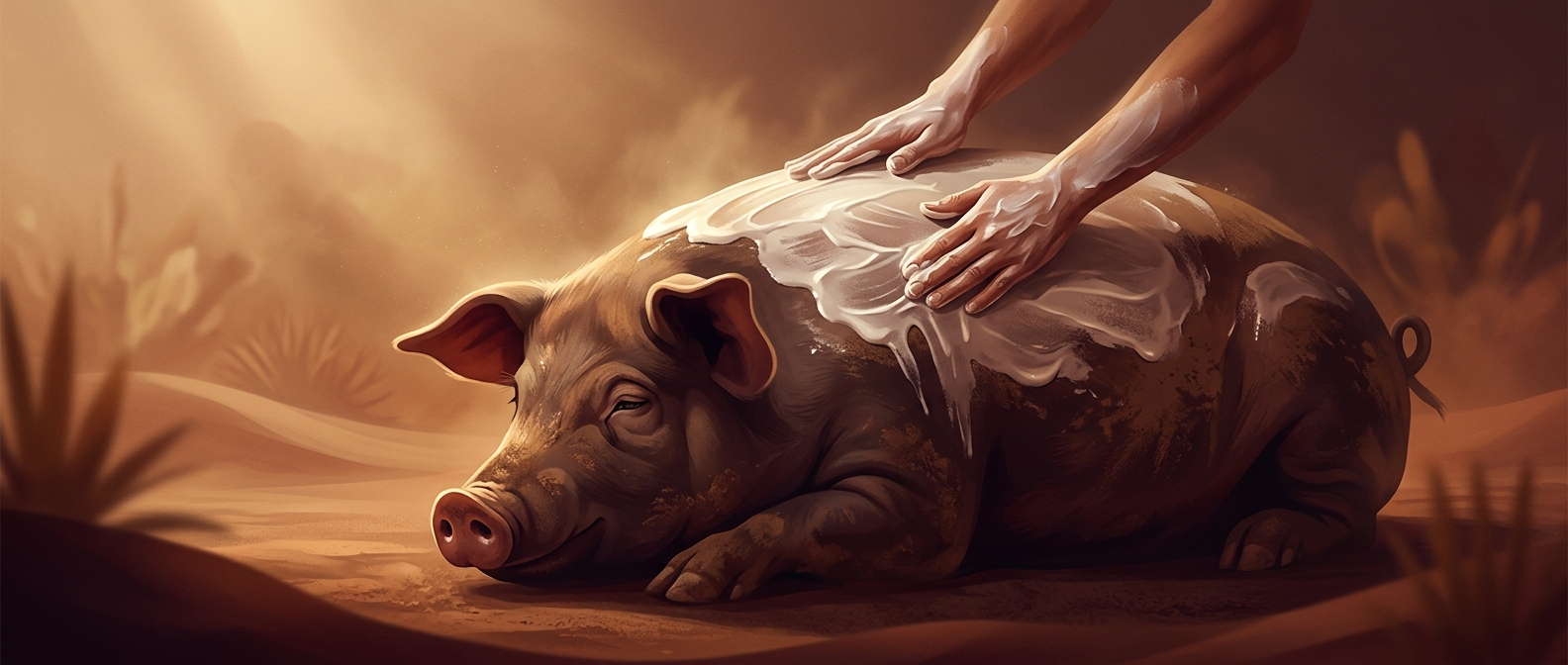
A small animal, a large patch of sunlight
Piglets can be vulnerable to sunburn because their skin offers less natural protection than the thick coat many other animals have. On an outdoor film set, that matters: a scene may keep animals in an open field or yard while cameras, lights, and crew take time to reset. Even a short stretch in strong sun can add up across repeated takes.
Sunscreen is part of set care
Wranglers—animal handlers responsible for the pigs—apply sunscreen to exposed skin before filming outdoors. The coating helps limit the ultraviolet radiation that reaches the skin; SPF 50 indicates strong protection against UVB, the rays most associated with sunburn. It is a practical layer of protection, not a reason to leave an animal in the sun indefinitely.
Handlers can also use shade and bring piglets out of the sun between takes. That coordination is especially important in filmmaking, where a scene may be repeated for camera angles or interrupted while equipment is adjusted. Animal care has to fit around the production without treating the animals as props that can simply wait in place.
The detail behind the shot
A piglet’s skin is easy to overlook when attention is fixed on framing and performance. But the sunscreen reveals a less visible part of making an outdoor family film: the crew must manage the conditions around an animal as carefully as the animal’s brief appearance on camera. The scene may last seconds; protecting the piglet has to cover the time before and after the take, too.