Why a tiny brush matters on camera
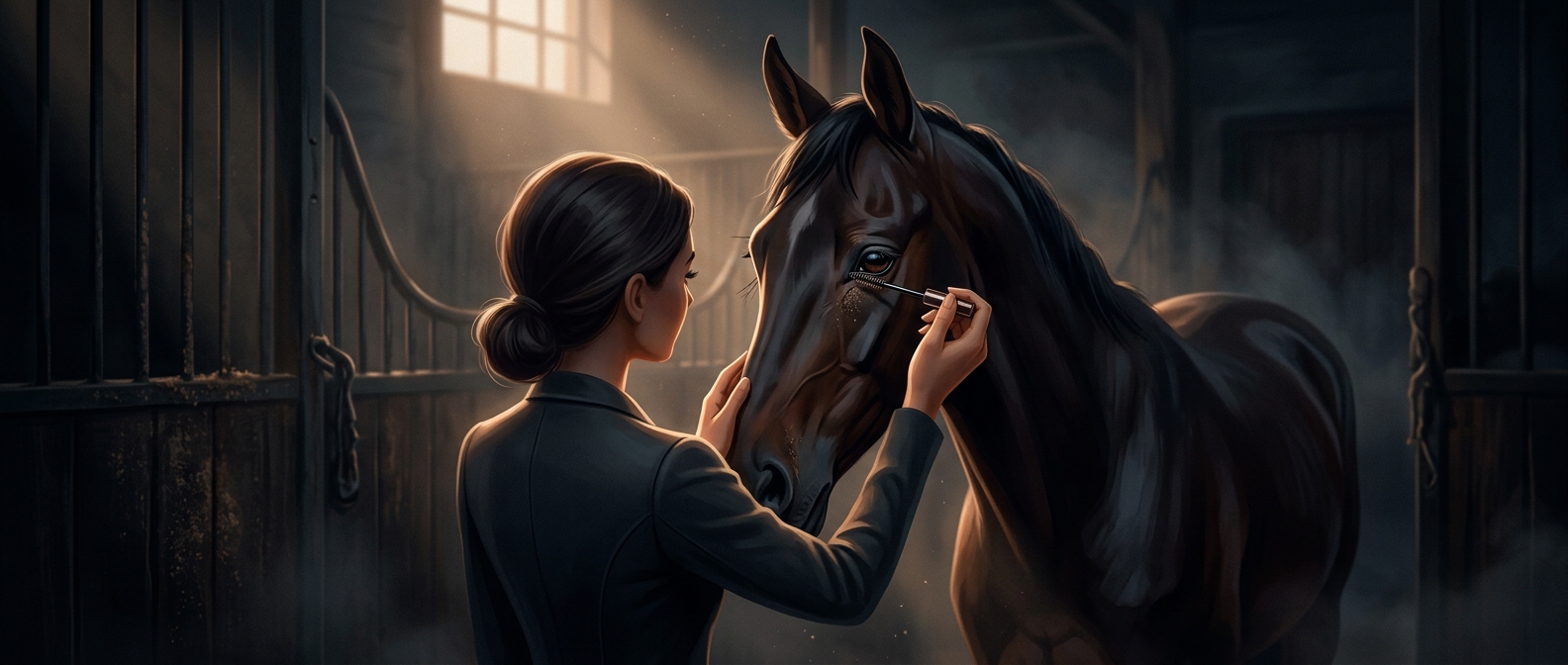
A horse’s eye is a small, glossy focal point in a close-up. A fleck of dried mud on the lashes can catch the light or make the eye look smeared, even when the rest of the animal appears ready for the shot. A mascara wand’s narrow, soft bristles let a crew member separate the lashes and lift away debris with more control than a broad cloth would offer.
The goal is not cosmetic makeup so much as careful grooming around a sensitive area. The brush is used on the lashes, not across the surface of the eye; any work near the eye needs a calm horse and a light touch. That makes the little tool useful where a larger cleanup could be awkward or distracting.
The close-up creates a continuity problem
Mud may be part of a scene, but its position can change between takes. If dirt clumps on the lashes in one shot and disappears in the next, the edit can make the horse seem to change appearance for no reason. Grooming the eye area helps keep that detail consistent while preserving the muddy look elsewhere.
It is a small example of how film crews manage what the camera notices: a scene can be rough and dirty, while the animal’s eye still has to read clearly in the frame.