The car is built for concealment, not comfort
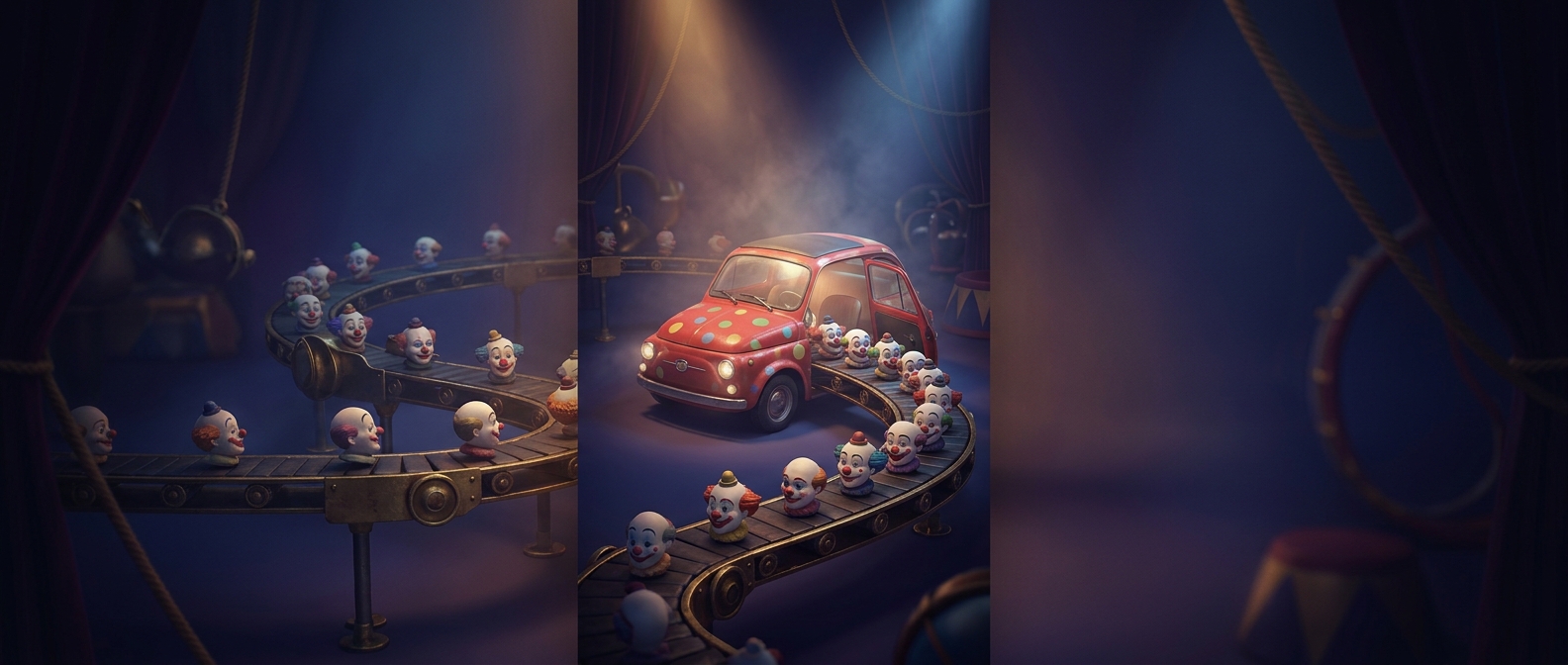
A clown-car gag works by making a small vehicle seem to produce far more people than it could plausibly hold. The hidden interior helps create that mismatch. Stripping out bulky seats and other interior fittings frees room for performers to crouch and fold themselves into a compact space. It is less a matter of ordinary passengers sitting down than of arranging bodies to use every available gap.
Darkness hides the evidence
Tinted windows limit what the audience can see before the reveal. Without them, a shifting silhouette or a face pressed near the glass could give away the crowd inside. The darkened windows also keep attention on the outside of the car—the familiar, ordinary-looking shell that makes the number of emerging performers seem so surprising.
The performers’ arrangement matters as much as the vehicle. Those inside must stay compact while others get out, then move into position for their own exits. A cramped interior turns the routine into a coordination problem: one person’s movement can block the space another needs.
The reveal depends on what remains unseen
The joke is not that the car has somehow become larger. It is that the audience cannot inspect its interior, so each new performer seems to exceed the space it appeared to have. By the time the last person climbs out, the car’s hidden layout has done as much work as the clowns’ timing.