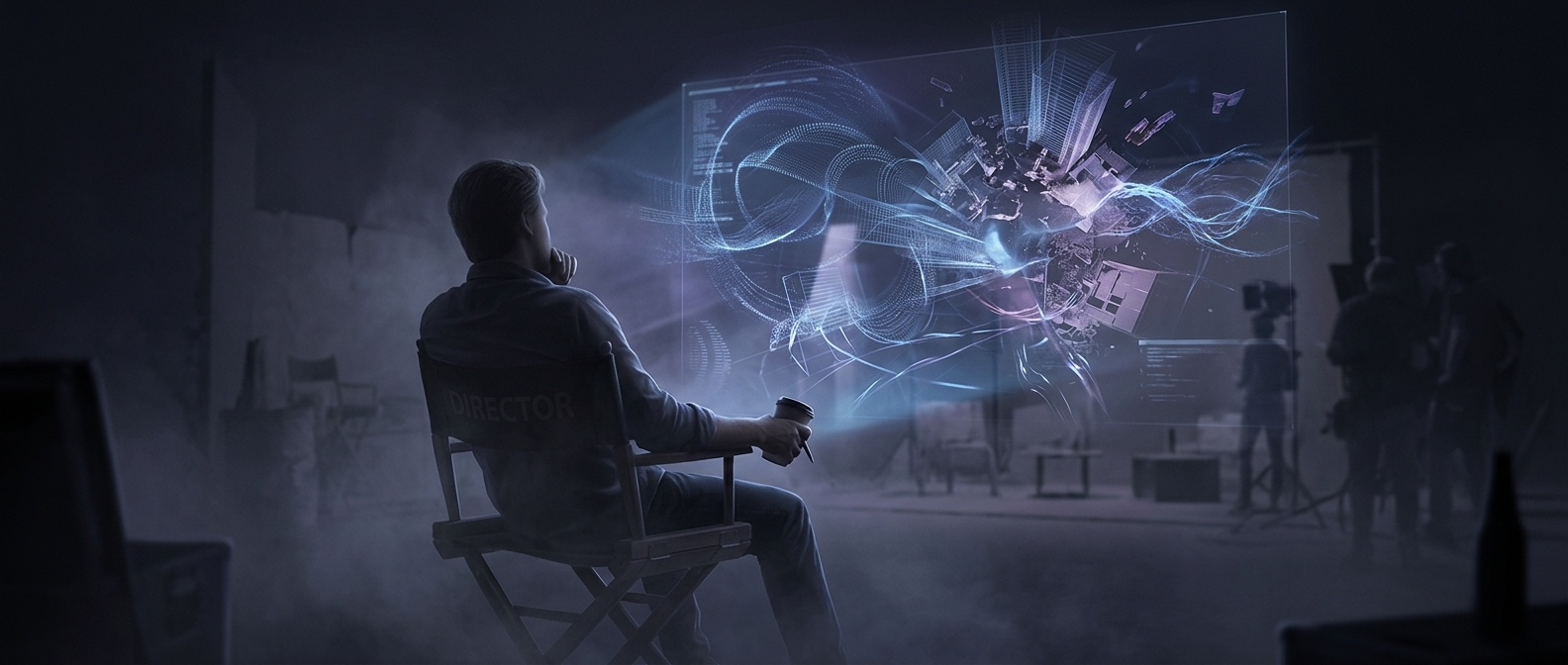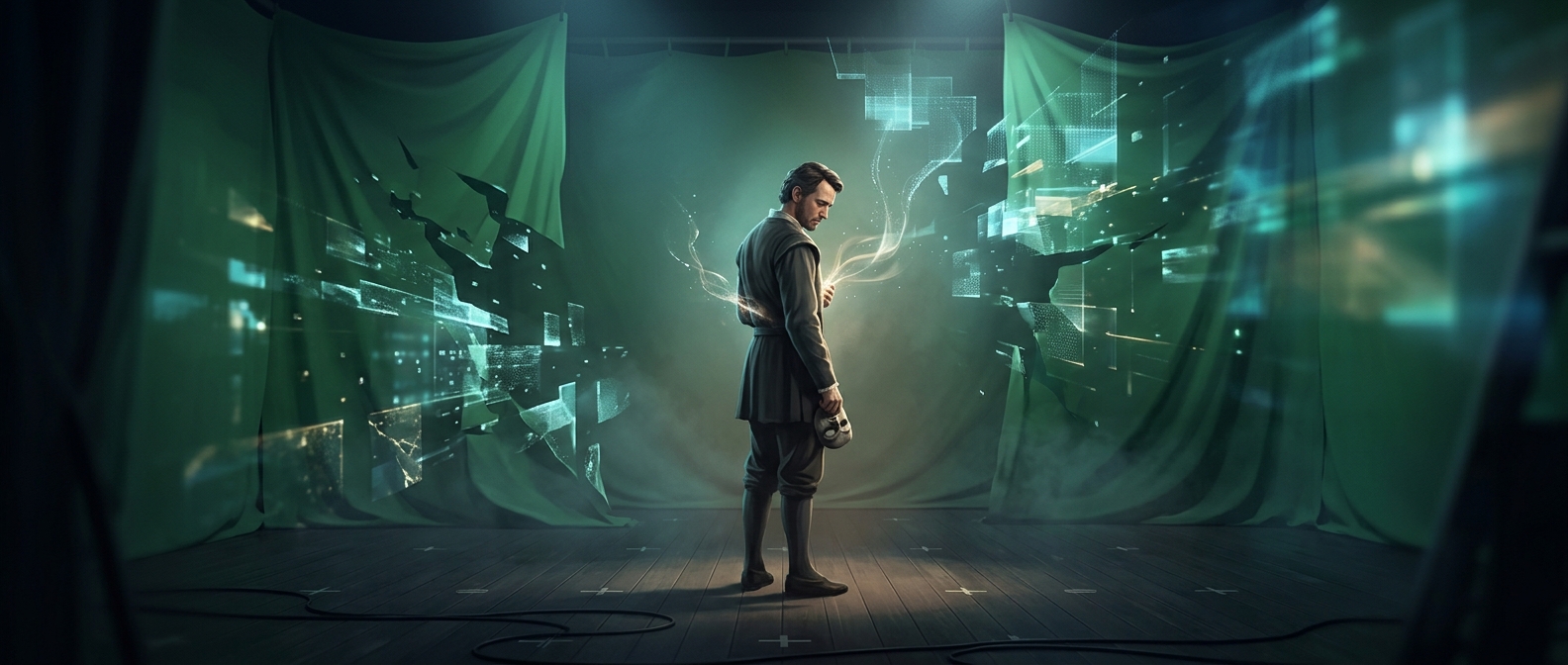
How a blank green stage becomes a believable scene
A green screen is not a picture of the finished world; it is a temporary background chosen because its color can be separated from the actors and set. In postproduction, software identifies the green pixels and makes them transparent, allowing artists to place a digitally created setting behind the live-action footage. This process is called chroma keying.
The clean cutout is only the beginning. Visual-effects artists must make the new environment fit the camera’s perspective and movement, then match its color, contrast, and light to the people in the shot. If a scene is meant to take place in a dim tunnel, for example, the actors need appropriate shadows and reflections—not the bright, even light of a studio.
What actors and crews do without the finished world
A tennis ball on a stick can give an actor a visible target for their gaze or a rough point of reference for a creature or object that will be added later. It is a stand-in, not the creature itself. Other temporary props, marks on the floor, and directions from the crew help performers judge where to move and when to react.
That arrangement changes the work, but it does not remove the need for acting. A performer still has to make the imagined event readable through timing, movement, and expression, while the crew keeps track of sightlines, camera positions, and lighting. The more convincingly those pieces line up on set, the less the finished image looks like a person performing in front of a colored wall.