A Knight Made of Digital Glass
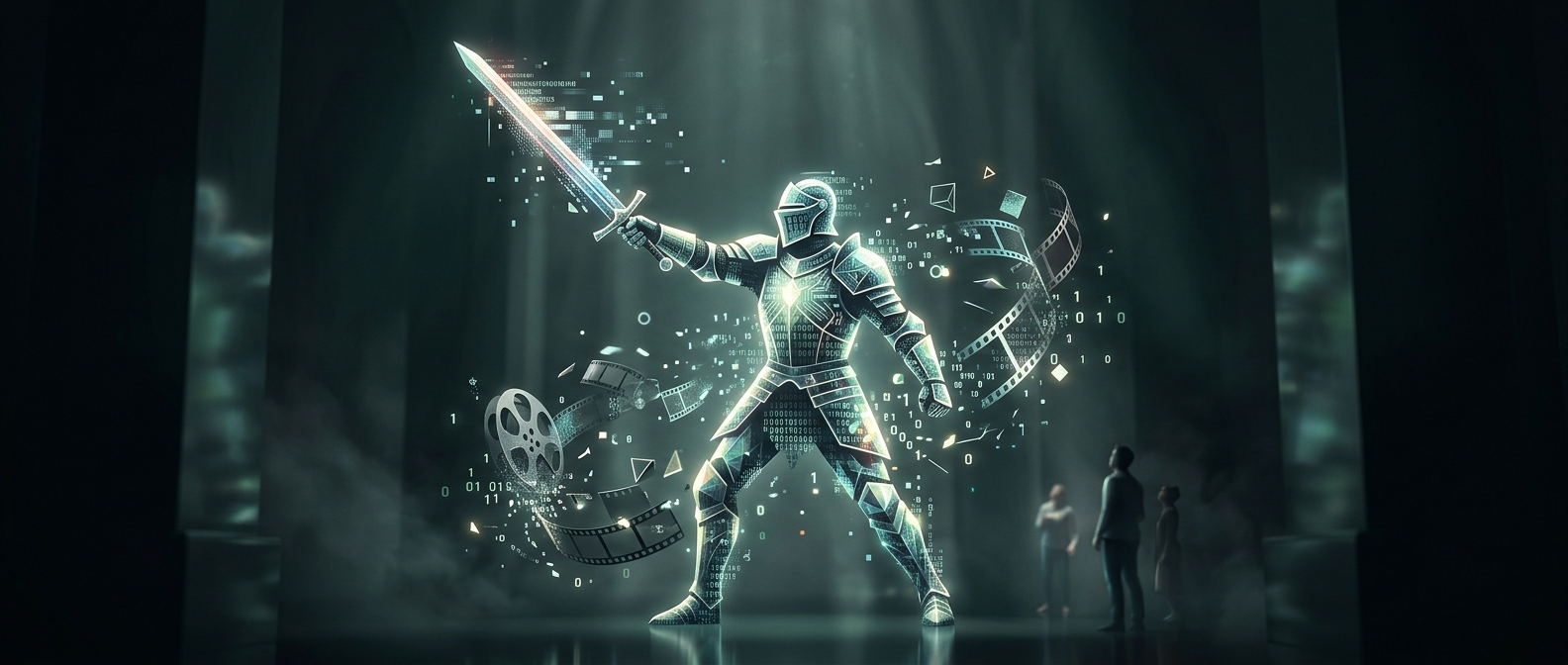
In Young Sherlock Holmes (1985), a figure in a church window appears to break free of its stained-glass design and move through the real world. The knight was created with computer-generated imagery, or CGI: artists built a digital version of the figure, then animated it frame by frame so its glass-like pieces seemed to shift and catch the light.
That made the effect more than a moving drawing. The knight had to look as if it belonged in the same space as the live-action actors and church setting. Its color, reflections, and movement all had to suggest translucent glass while remaining readable as a solid, moving character.
Why the Scene Was a Milestone
At the time, computers could not simply produce a finished movie scene. The digital animation had to be rendered—turned into images—and then combined with photographed footage. That process demanded careful planning: the animators needed to choreograph the knight’s movement, while the effects team had to make the separate images fit together convincingly.
The result is often described as the first fully computer-generated character in a feature film. Its importance was not that every part of the scene was digital, but that a computer-made figure could act as a character within live-action storytelling. The image began as a flat church window; on screen, it became an attacker with weight, direction, and presence.