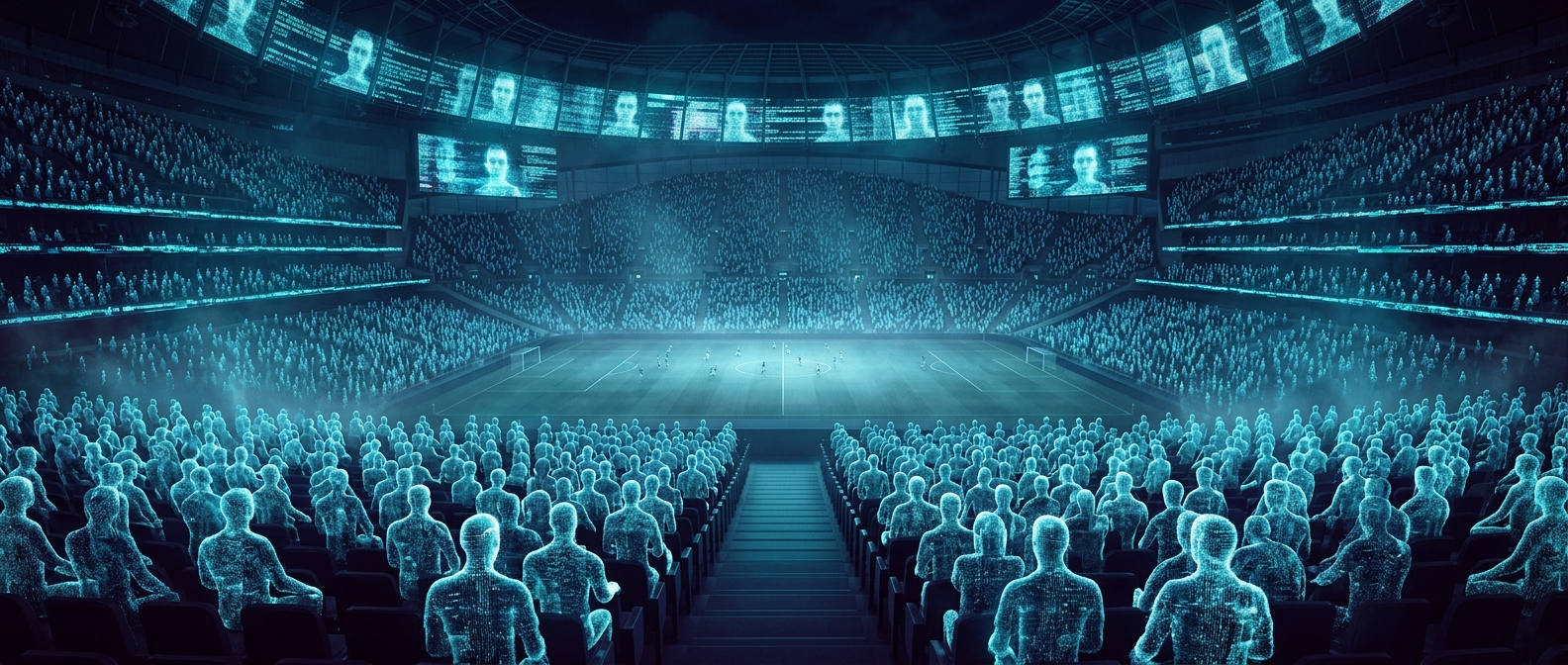
How virtual fans were fitted into a live broadcast
A digital crowd had to behave as if it occupied the same bowl of seats the cameras were filming. Broadcasters used augmented reality: computer-generated figures were layered onto the live arena picture, rather than replacing the event with a fully animated scene. The graphics system mapped the stands and used the camera’s position and movement to keep the added spectators aligned with the rows as the shot changed.
That alignment mattered. If fans seemed to slide across the seats when a camera panned, or appeared in front of a railing that should have blocked them, the illusion would break. The virtual figures therefore had to fit the venue’s geometry and remain visually consistent with the broadcast’s changing angles. They also had to leave the court or field clear, where the real action took place.
The picture and the sound were separate jobs
The crowd on screen was only part of the effect. Broadcasters could also mix crowd noise into the program audio, giving viewers the familiar swell of a reaction even though the arena itself was quiet. That sound did not have to match each visible digital person; it was an audio layer shaped to make the overall broadcast feel less stark.
The result was a compromise between an empty venue and a convincing live atmosphere. Viewers saw stands that looked occupied, while the athletes still competed in the actual arena. The virtual crowd could soften the strange sight of rows of vacant seats—but it could not change the conditions the players experienced there.