Why “Downstage” Means Closer to the Audience
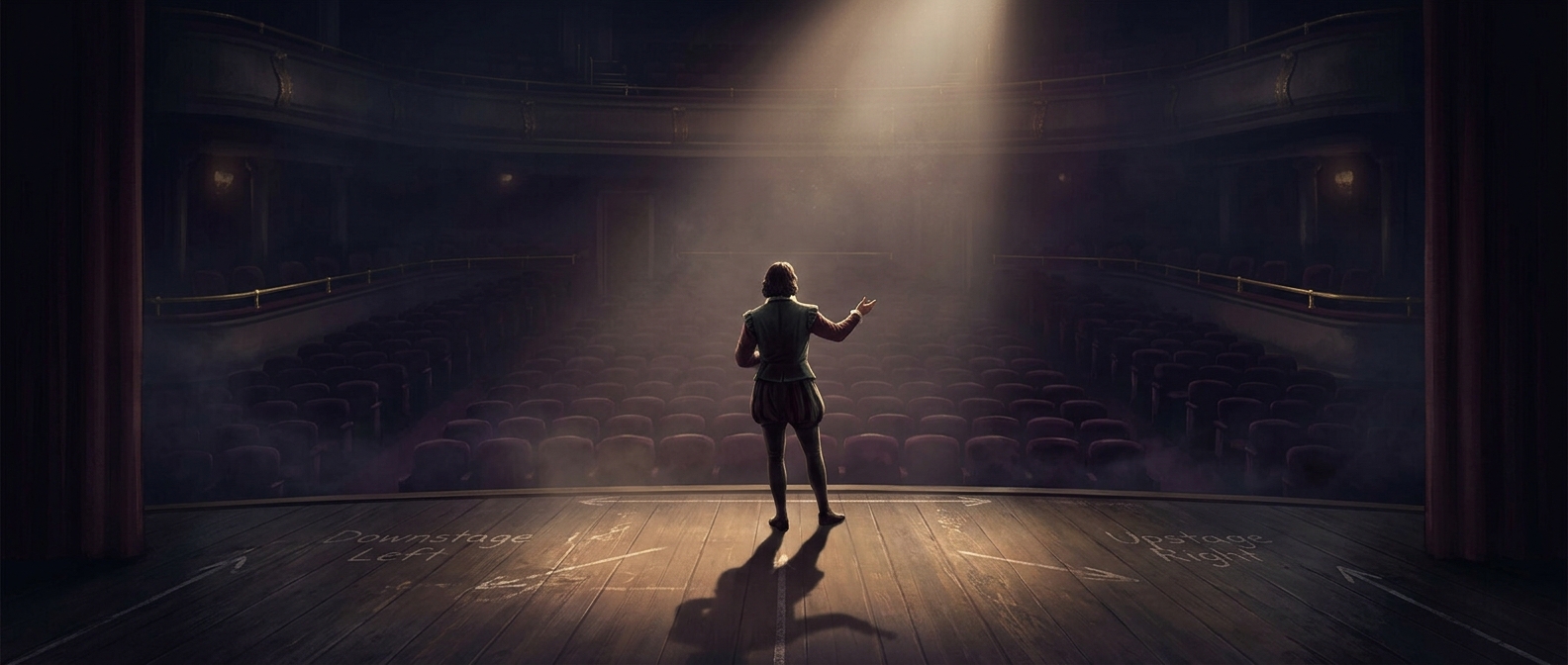
Imagine standing onstage and facing the seats. Downstage is the part of the stage in front of you, nearer the audience; upstage is behind you, farther away. Stage directions use the performer’s point of view, not the audience’s. So a performer told to move stage left goes to their own left while facing the audience—which is the audience’s right.
The Slope Behind “Up” and “Down”
The terms preserve a feature of older theaters: their stages were often raked, meaning the floor sloped upward away from the audience. Moving toward the audience was literally moving downhill, or “downstage”; moving toward the back of the stage was moving uphill, or “upstage.” The slope also helped audience members see performers farther back.
A Convention That Outlasted the Set
Modern stages are often flat, but the directional language remains useful. It gives actors, directors, and stage crews a shared map that works regardless of where the audience is sitting or how a set is arranged. A direction such as “cross downstage” still tells a performer to move toward the audience—even when there is no slope to descend.