A Scene Change Is a Choreographed Operation
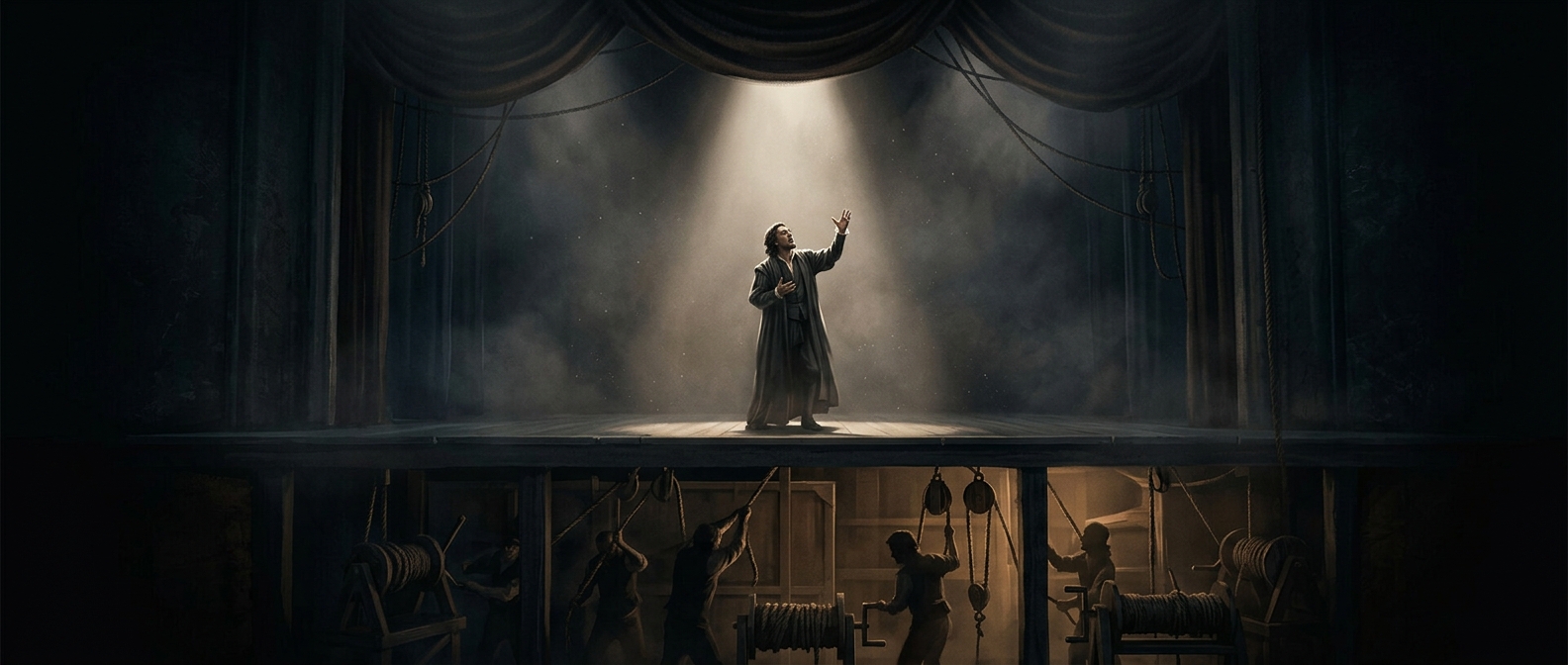
A set change can look like a pause in the story, but backstage it is a timed piece of stagecraft. The crew may be moving walls, furniture, props, or entire scenic units while the audience’s view is blocked. The goal is not simply to clear one arrangement; it is to place the next one accurately enough that actors can step into it without breaking the scene’s logic.
The Crew Works to Cues
Stagehands do not usually move everything at once. A stage manager coordinates the change through cues—signals that tell particular crew members when to act. One team might remove a table while another rolls in a new piece of scenery. Items are often marked or positioned in advance, so people can find their places in low light. Large pieces may travel on wheels or along tracks; smaller objects are carried and set by hand.
The order matters. A unit that must pass through a narrow opening has to move before another piece blocks its route. Crew members also need clear paths and agreed handoffs, especially when the stage is dark. The curtain gives them privacy, but the change still depends on practiced timing and coordination.
The Illusion Resumes on the Other Side
Actors use the same interval to get into position, adjust a costume, or prepare for the next entrance. When the curtain rises, the new arrangement signals that time or place has changed—even if the production has moved only a few pieces. The audience sees a new world; the crew has made that world possible through a sequence of precise, mostly unseen decisions.