A Punch Built From Distance and Timing
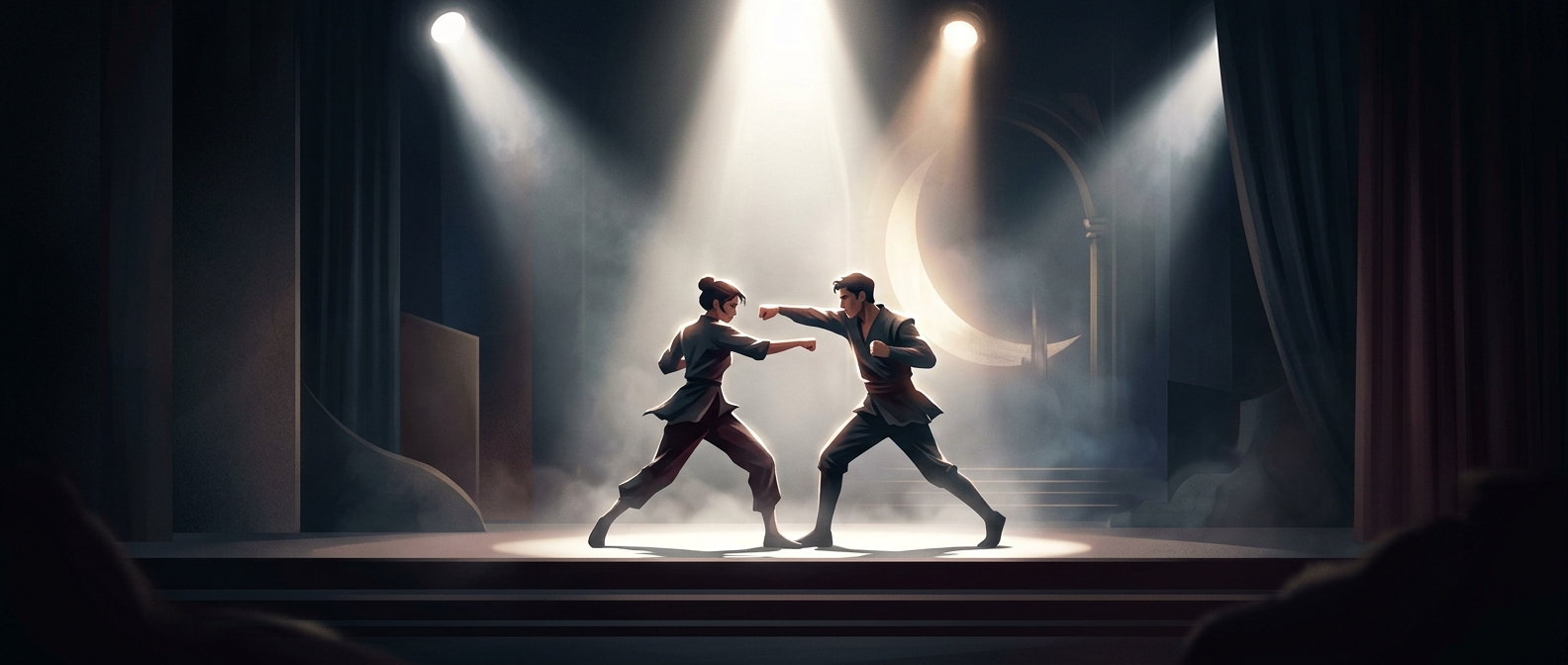
A convincing stage punch is an illusion made from two separate actions: one performer’s fist travels past the other’s face, while the person being “hit” makes a sharp slap against their own thigh. The slap supplies the crack the audience expects to hear; from the seats, the movement and sound seem to happen at the same instant.
The gap is deliberate. A real blow can injure an actor, and even a near miss can be dangerous if either performer moves unpredictably. So the strike is choreographed: actors learn where to stand, how far the fist passes, and when to turn or react. The sequence works more like a dance than a spontaneous fight, with each person responsible for their part of the timing.
Why Bright Lights Make It Harder
Stage lighting can expose the very details that help sell the trick. In dim light, a passing fist or a small gap may disappear from view. Under bright lights, the audience can see more of the performers’ bodies, so the illusion depends on carefully arranging the action for the house—the audience’s viewing area. A punch that looks convincing from one angle might look obviously fake from the side.
That is why performers repeat and refine the sequence rather than simply swinging harder. The goal is to make the motion readable from the seats while keeping the contact imaginary. The more visible the stage, the more precisely the actors must control distance, angle, and timing.