A Blood Effect Built Into the Costume
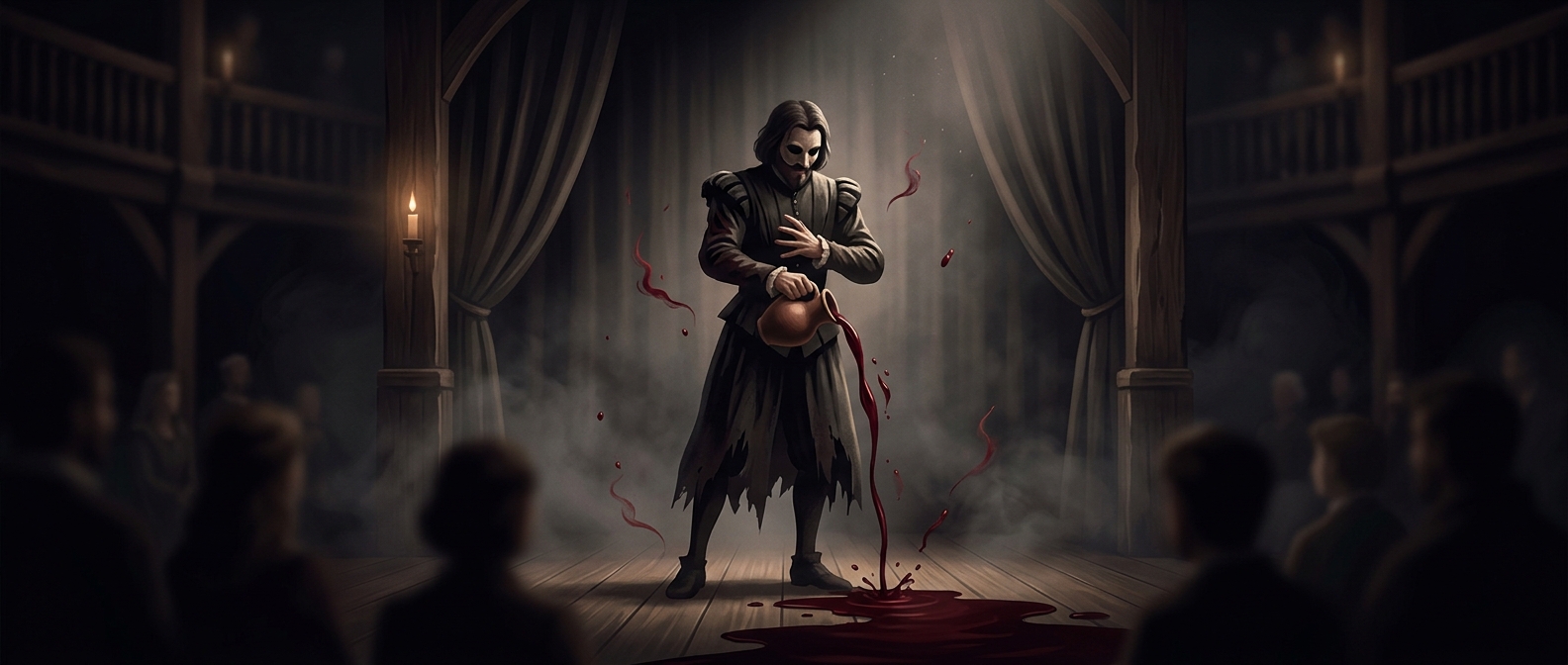
In a scene staged with real pig blood, the trick was less a special effect than a concealed container. A small bladder filled with blood was hidden beneath an actor’s clothing and inflated. When a blow struck the right spot, the bladder burst, releasing blood across the costume and stage.
That setup made the effect depend on timing and placement. The actor had to take the apparent hit where the hidden bladder sat; the burst then supplied the sudden, visible consequence. Unlike a painted wound, it could make a violent moment look messy and immediate to spectators watching from the auditorium.
The Cost of Making Violence Visible
Plays such as Titus Andronicus put bodily harm at the center of the action. A concealed blood bladder offered a direct way to make that violence legible onstage without showing a real wound. But the effect was blunt rather than controlled: once the container burst, blood went where the impact and the actor’s movement sent it.
That practical limitation is part of the effect’s force. The same device that made a staged blow look startling also made each performance a live, physical event—with a costume soaked and a stage left to clean.