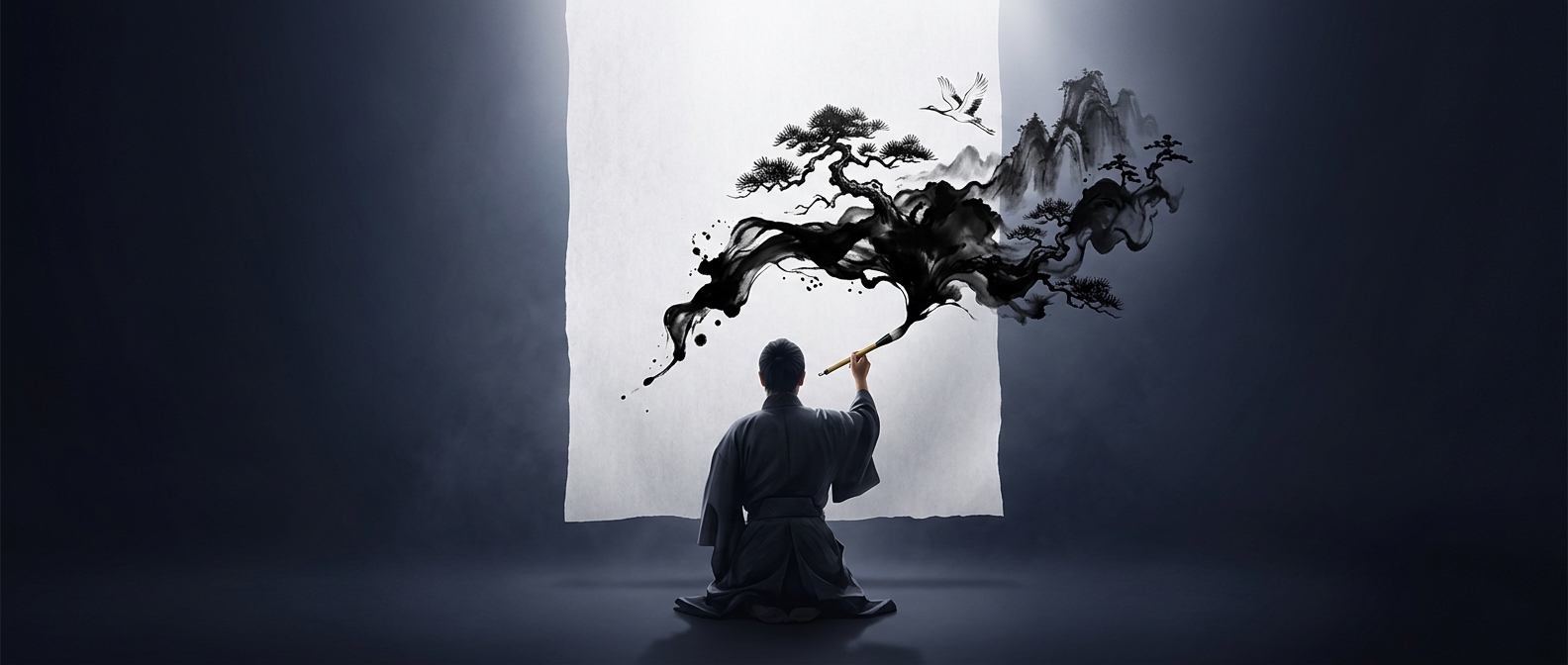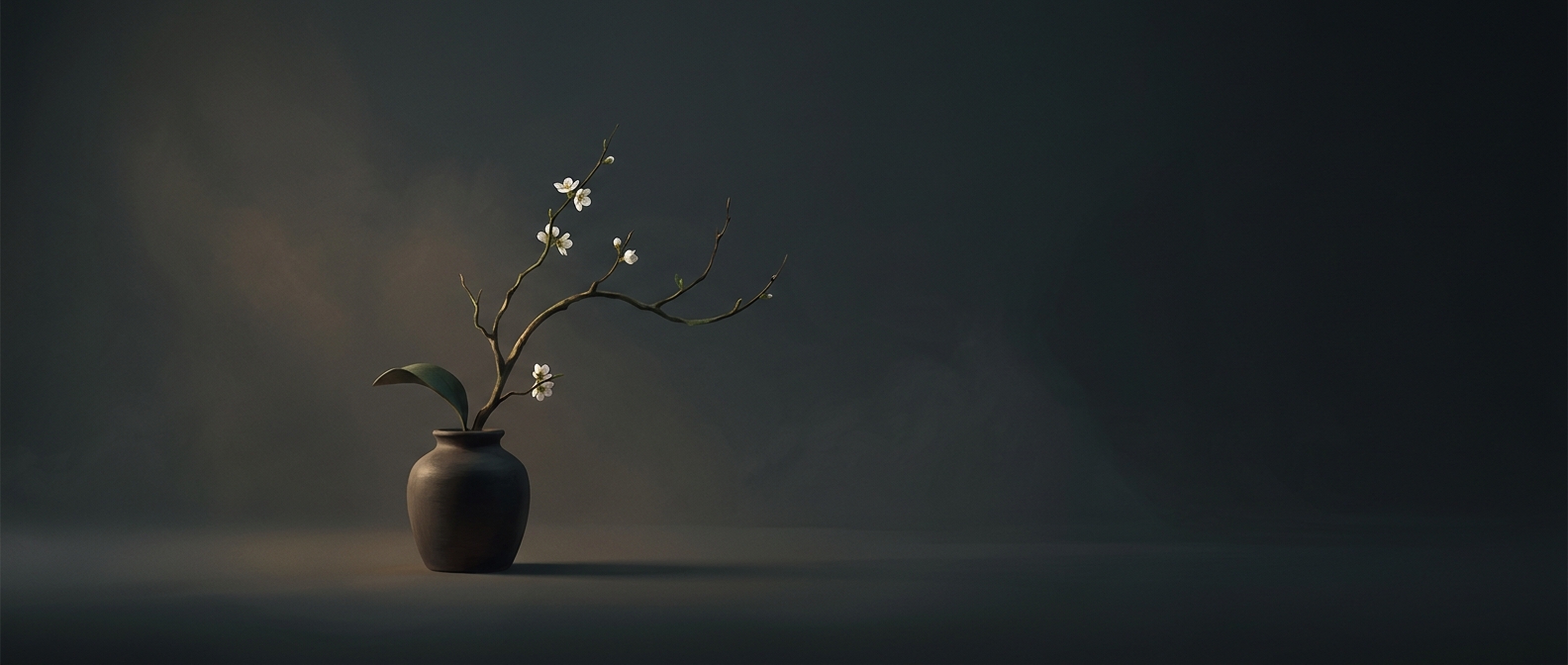
In ikebana, the space between stems is part of the design
An ikebana arrangement is composed not only of flowers and branches but also of the open areas they leave around and between them. Those gaps give each line room to register: a curved twig can feel more expressive when it is not crowded by other stems, and a single bloom can draw the eye precisely because the arrangement does not fill every part of the container.
This is a deliberate use of negative space—the unoccupied area that helps define the objects around it. In ikebana, empty space is not leftover space. Its shape and proportion affect how the arrangement feels, much as the pauses between notes help shape a piece of music.
Why restraint changes the arrangement
Many ikebana compositions organize a few plant materials by their lines, angles, and relationships rather than by sheer abundance. A branch might reach outward or upward, while a flower sits lower and closer to the vessel. The open area between them makes that contrast legible. Add more stems without reconsidering their placement, and the lines can merge into a dense cluster, weakening the structure.
The vessel matters, too. Its rim, height, and position help establish where stems begin and how far they extend, while the visible space around the arrangement connects it to its surroundings. The result is designed as a whole: plant material, container, and the air around them.
An arrangement that invites a slower look
The emphasis on gaps does not mean every ikebana work must be sparse or follow one fixed recipe. Schools and styles differ, and some arrangements use many materials. The key is that each element has a relationship to the others, including through the space left open.
That makes placement consequential. Moving one branch can change not just the silhouette but the size and direction of a gap—and, with it, the balance of the entire composition.