How a painted image became a moving one
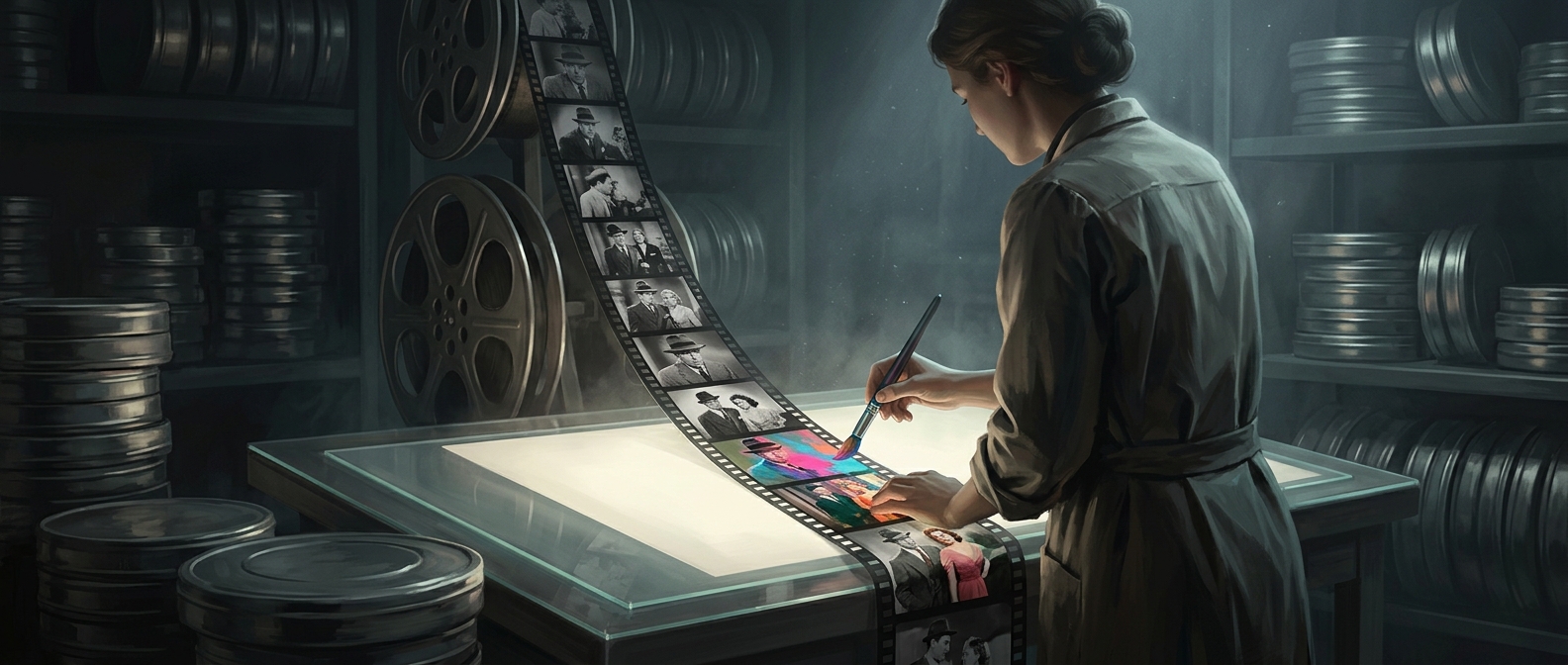
The color in the hand-painted version of Georges Méliès’s A Trip to the Moon was not added with a filter or applied to a single poster-like image. Artists painted directly onto successive frames of the film. Because each frame showed the action at a slightly different moment, the colors had to follow the objects as they moved: a painted costume or rocket needed to remain in the right place from one image to the next.
That meant repeating tiny brushstrokes thousands of times. Workers could divide the task by color, applying the same shade across a run of frames before the film moved to the next stage. The method made color a coordinated production process, not a quick finishing touch.
Why the labor mattered on screen
A film projector flashes still images in rapid succession, and the eye reads them as continuous motion. When the hand-painted frames are shown in sequence, their individually applied colors appear to move with the scene. The illusion depended on keeping the paint aligned from frame to frame; a stray brushstroke could flicker or jump instead of seeming attached to the object.
The result was vivid, but it came at a cost: every additional minute of colored footage required an enormous amount of manual work. That tradeoff helps explain why hand coloring was a special treatment rather than a practical way to color every film. In Méliès’s fantastical journey, the painted hues made the moon’s landscapes and theatrical spectacle feel more magical—while concealing, in the finished projection, the painstaking labor repeated on each frame.