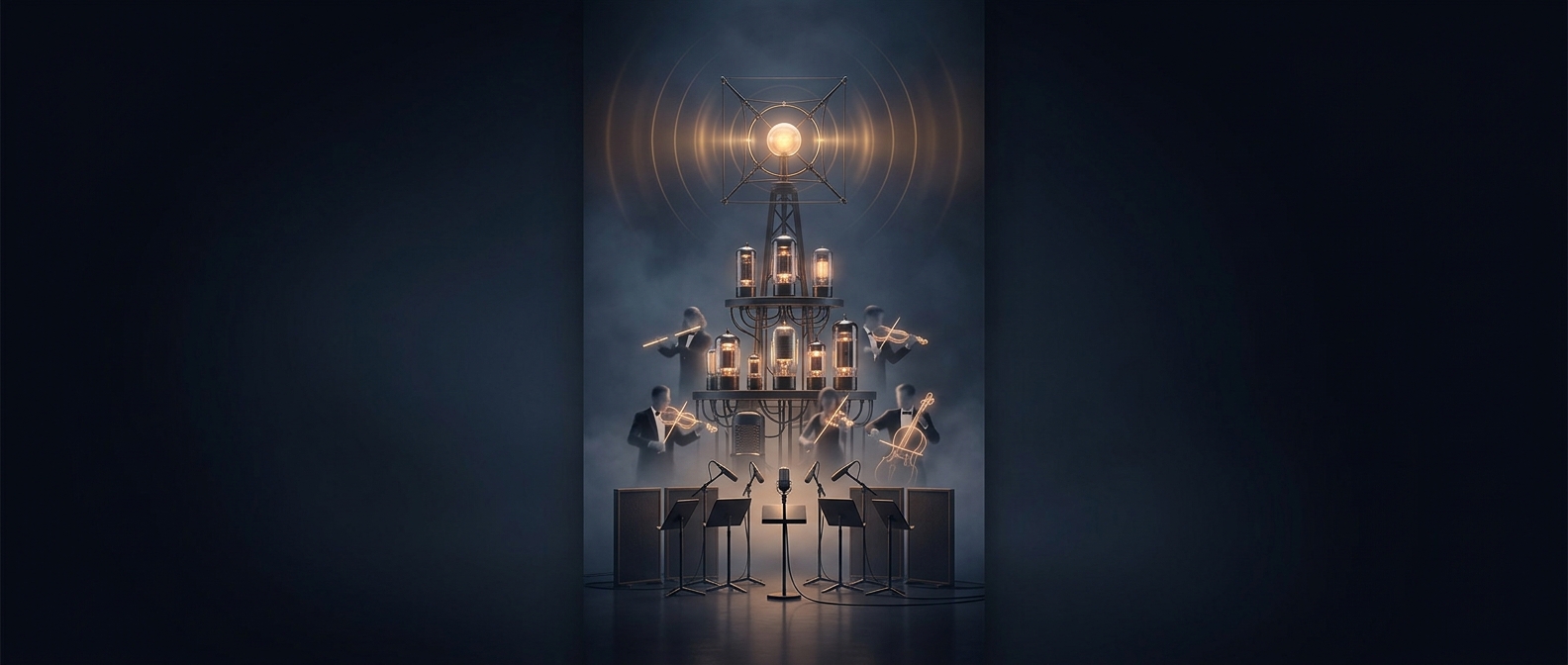
Why Early Radio Put Musicians in the Studio
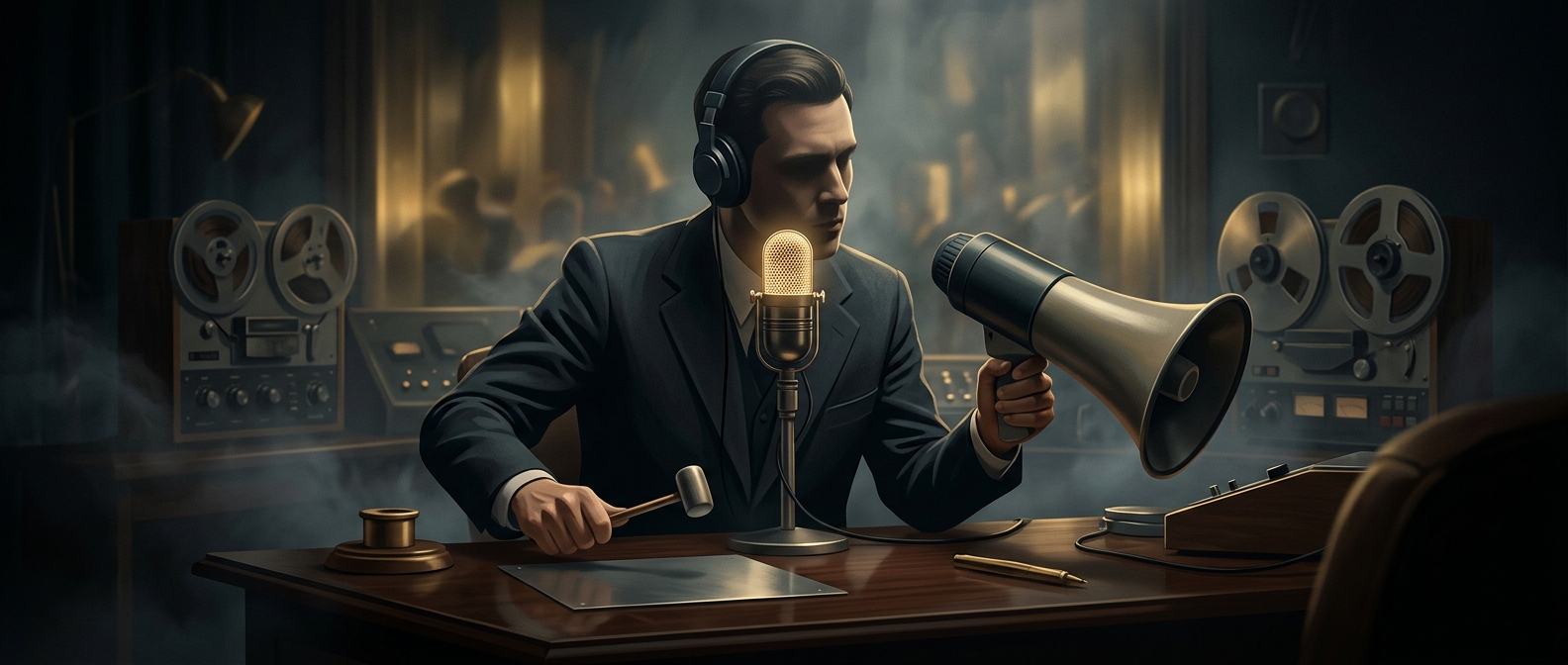
Before recorded music became a routine part of broadcasting, stations often filled their schedules with live performances. One reason was licensing: playing a commercial recording over the air could raise rights and payment questions, while hiring musicians to perform gave a station a direct way to provide music. The rules and arrangements varied, but live music was a practical solution as well as a legal one.
A Performance Built for the Broadcast
A live orchestra could shape its playing to the needs of the program. Musicians could start on cue, stretch a piece to fill a segment, or stop when the announcer needed to speak. That flexibility mattered when a station had to keep a broadcast moving without relying on a library of recordings.
The performance also had to work in the room. A small studio might have to accommodate many players, their instruments, and microphones, with little space to separate sounds. The result depended on musicians balancing themselves by ear and on the station placing microphones where they could capture the ensemble clearly.
The Studio Became Part of the Show
Live music made broadcasting less like playing a record and more like staging a performance for listeners who could not see it. Stations supplied the room and the musicians; performers supplied music that could be timed and adjusted in real time. The cramped studio was not merely a place to record the orchestra—it was the setting in which radio’s music had to be made.