How Radio Turned Score Updates Into a Game-Day Scene
A radio listener cannot see a batter swing or a crowd react. To make a sports update feel like a moment unfolding at the ballpark, a broadcast needed more than the words “the batter is up.” It needed sounds that let listeners picture the action.
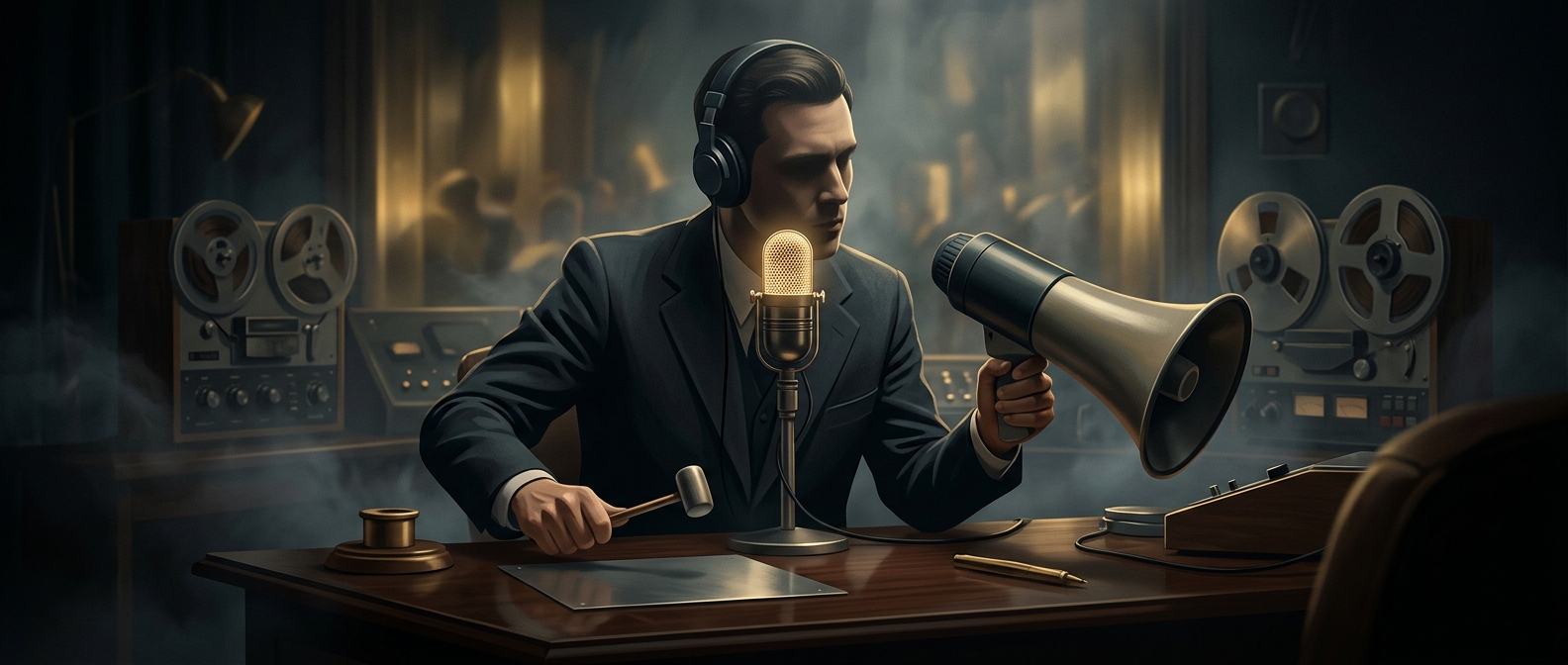
That mattered especially when an announcer was reading ticker-tape updates—a steady stream of written reports—in a quiet studio rather than calling a game from the stands. The information could be current while the room around the announcer was anything but lively.
Building the Scene One Sound at a Time
Broadcasters supplied the missing atmosphere with effects. Smashing wooden blocks together gave a sharp crack resembling a bat hitting a ball. Crowd recordings added the swell of spectators, suggesting a larger, noisier place beyond the studio walls.
These sounds did not have to reproduce every detail of a real stadium. Their job was to give the announcer’s words a believable setting. A crack could cue the imagined hit; a burst of crowd noise could make the update feel as if people were responding together. The listener filled in the visual action from a few carefully chosen sounds.
Why the Illusion Worked
Radio production depends on directing attention through sound. A clean spoken report carries the facts, while an effect marks the action and helps distinguish a game scene from an ordinary reading. Timing matters: placed close to the relevant words, a wooden crack or crowd swell can make a bare update feel immediate.
The result was a small act of broadcast theater. The announcer supplied the play-by-play, and simple studio effects supplied the atmosphere—turning a quiet room into a place listeners could imagine as a live game.