A Small Tilt Rewrites the Face
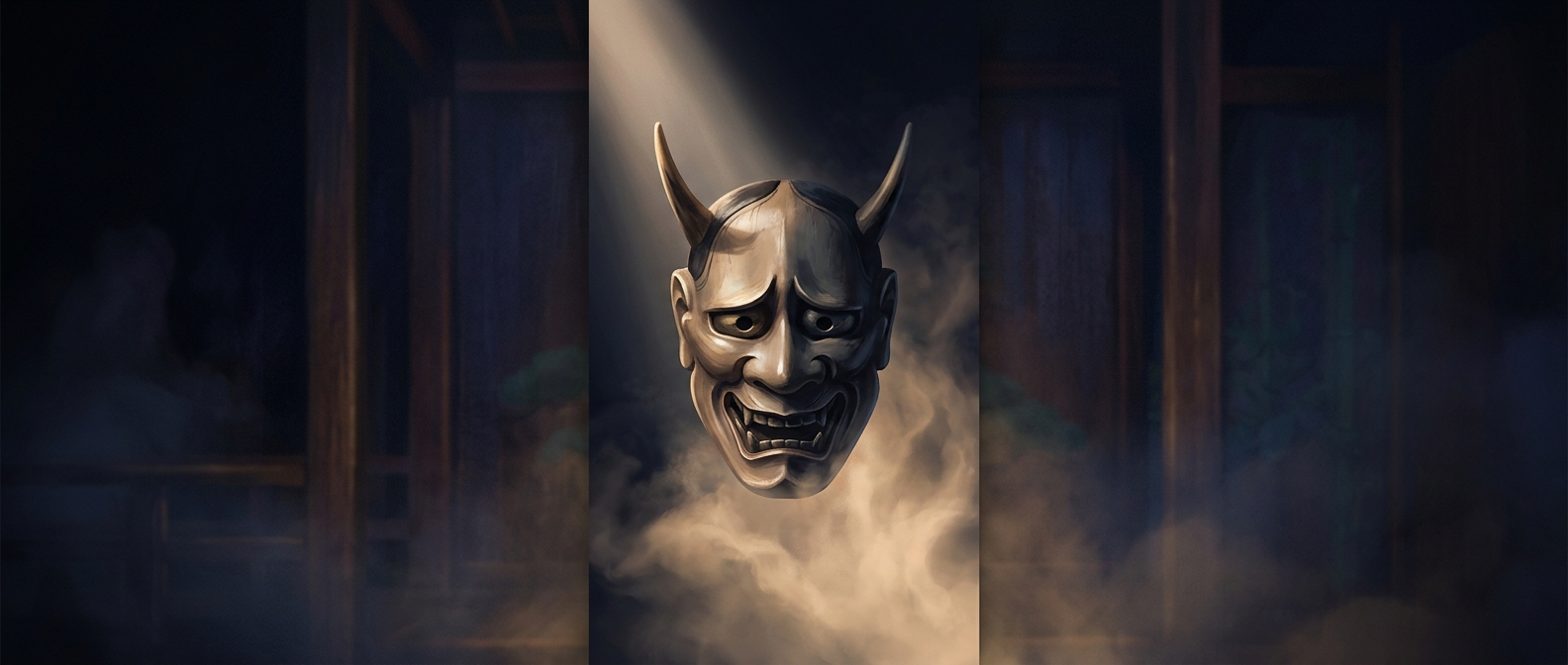
A Noh mask is not a moving face: its carved features stay fixed. But the mask’s surface is shaped so that a slight change in its angle can alter the expression viewers perceive. Tilt it upward, and light may brighten the lower face while shadows gather elsewhere; tilt it downward, and the eyes and brow can fall into shadow. The same carved mouth and eyes can therefore seem to suggest different moods.
The effect depends on the mask’s contours, the direction of the stage light, and where the audience is sitting. A change of only a few degrees can shift which ridges catch light and which hollows darken. That contrast gives the face a new emphasis without changing its features.
The Actor Makes the Change
The performer controls the effect by moving the head and upper body with deliberate precision. A gesture that might look like a simple nod can redirect light across the mask, making it seem more sorrowful or more uplifted. The audience reads that subtle shift as part of the character’s emotional state.
This is why a Noh mask can feel expressive without any alteration to its carved expression. Its mood is created in the encounter between sculpture, light, and movement—and a slight tilt can make a still face appear to change its mind.