Romance shaped by courtly rules
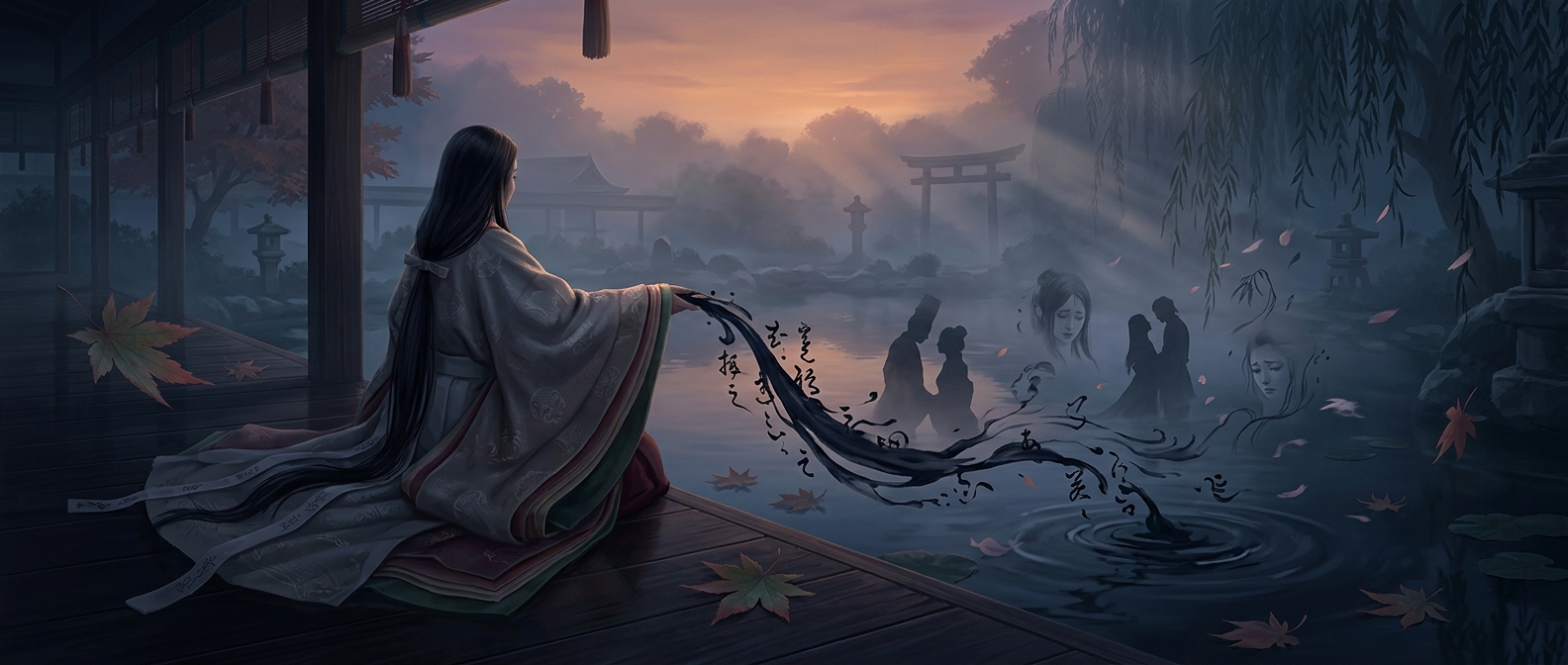
In The Tale of Genji, love rarely unfolds in private or on equal terms. Set among Japan’s Heian-era aristocracy, the story follows Prince Genji through relationships shaped by rank, family alliances, reputation, and the strict etiquette of court life. Lovers often communicate through poems and carefully chosen letters; a delay, an unanswered message, or a change in tone can carry the weight of an open confrontation.
Those constraints give the romances their tension. Genji can pursue intimacy, but he cannot simply escape the social arrangements around him. His choices affect the women involved, whose security and standing may depend on a relationship they have limited power to define. Desire therefore brings not only pleasure but uncertainty, jealousy, and lasting hurt.
A love story that keeps its consequences
The novel’s scale matters. Rather than ending when one courtship succeeds or fails, it follows relationships and their effects across years and generations. Affection can fade, old attachments can haunt later choices, and the children of one generation inherit the emotional and social complications of the previous one. Romance becomes a chain of consequences, not a single dramatic obstacle to overcome.
The story also gives emotional weight to what cannot last. Beauty, youth, status, and love all change; characters respond to loss even when they cannot reverse it. That sensibility helps explain why the novel’s romantic episodes can feel tragic without depending on one final catastrophe. The heartbreak accumulates in ordinary choices made inside a world that leaves little room to begin again.