The pages that nearly ended Carrie
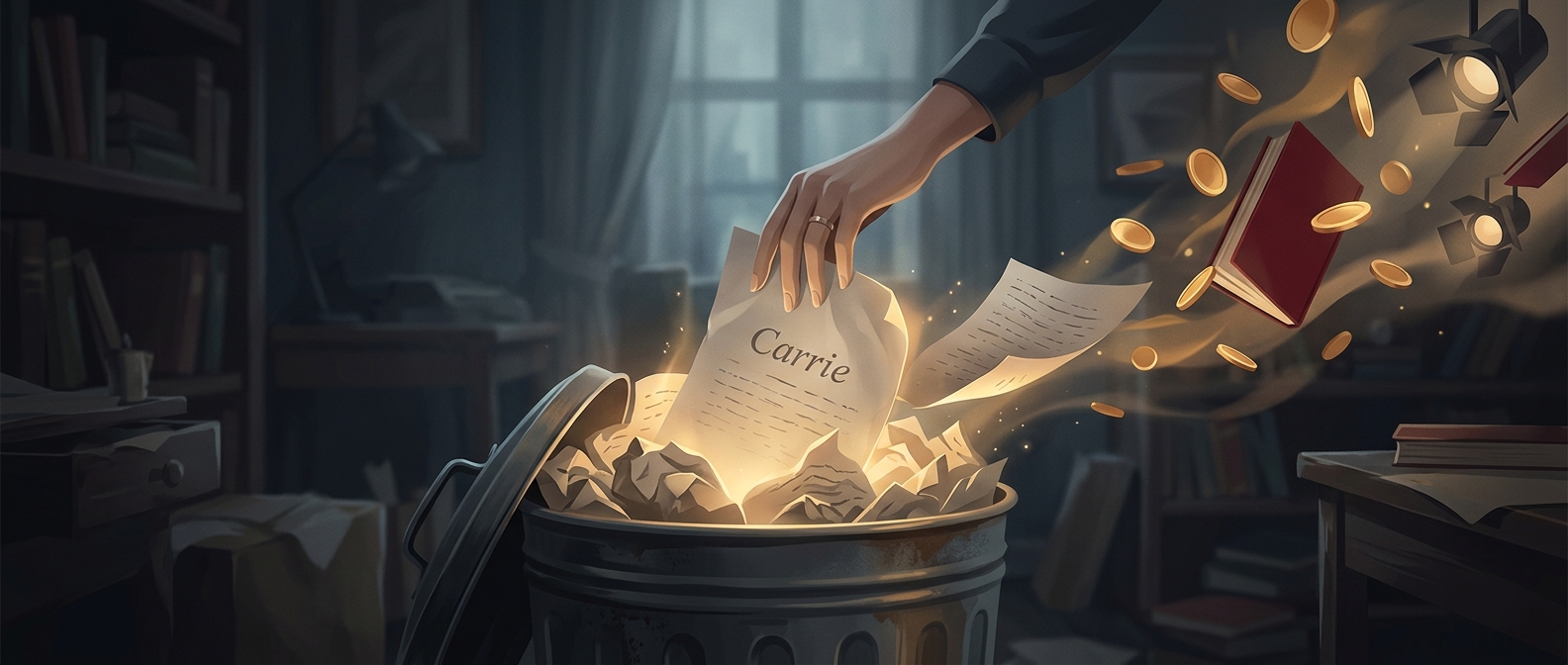
Stephen King did not toss a finished novel into the trash. He discarded the early pages he had written for Carrie after becoming dissatisfied with the story. His wife, Tabitha, found them and urged him to keep going, offering encouragement and help with details of the teenage girl at the center of the book.
That intervention mattered because King was struggling with a perspective far from his own: Carrie White is an isolated high-school student, and the story turns on the humiliation and cruelty she faces at school. Tabitha’s response gave him a reason to return to a draft he had judged a failure.
From rejected pages to a debut
King continued the novel, shaping Carrie’s story through a mix of narrative and fictional documents, including news reports and official records. That documentary style lets readers see the disaster’s consequences while the events themselves unfold, making the book feel like a case being pieced together after the fact.
Published in 1974, Carrie became King’s first published novel. The episode is a reminder that the book’s beginning was not a polished manuscript awaiting discovery: it was a few rejected pages, rescued from the wastebasket by someone who saw promise in them.