Why Kadomatsu Stand at the Threshold
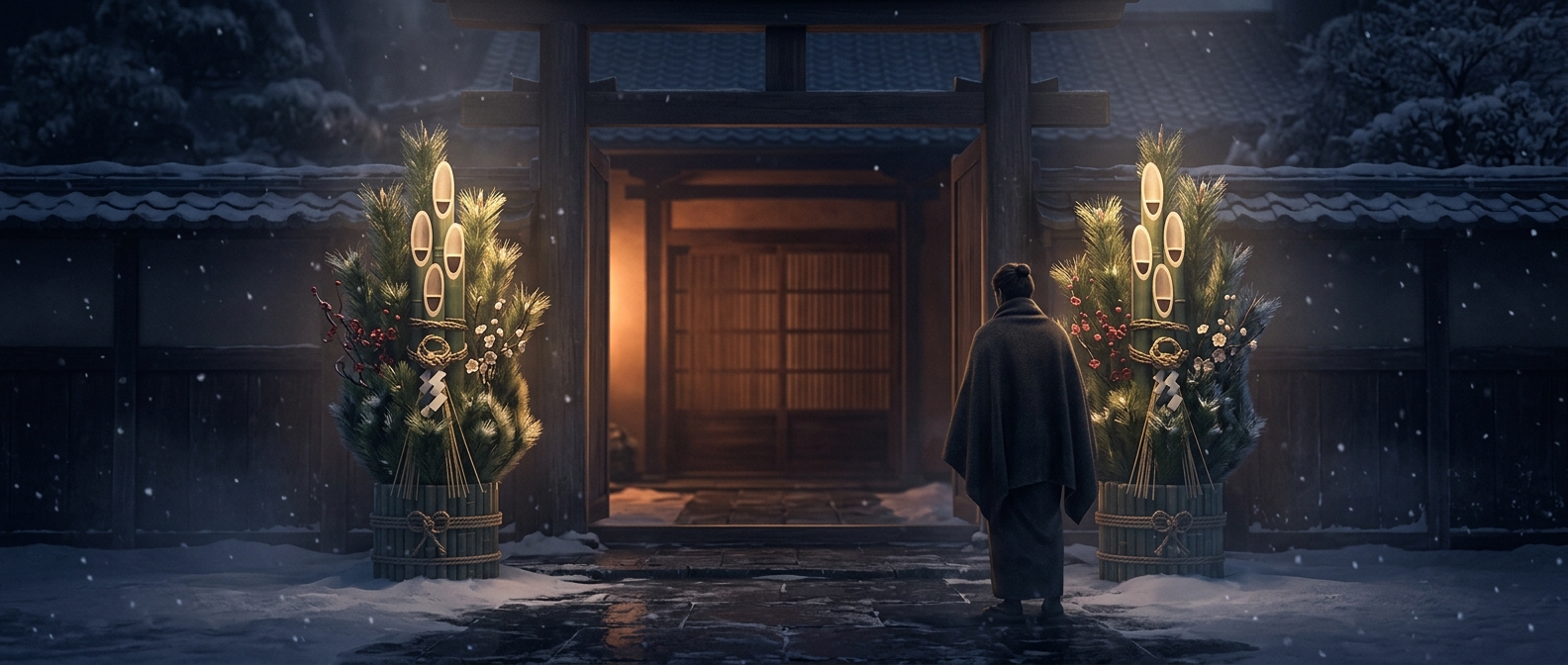
A kadomatsu is more than seasonal greenery: in Japanese New Year custom, it marks a place where the toshigami, a deity associated with the coming year, can arrive. The belief is that the deity visits households at New Year and brings blessings, including good fortune and a successful harvest. Pine and bamboo—plants associated with endurance and vitality—make the arrangement a fitting welcome.
Its position at a doorway or gate gives that welcome a practical shape. Set outside, often as a pair, the decorations identify the household’s entrance as the point of arrival. In Shinto practice, an object or place that serves as a temporary focus for a deity is sometimes called a yorishiro. A kadomatsu can serve that role: it is not simply an ornament to carry indoors, but a marker placed where the visitor is expected to come.
A Welcome With a Season
The arrangement is temporary because its purpose belongs to the New Year observance. After the holiday period, kadomatsu are taken down; in some communities, they are burned in a customary ritual. Their brief appearance turns an ordinary entrance into a seasonal threshold, signaling that the home is ready to receive the year—and, in the tradition, its visiting deity.