The Mask Is a Launcher, Not a Source of Fire-Breathing
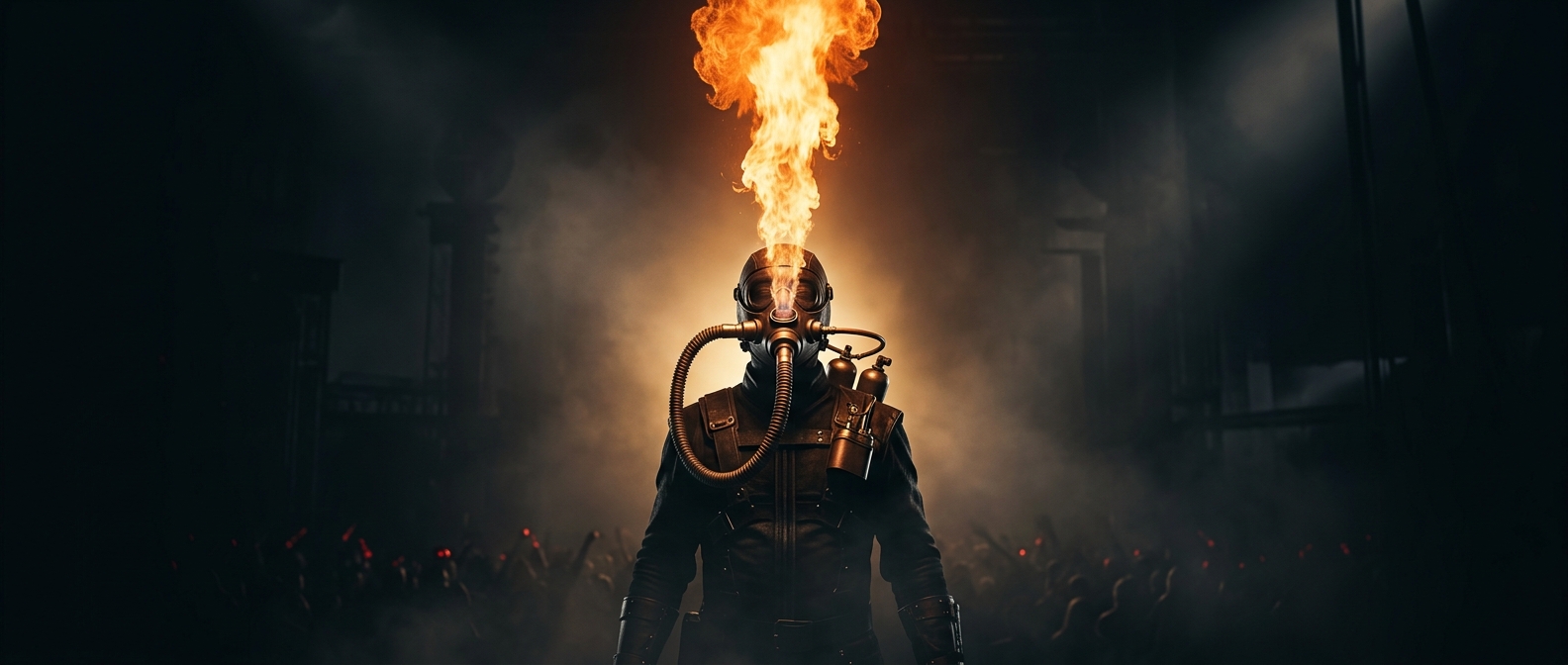
The effect looks as if a performer exhales a sheet of flame, but the fire comes from a pyrotechnic device built into the mask. The apparatus releases fuel and ignites it, sending the flame outward from the face. The mask makes the hardware part of the costume, so the burst appears to come from the performer’s mouth.
That distinction matters: the performer is not inhaling fuel or breathing fire. The flame is a directed stage effect, and its path is designed to point away from the wearer rather than curl back across the face.
Why Timing Is Part of the Apparatus
A flame burst has to happen at a chosen moment and in a chosen direction. Onstage, that means the performer’s movement and the device’s operation must work together: a turn or gesture can change where the flame appears to travel, while a mistimed burst could disrupt the scene or put people in its path.
The mask therefore does more than make the image dramatic. It conceals the mechanism and lets the band build a recognizable visual cue into a performance. What looks like an impossible human trick is, in practice, a carefully staged ignition—and the performer’s apparent breath becomes a jet of fire.