Why Taiko Uses the Whole Body
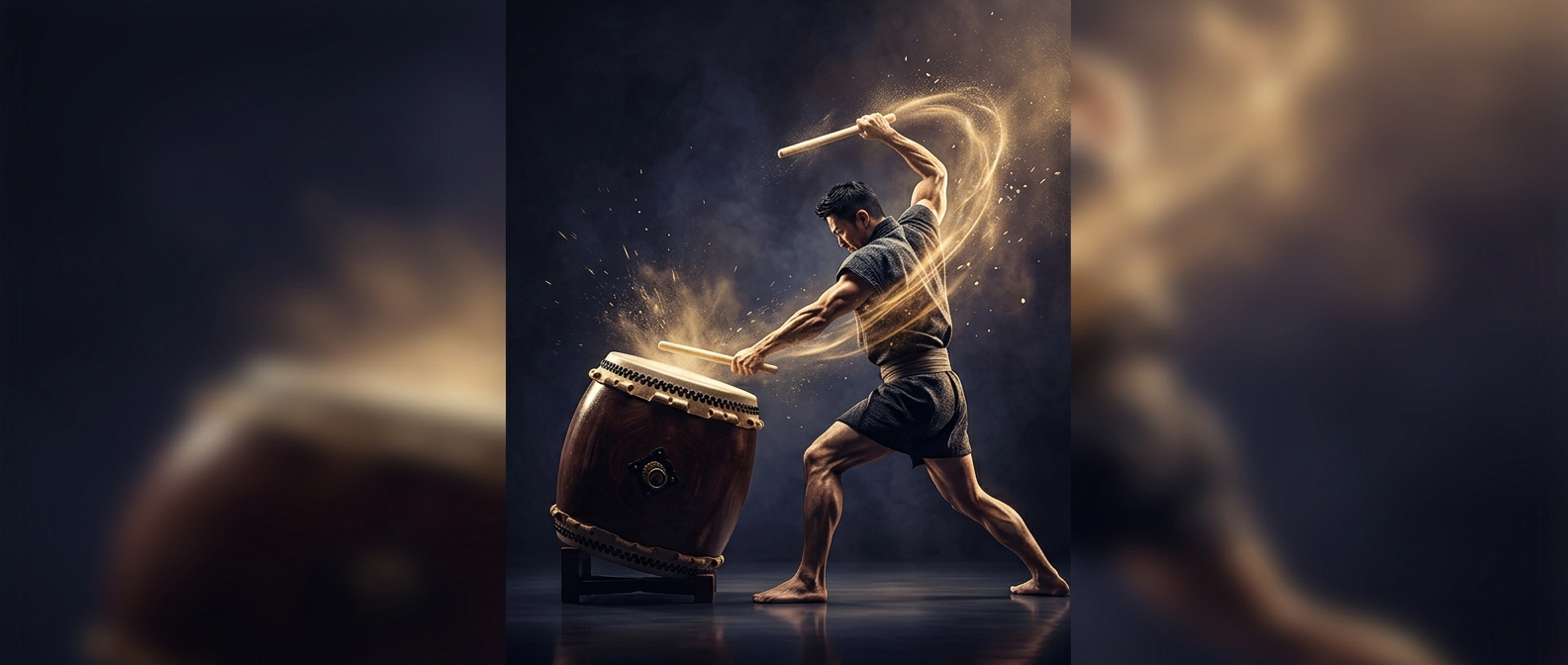
A taiko strike begins before the stick reaches the drum. Players often bend their knees, plant their feet, and rotate through the hips and torso, then drive the arms forward. That sequence lets the body generate force together rather than asking the wrists alone to do the work. The large drums make the motion especially visible: a strong, clear hit depends on a coordinated movement from stance to stick.
Rhythm Turns Repetition Into Exercise
In an ensemble, players repeat these movements in time with one another. A passage may alternate forceful strikes with changes in level, direction, or stance. The legs and core stabilize the body; the shoulders and arms repeatedly lift and swing the sticks. Keeping the movement synchronized with the rhythm adds a coordination challenge alongside the physical effort.
The result can feel like a mix of vigorous movement and muscular work. How demanding it is depends on the performance: tempo, duration, choreography, and how forcefully a player moves all matter. Taiko is not simply loud drumming; the visible choreography is part of how performers shape the music.
The Sound Comes From the Motion
The stance and gestures are not just decoration around the beat. They help players prepare each strike, control its force, and make the ensemble’s movements legible to an audience. A player’s whole body becomes part of the instrument—building each hit from the ground up, then resetting in time for the next one.