How Flamenco Guitar Turns Wood Into Rhythm
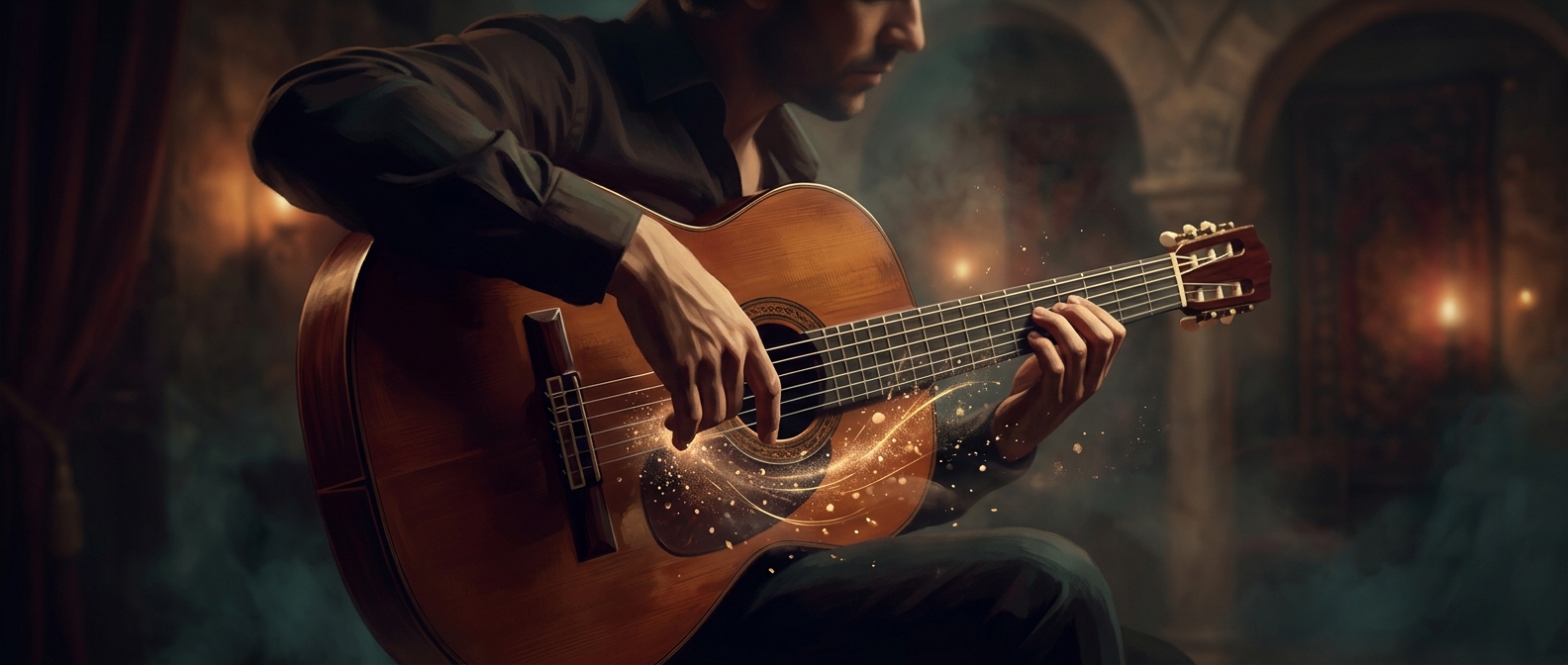
In flamenco, the guitar does more than carry melody and harmony. Players add sharp taps to the soundboard—the thin wooden face of the instrument—so notes and percussion can come from the same pair of hands. The result is a rhythm that feels woven into the music rather than supplied by a separate drum.
A Tap Has to Fit the Phrase
A flamenco guitarist may strike the soundboard with a fingertip or nail between plucked notes, adding a crisp accent without stopping the musical line. The tapping can reinforce the beat, answer a singer or dancer, or help mark a change in the phrase. Because the sound comes from the guitar itself, the player can place each accent exactly where the music needs it.
This technique is commonly called golpe, Spanish for “blow” or “strike.” Flamenco guitars are often fitted with a transparent protective plate on the soundboard, called a golpeador. It helps guard the wood from repeated tapping, though players still need control: the soundboard is part of the instrument’s resonating structure, not a drumhead built for forceful hits.
One Instrument, Two Kinds of Attack
Plucked strings produce pitched notes that ring and decay; a tap adds a short, percussive click. Switching between the two gives the guitarist a way to sharpen flamenco’s rhythmic patterns while keeping the harmony moving. When a dancer’s footwork or a singer’s phrasing calls for an accent, the guitar can answer with a sound that is both musical punctuation and part of its beat.