A Piano Glissando Is a Fast Chain of Separate Notes
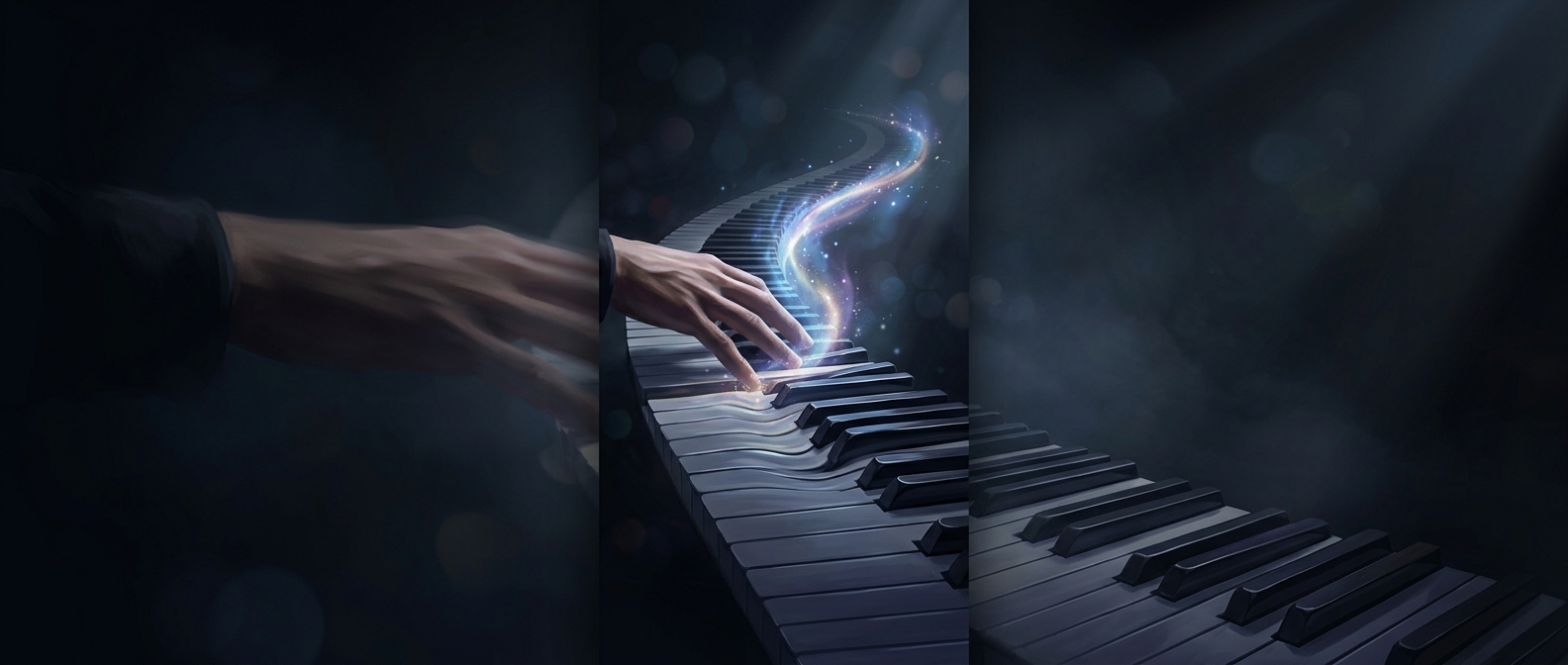
A piano’s keys do not bend pitch as a string can. Each key sets a small hammer in motion, striking a string tuned to a particular note. In a glissando, the sweeping hand depresses many keys in quick succession, so the ear blends their individual attacks into a rushing cascade. The pitch is not sliding continuously; it is jumping through the piano’s fixed notes too quickly for each one to stand apart.
The Keyboard Shapes the Sound
A sweep along the white keys produces the notes of the C-major scale, while a sweep along the black keys produces a different, more pentatonic collection. That changes the character of the flourish: the available notes determine which pitches flash past, even when the gesture is over in a moment.
Players often use a fingernail or the side of a finger to travel across the keys. A fingertip pressed firmly against the key edges can scrape or hurt, so the motion has to be quick and controlled. The result is a sound that feels like one continuous rush, built from a series of distinct hammer strikes.