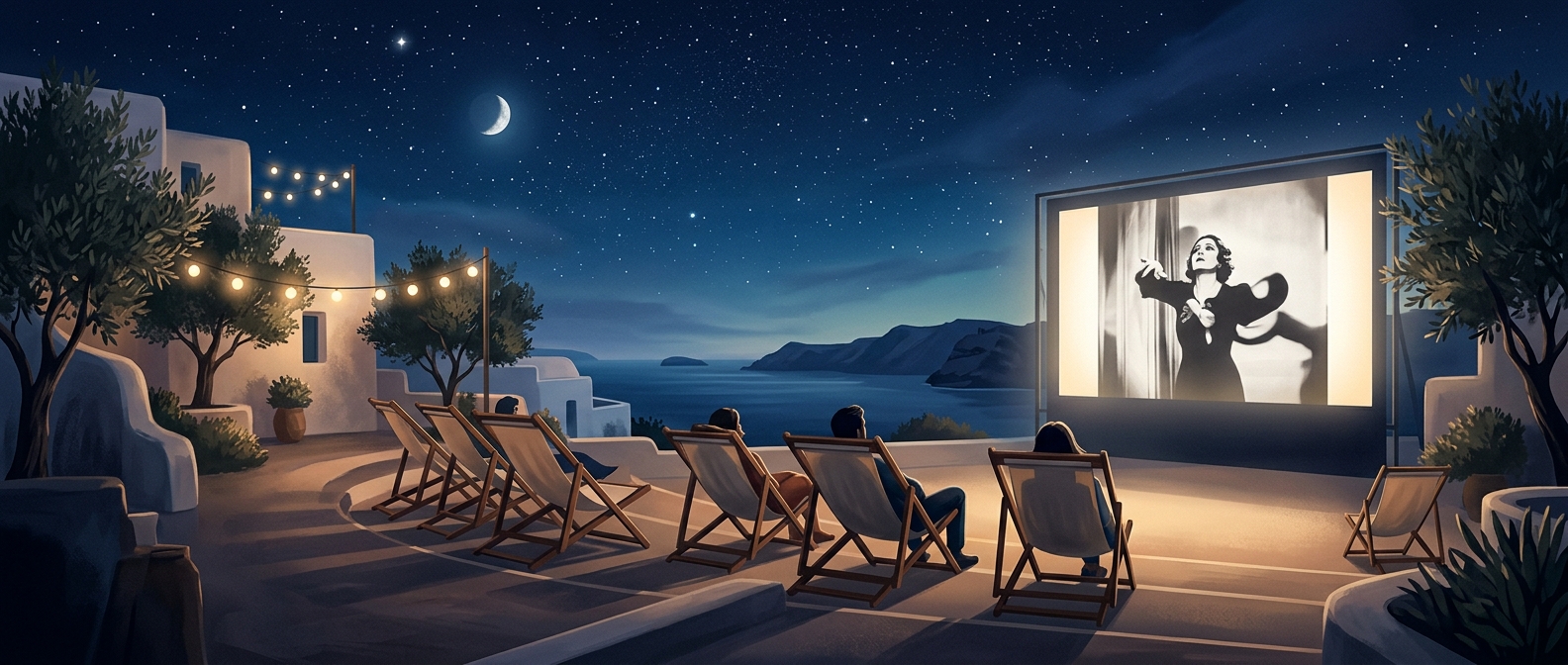
Why the cinema moves outdoors
In Athens, an outdoor screening turns the city’s warm evenings into part of the moviegoing experience. Rather than trying to cool a crowded indoor room through the hottest hours, cinemas make use of courtyards, gardens, and roof terraces, where the audience can sit beneath the open sky. The setting is practical, but it also changes the pace: arriving, settling in, and watching together becomes an evening out rather than simply a trip to a dark theater.
A theater built around its surroundings
An open-air cinema still needs the essentials of any screening: a projection surface, a projector, and sound that audiences can hear without overwhelming the neighborhood. But the venue must also work with its setting. Nearby buildings, street noise, and changing light all affect where the screen goes and when a film can begin. Once darkness falls, the screen becomes the visual focus while the surrounding garden or rooftop remains part of the scene.
That combination helps explain why these cinemas feel different from a temporary outdoor showing. They are places people can return to, often with an atmosphere shaped by the particular courtyard or terrace. The movie is shared, but so is the air, the view, and the small interruptions of being outside.
More than a cooler room
The format joins two kinds of summer leisure: watching a film and spending time outdoors after the heat of the day. It gives a familiar activity a distinctly local setting, without requiring audiences to choose between comfort and the communal feel of a theater. When the credits roll, the night is still around them—not sealed away behind an exit from a dark room.