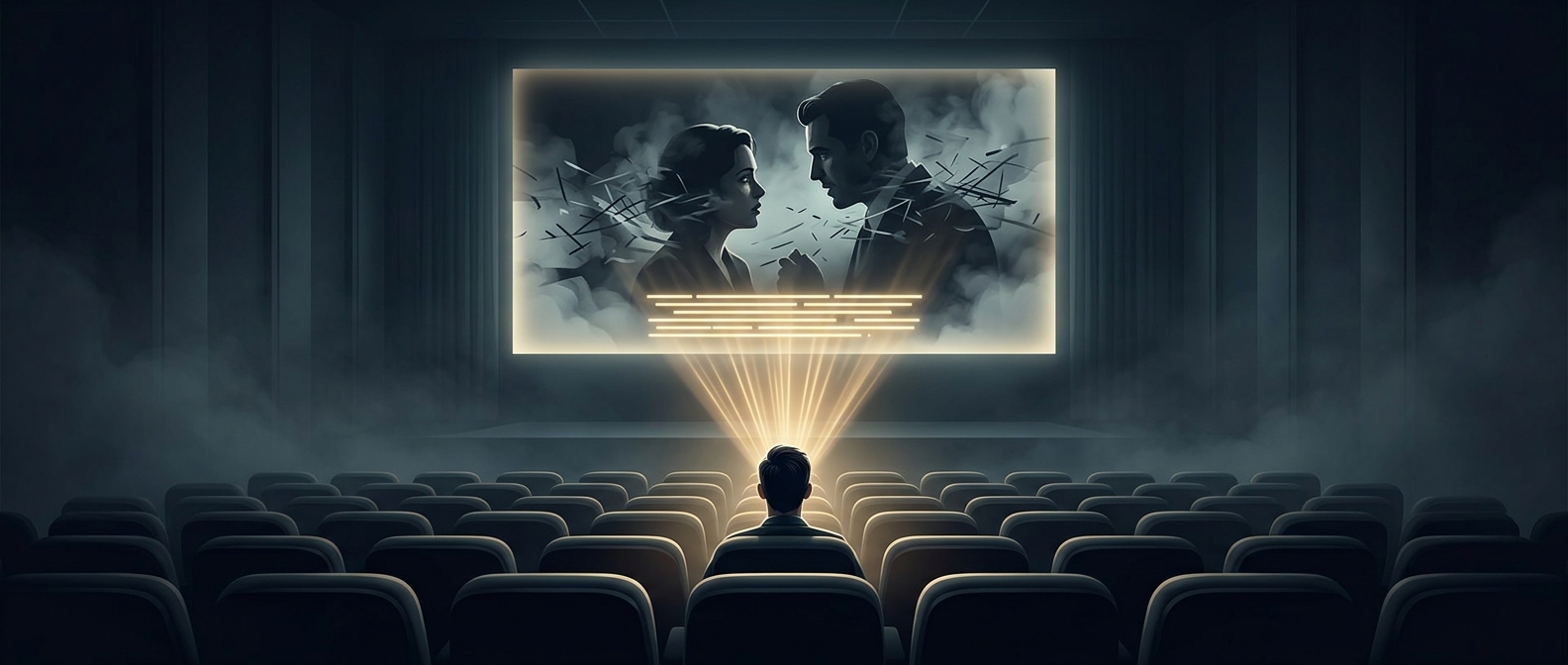
A movie mix is built for a larger sound system
In a finished film, dialogue shares the soundtrack with music, effects, and ambience. Mixers balance those elements to create a convincing scene: a quiet line may sit inside a busy soundscape, while a sudden impact or swell can be much louder. That contrast—called dynamic range—helps a film feel dramatic in a theater, where speakers can reproduce a broad range of sound at substantial volume.
At home, the same mix has to pass through very different equipment. A television’s small speakers, a phone, or a soundbar may struggle to make speech distinct, especially when effects occupy nearby frequencies. Room noise and listening at a lower volume can bury a softly delivered line further.
Turning it down can make speech harder to follow
When viewers lower the volume to keep loud moments comfortable, the quiet parts become quieter too. Some devices also reduce the difference between loud and soft sounds, but that processing can change the balance rather than cleanly separate speech from everything around it. Dialogue that was intelligible in a controlled theater may therefore become difficult to catch on a living-room setup.
Subtitles solve the problem at the point where it matters: the viewer can read a line even when the soundtrack does not make every word clear. They are useful not only for whispered scenes, but also for unfamiliar accents, overlapping conversation, and noisy listening environments. The result is that a viewing aid has become part of how many people follow a film—not because they missed the story, but because the soundtrack was designed to work across listening conditions it cannot fully control.