Why the subtitles may tell a different joke
A joke rarely survives translation word for word. Its punch line may depend on a pun, a familiar reference, or a phrase that sounds playful in one language but flat in another. Localizers—the people who adapt a work for audiences in other languages—may replace the joke with one that creates a similar effect, even if it describes something different.
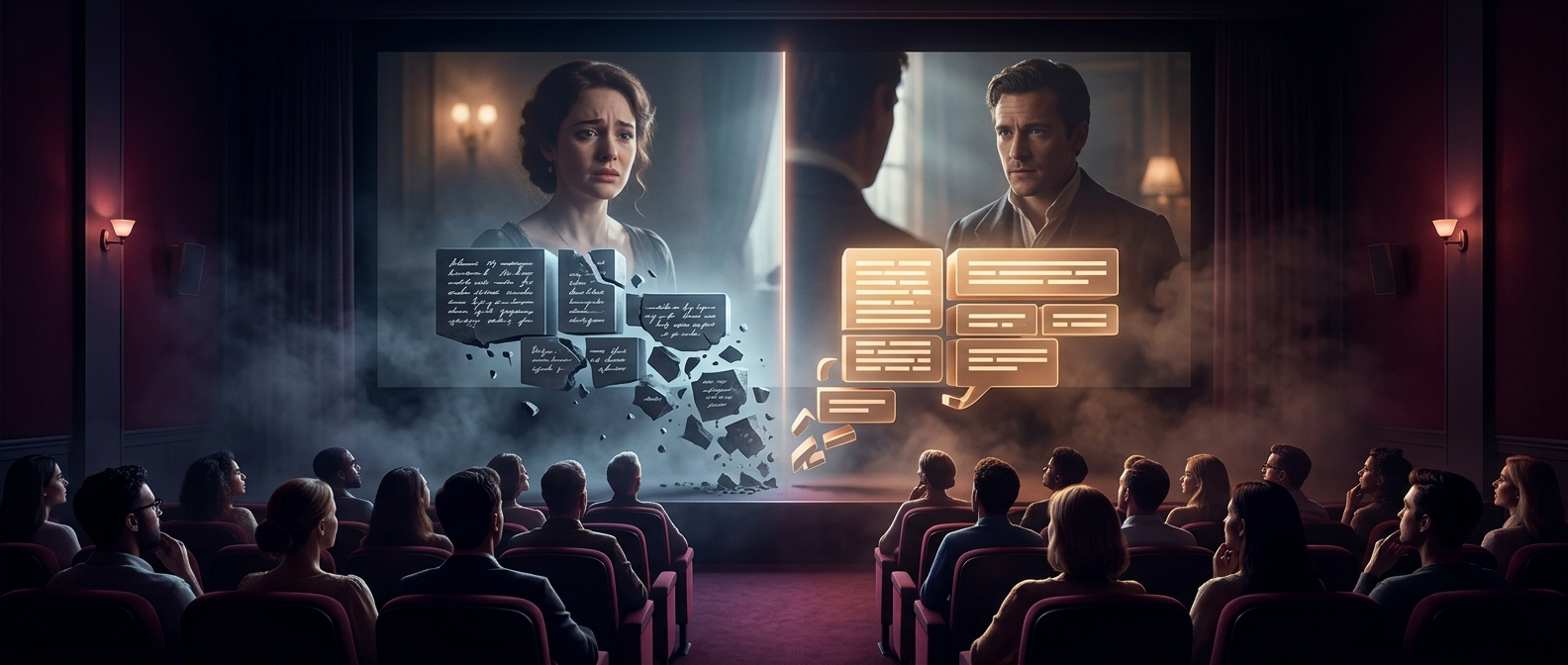
That rewrite becomes especially visible when the spoken dialogue is already recorded. The audio is a fixed performance, while subtitles or other on-screen text can be edited independently. A translator working from the recording may therefore choose a readable, culturally clear line rather than a literal transcript of what the character says.
The tradeoff between matching and making sense
Subtitles have their own limits: they must fit on screen and remain readable while the scene continues. A close translation might preserve the original wording but lose the humor; a shorter adaptation might land better but no longer match the audio. The localization team has to decide which part matters most in that moment—the exact words, the joke’s purpose, or the timing of the scene.
The result can feel like a mismatch, but it may be a deliberate compromise rather than a mistake. The viewer is reading an adaptation of the performance, not always a transcript of it.