A warm seat was a difficult engineering problem
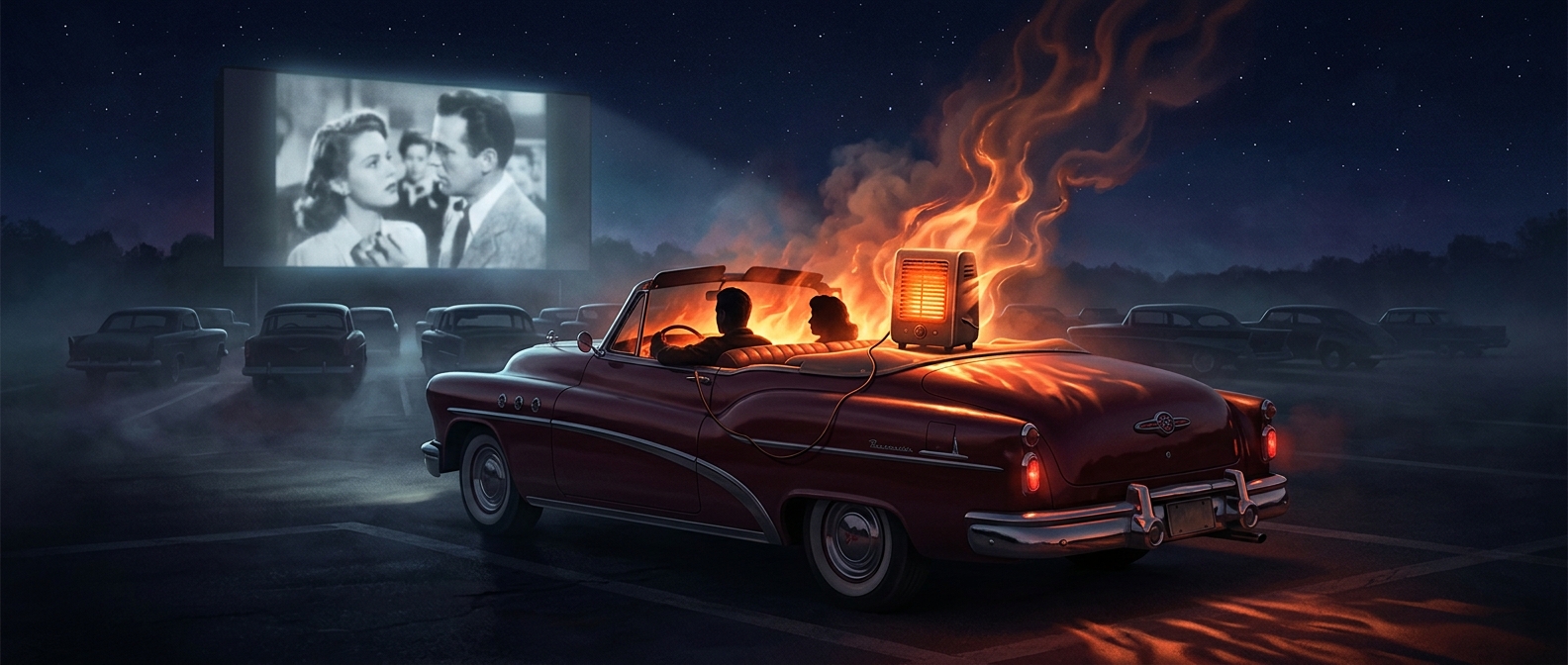
At a drive-in, the car was both the audience’s seat and its shelter. But once the engine was off, its normal cabin heater could no longer provide warmth. A rental heater offered a workaround: a compact electric unit hung at the window, placing its heat near the people inside without requiring them to run the car.
The catch was that a small heater had to warm a chilly cabin through a limited supply of electricity. Electric resistance heaters turn electrical energy directly into heat, but producing useful warmth takes substantial current. That demand could strain a car’s electrical system, especially if the heater was used alongside other electrical loads. A fuse might blow to protect the wiring; if the device or its placement became too hot, nearby upholstery could be at risk.
Comfort depended on where the heat went
Even when the heater stayed on, it could not make the whole car cozy at once. It warmed the air closest to the unit, while cold glass and the rest of the cabin continued to draw heat away. The window mount made the warmth accessible to occupants, but also put a hot appliance close to trim and fabric—a practical compromise, not a miniature version of a home furnace.
That tradeoff captures the drive-in’s particular challenge: viewers wanted the car sealed up and the engine quiet, yet still comfortable enough to sit through a movie on a cold night. The rental heater tried to solve that problem with a device small enough to hang in a window—and sometimes asked more of the car than its wiring or upholstery could safely tolerate.