Baccarat’s salon reputation—and its simple wager
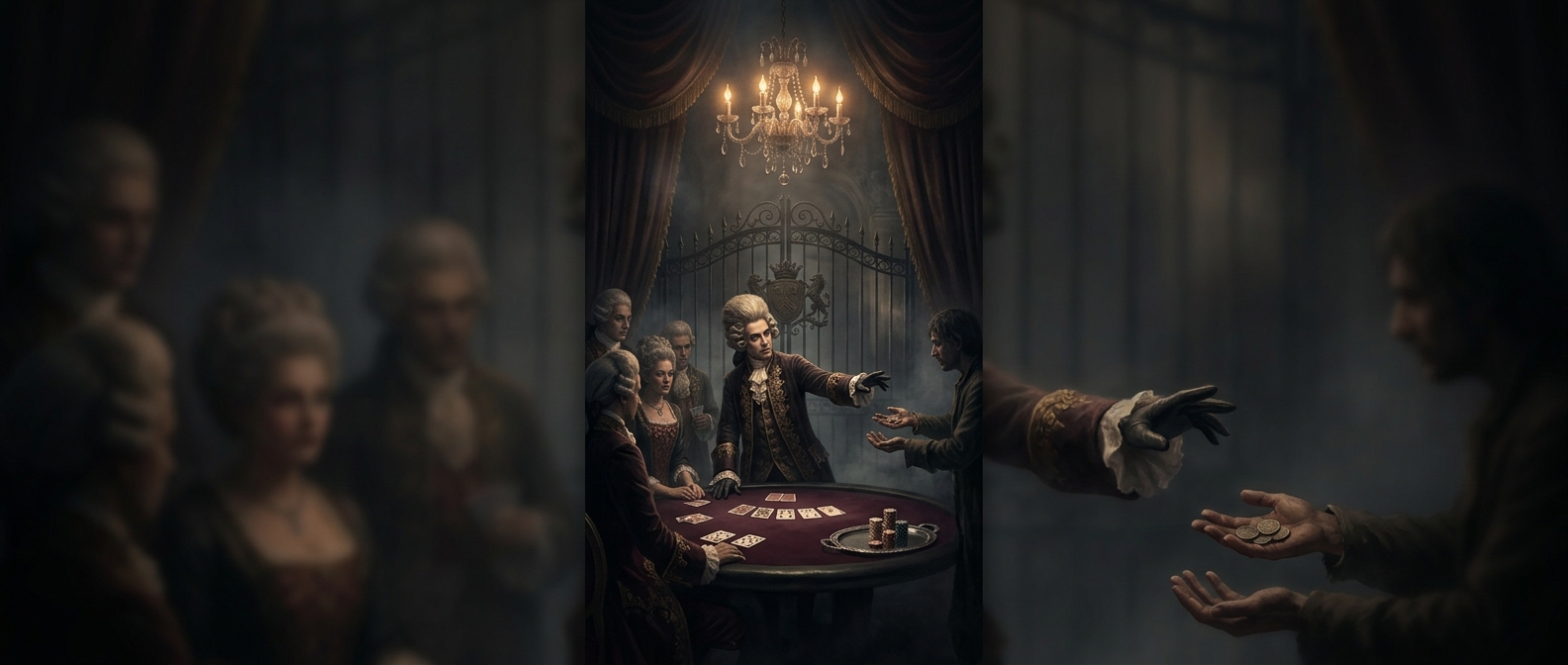
In nineteenth-century France, baccarat was associated with upper-class play. Its exclusivity came from the social world around the game: private salons and elite company, rather than a complicated set of skills that ordinary players needed years to master. The card game’s reputation could sound intimidating even though its central choice was straightforward.
“Player” and “banker” are bets, not jobs
At a modern baccarat table, player and banker name the two hands being compared. They do not mean that the bettor must play a hand or act as the banker. A player can choose which hand they think will finish closer to nine—or wager on a tie—while the game’s prescribed drawing rules determine how the hands proceed.
That structure is why a newcomer can take part without memorizing every card rule: the dealer handles the sequence, and the bettor’s decision is about the outcome. The old association with aristocratic rooms may linger in baccarat’s image, but the basic wager now fits on a small menu of choices.