Why Chaplin Could Lose a Chaplin Look-Alike Contest
The famous story has a neat comic twist: Charlie Chaplin entered a contest for people resembling his own screen persona and reportedly finished around twentieth, short of the finals. The anecdote is often retold as proof that audiences could mistake an imitation for the real thing. But a look-alike contest measures something narrower than identity: how closely a contestant matches the judges’ image of a character.
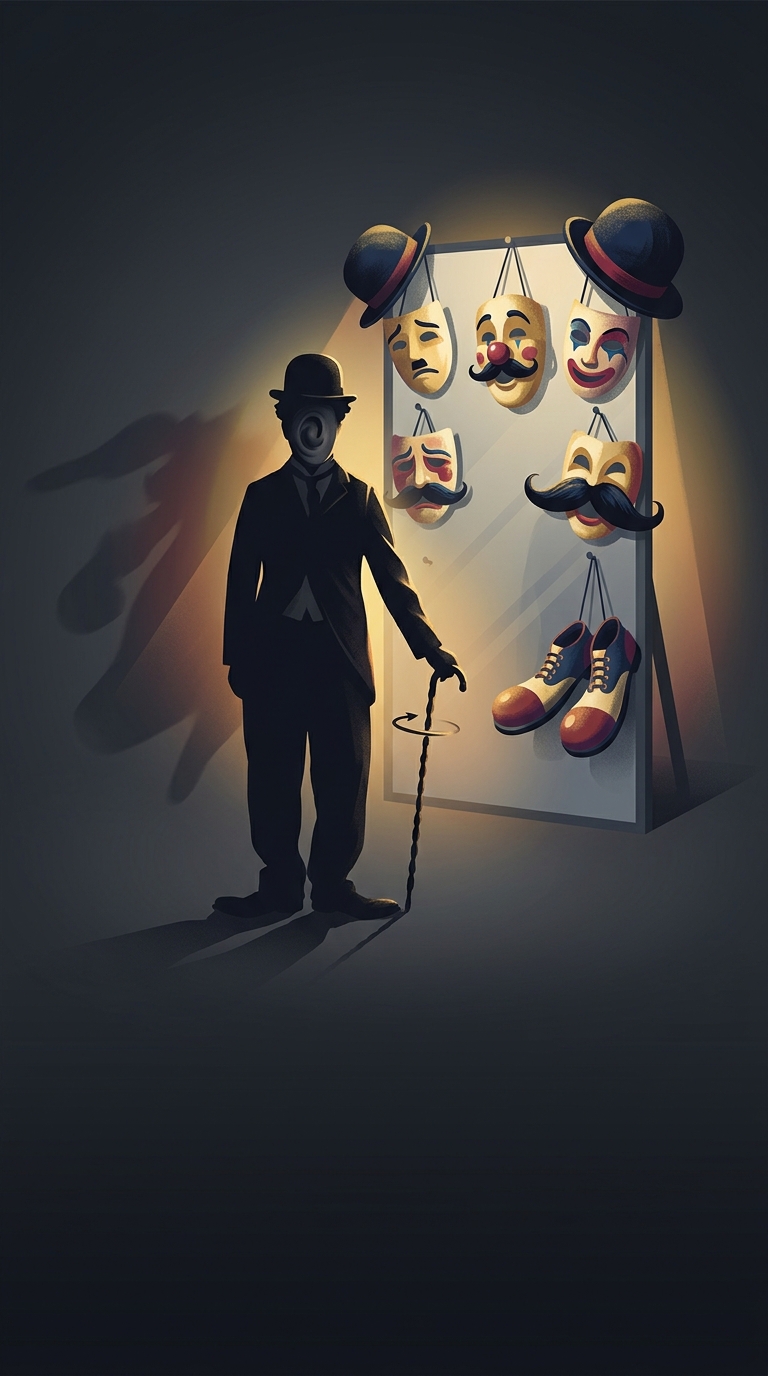
Chaplin’s Tramp was built from recognizable visual signals—a small mustache, bowler hat, cane, oversized shoes and distinctive clothes. Those details could make a stranger look “more like Chaplin” at a glance than Chaplin himself, especially if judges were comparing costumes and poses rather than personal features. In a contest, the performance of the image can matter more than the person who originated it.
A Screen Character Becomes a Template
By 1915, Chaplin’s silent-film character was already a public image that could be copied. Viewers did not need to hear the Tramp speak: his walk, gestures and outfit made him legible on screen. That clarity helped turn the character into a template for impersonators—and gave judges a checklist, whether or not they consciously used one.
The story’s exact placement is usually given as approximate, so it is safer to treat the “around twentieth” result as an anecdotal detail, not a precise scorecard. Its enduring punchline rests on the mismatch between being the original and matching the audience’s idea of the original. In a room full of people dressed as the Tramp, even Chaplin could apparently be outdone at looking like Chaplin.