How a gas station became a video library
In the late 1970s, owning a film on tape was an expensive proposition. A shop could buy a small collection of VHS and Betamax titles, but asking each household to purchase its own copy put home movies out of reach for many viewers. George Atkinson’s rental shop offered a different arrangement: pay to borrow a tape, watch it at home, then return it for someone else to rent.
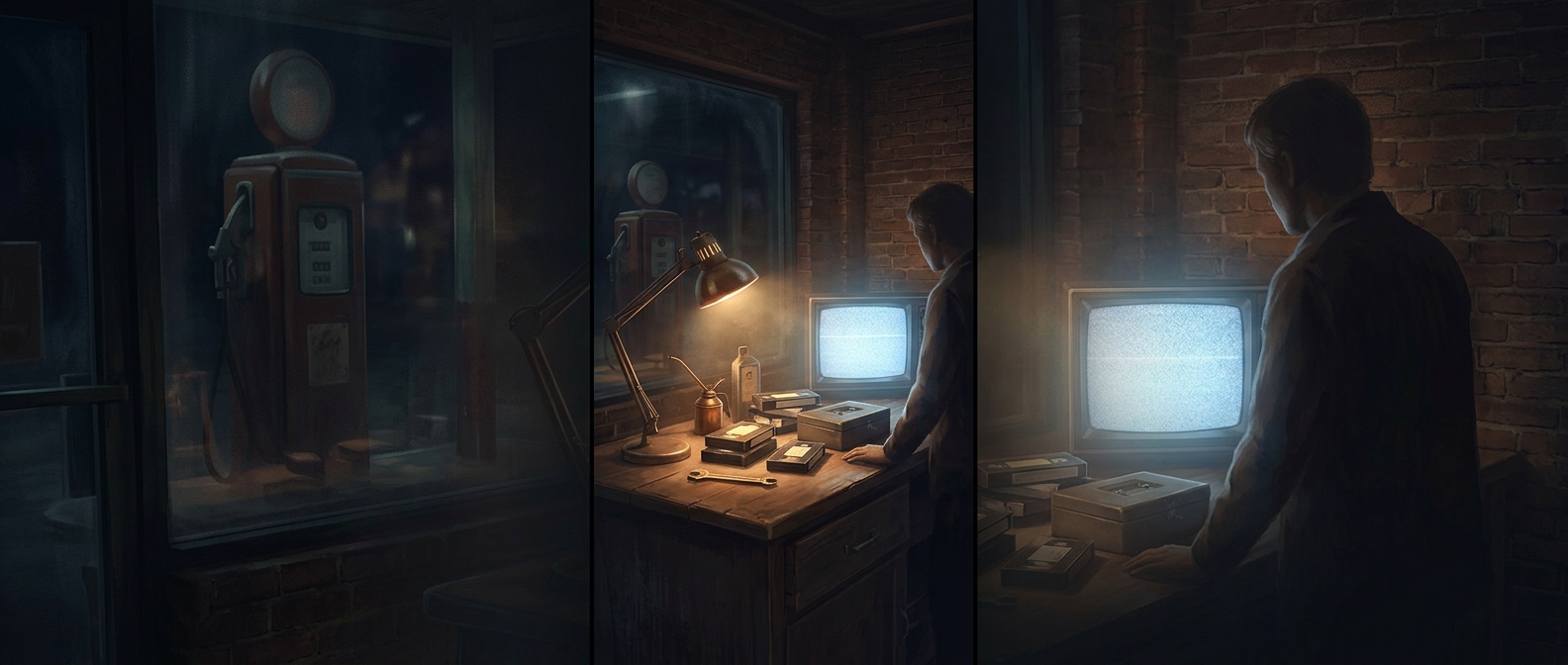
That simple exchange made a limited stock serve many households. The shop’s value was not just the tapes on its shelves; it was access to them without the cost of ownership. A former gas station gave the operation a physical storefront where customers could browse, take a film home, and bring it back.
A new business built around repeat use
Rental changed what a movie could be at home. Instead of planning around a theater’s schedule or buying a costly tape, customers could choose a title and watch on their own equipment. For the shop, each returned cassette could earn another rental fee, so the same copy generated income repeatedly.
The model also depended on practical limits: a tape out with one customer was unavailable to another, and a late return delayed its next rental. The daily fee linked the price to how long a customer kept the copy. The breakthrough was turning a movie tape from a product to own into a shared service. That shift helped make a neighborhood shop—not just a television or a VCR—part of the new home-video experience.