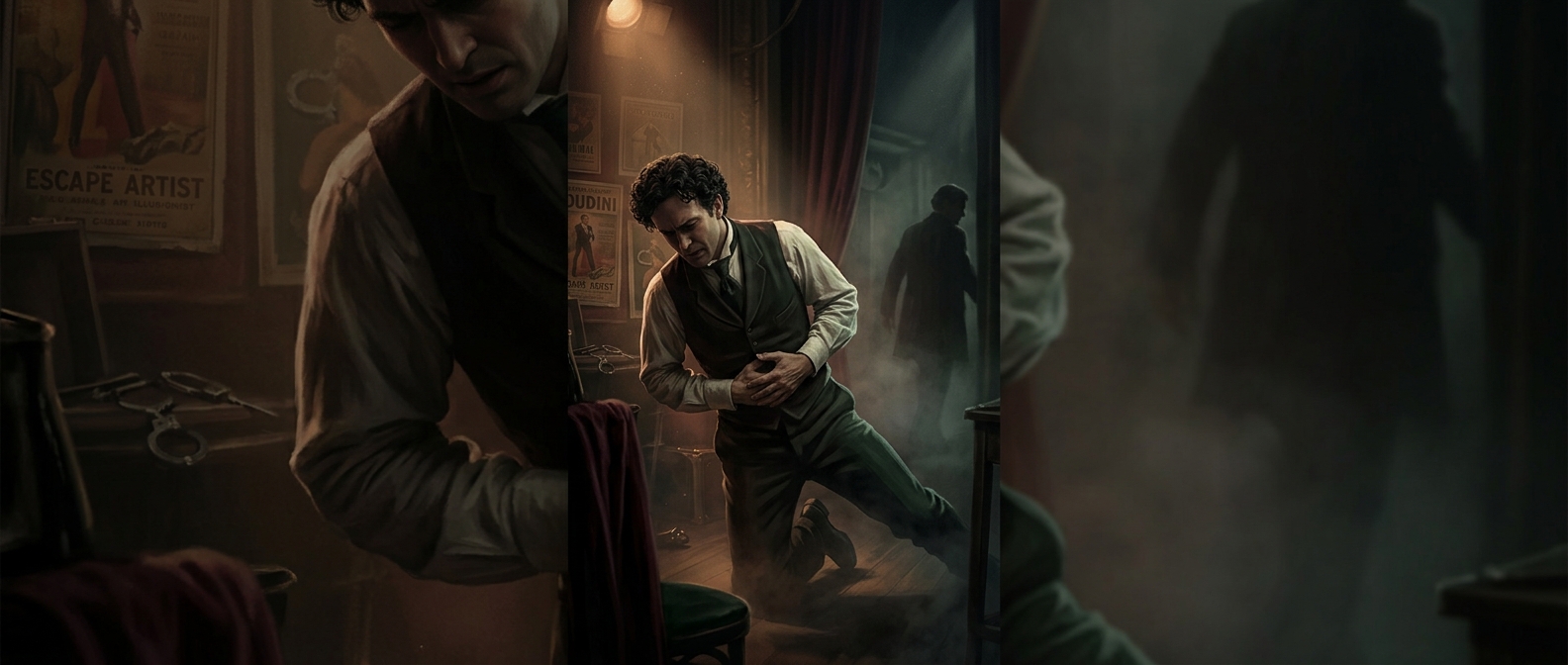
How a Stomach Punch Became Part of Houdini’s Death Story
A dramatic event shortly before a death can become its explanation, especially when the two seem to fit: a blow to the abdomen, followed by a fatal illness. But sequence is not proof of cause. In Houdini’s case, the established medical account is that his appendix ruptured and he died of peritonitis, a dangerous infection of the lining of the abdominal cavity.
The punch is part of the story because it happened while Houdini was already known for feats that involved withstanding physical force. Yet the fact that it came before his illness does not, by itself, show that it injured his appendix or caused it to rupture. Establishing that link would require more than a memorable timeline.
What Happens When an Appendix Ruptures
Appendicitis begins when the appendix becomes inflamed. If the inflammation progresses and the organ ruptures, bacteria and infected material can escape into the abdomen. The resulting infection—peritonitis—can spread beyond the original site and become life-threatening.
That chain matters because it gives a medical explanation for Houdini’s death without needing the punch as its cause. A blow might draw attention because it is visible and easy to retell; an internal infection is less dramatic, even when it is the central danger. The careful version of the story keeps both facts in view: Houdini had been punched shortly beforehand, and he died after his appendix ruptured. The timing is striking, but it does not settle the cause.