Why boys played Shakespeare’s women
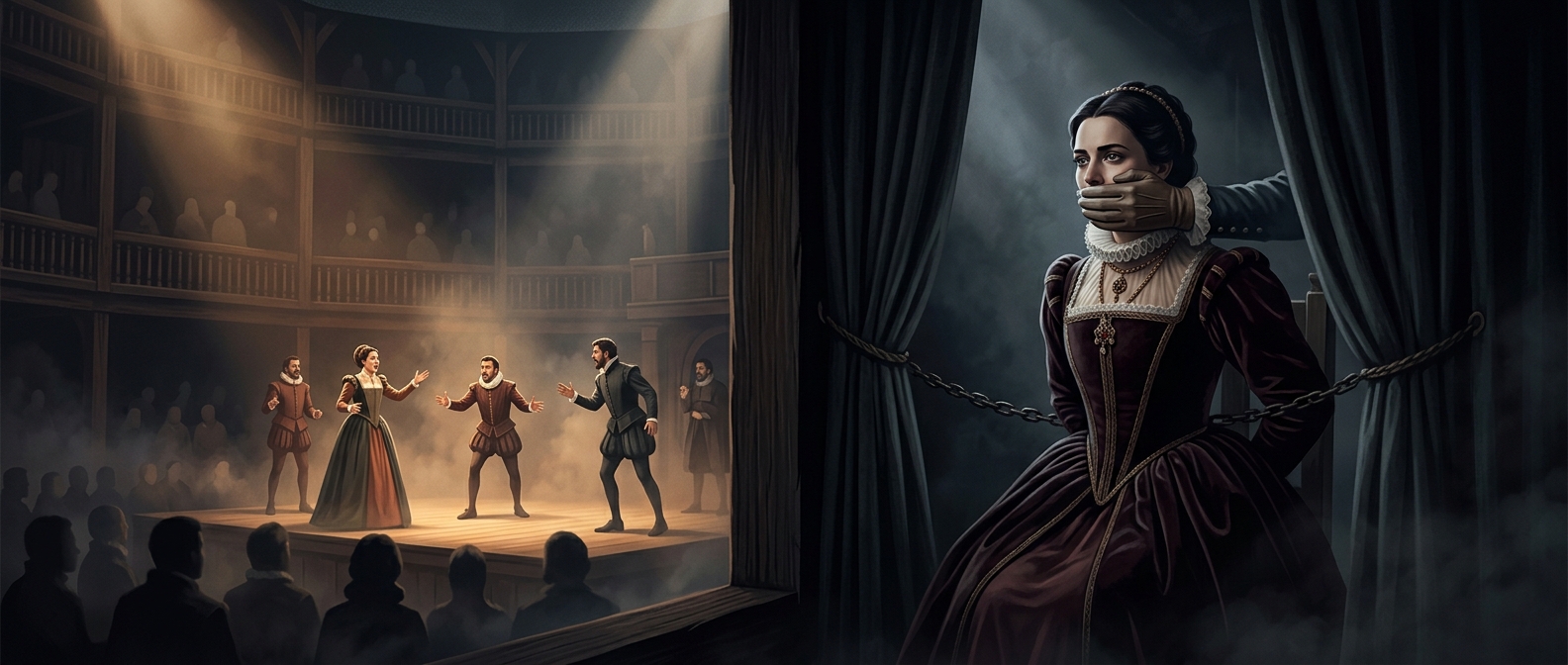
In Shakespeare’s professional theater, women were not allowed to act on the public stage. Companies therefore assigned female roles to boys—typically young members of the acting profession who were still developing their voices. A boy playing Juliet or Lady Macbeth was not an occasional workaround; it was part of how a company staffed its productions.
This shaped the work behind a performance. A young actor had to learn lines, movement, and the conventions audiences expected for a female character, while performing in elaborate costumes that could make quick changes difficult. The same company also needed enough experienced performers to cover its many roles, so actors often took on more than one part across a production or its repertory.
The convention became part of the drama
Audiences knew that the woman onstage was being represented by a male performer. Playwrights could make that theatrical artifice visible, as Shakespeare does in Twelfth Night, where a boy actor plays Viola, a woman who disguises herself as a young man. The result is a layered performance: a male actor presents a female character who is, in turn, pretending to be male.
That convention also shaped how scenes of disguise and mistaken identity landed. When a character’s gender presentation changed, the audience watched not only a plot twist but a performance built around the stage’s all-male casting. Juliet’s love story and Lady Macbeth’s command, meanwhile, depended on young male actors making women’s characters legible to the crowd.