A Familiar Face at Ford’s Theatre
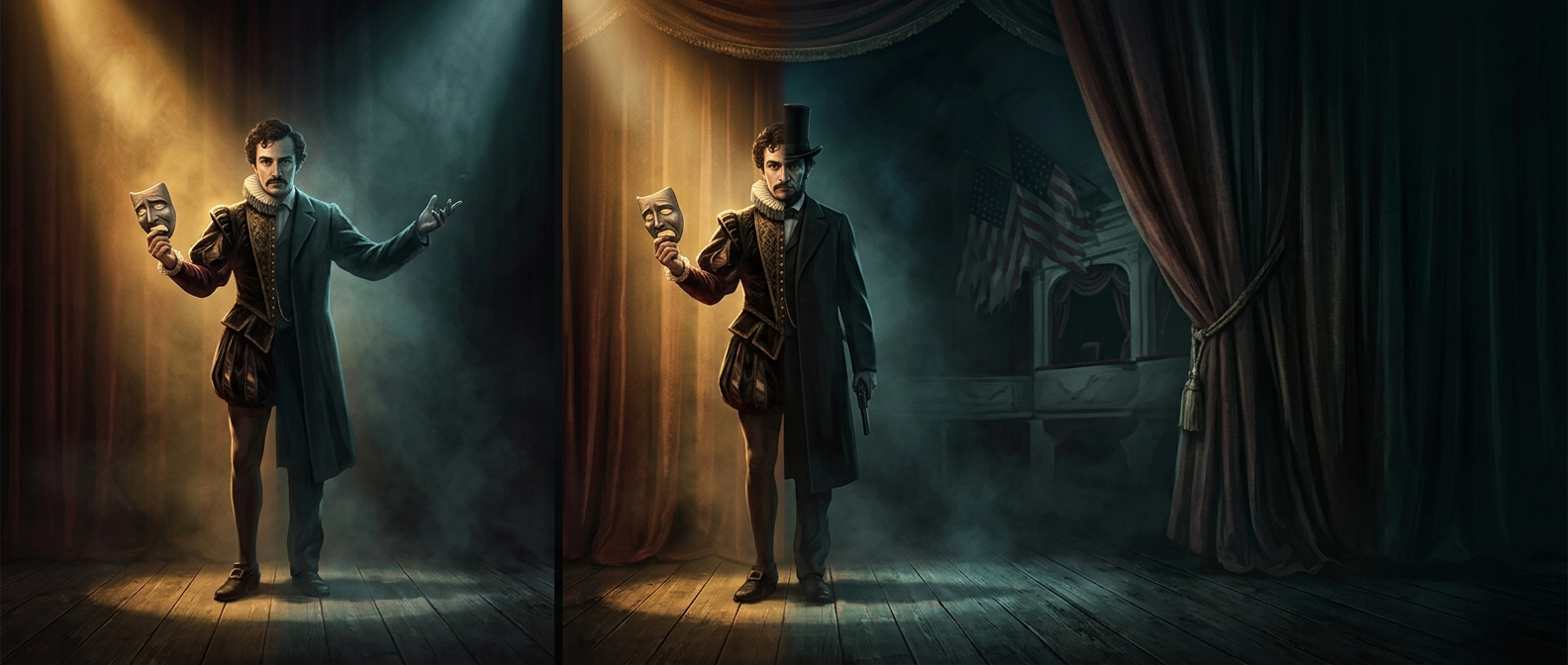
John Wilkes Booth was not an unknown intruder. He was a well-known stage actor, especially celebrated for playing Shakespearean characters, and he had performed at Ford’s Theatre. In a theater, that reputation could function like a pass: staff and patrons were accustomed to seeing him around, and his presence backstage or near the auditorium did not necessarily seem suspicious.
That familiarity mattered on the night of April 14, 1865. Booth used the theater’s layout and his knowledge of its workings to reach the presidential box, where Abraham Lincoln was watching the comedy Our American Cousin. His access was not simply a matter of being a star; it depended on being a person who belonged in that setting, at least in the eyes of people who might otherwise have questioned him.
Fame as Access—and Cover
Booth’s celebrity also shaped how people understood him. An actor’s public identity could make his movements seem ordinary: theater workers might recognize him as a performer rather than assess him as a threat. The same career that made him familiar to audiences gave him practical knowledge of the building and a plausible reason to be there.
The contrast is stark: a performer known for bringing Shakespeare’s characters to life used the theater as the setting for a real political murder. His fame did not make the attack inevitable, but it helped turn a crowded public venue into a place where he could approach the president without immediately attracting attention.