Turning a confrontation into a contest
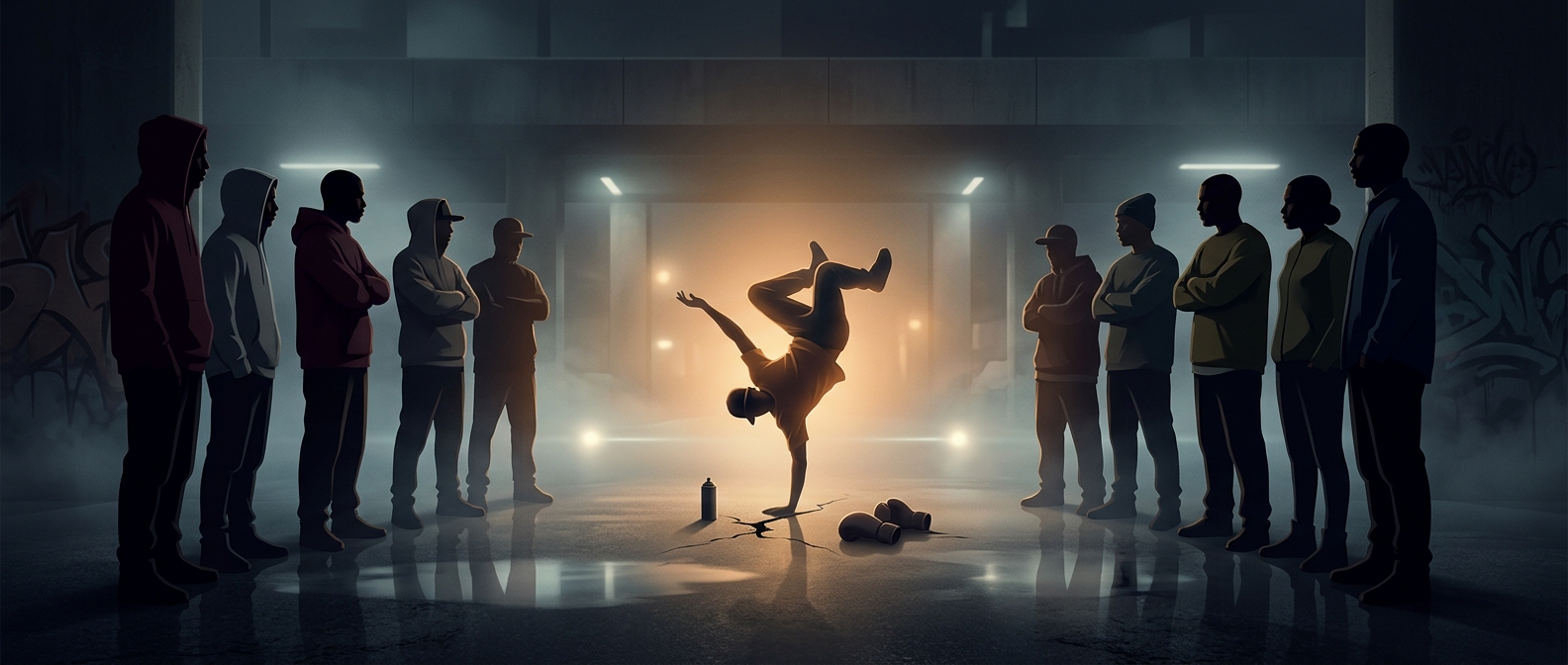
A turf dispute is about more than a patch of ground: backing down in front of your own group can look like surrender. A dance battle offered a different way to test confidence and skill in public. Instead of advancing with weapons, rivals could answer one another with movement—sharp footwork, spins, freezes, and improvised flourishes—while onlookers judged who had made the stronger showing.
The shift mattered because it changed what counted as winning. A dancer could claim attention through timing, control, and originality, rather than by inflicting harm. The crowd became an audience for a contest, not merely witnesses to a fight.
Why the format could defuse a dispute
Breakdance battles fit the social logic of a challenge: one side made a move, the other had a chance to respond. The exchange allowed groups to display nerve and earn recognition while leaving room for the confrontation to end without anyone being physically defeated. Dance did not erase rivalries, and it was not a reliable solution to every conflict. But in some New York encounters, it provided a public alternative to violence.
That possibility helps explain why breaking became more than performance. In the right moment, a circle of spectators and a sequence of competing moves could redirect a dangerous face-off into a contest whose final score was applause, reputation, or simply the fact that everyone walked away.