A doll designed as a character
Barbara Millicent Roberts is more than an expanded label on a box: the name gives Barbie a personhood that a simple fashion-doll description would not. Ruth Handler named the character after her daughter, Barbara, when Mattel introduced Barbie in 1959. The choice linked a mass-produced toy to a familiar human scale—a girl with a name, a background and a life that could continue beyond any one outfit.
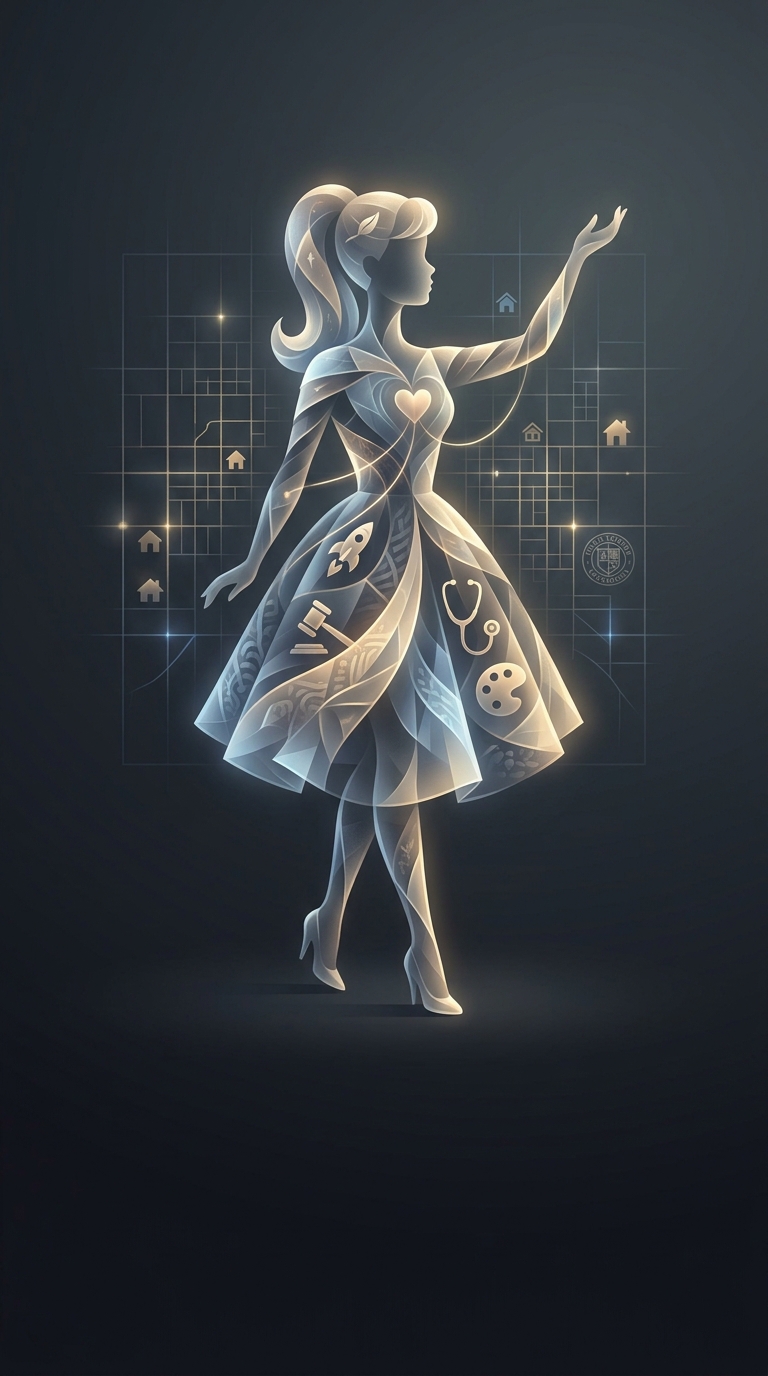
That mattered to the kind of play Barbie invited. Rather than dressing a baby doll as someone to care for, children could use Barbie to imagine who she might become. A named character could move from one role to another without losing her identity.
Why give her a hometown?
Willows, Wisconsin, supplies a small but useful piece of biography. A fictional hometown places Barbie in an ordinary American setting without tying the character to a real person’s life or a specific community. It gives the story a starting point, while leaving room for the doll’s world to expand through new clothes, settings and roles.
The backstory also makes a practical bridge between toy and play: children can treat Barbie as a character with a past, then invent what happens next. Her legal-sounding full name and hometown suggest a complete life, but neither limits what that life can contain. The biography is a framework for imagination, not a fixed plot.