A household problem left a mark on the walls
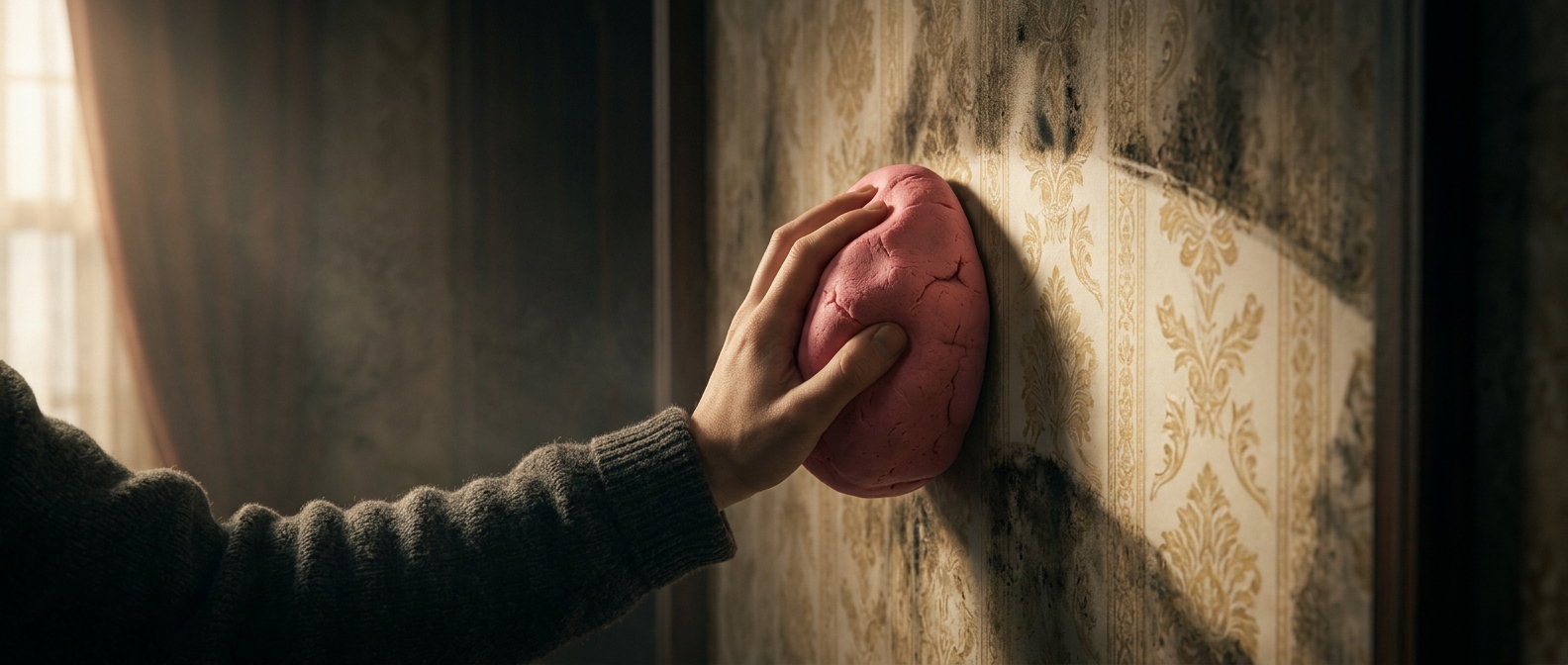
In homes heated with coal, fine soot could settle on wallpaper and darken it. Cleaning the paper with water risked damaging its surface, so a soft, kneadable cleaning compound offered a practical alternative: pressed against the wall, it could pick up grime without scrubbing the paper. As it became dirty, the material could be worked to expose a cleaner surface.
The useful property was already there
The cleaner’s appeal as a toy came from the same quality that made it useful at home. It was pliable enough to press, roll, and shape by hand. That meant the makers did not need to invent an entirely new material; they could change how people understood and used the one they already had.
When vinyl wallpaper became common, the original cleaning job faded. Coloring the compound and presenting it as a children’s toy gave the product a new purpose instead of leaving it tied to a household problem that was disappearing. A change in home materials turned a cleaning product into a plaything—but its satisfying, shapeable texture connected both uses.