From Hazard’s many rules to a shared table game
Hazard’s complexity came from the decisions a player had to make around each throw: the game used several possible numbers and changing conditions to determine what counted as a win or loss. As the game traveled from England to French-speaking communities and then to the Americas, it was streamlined. The result was a game that could be followed around a table without each player having to master Hazard’s full rule set.
The throw still drives the action
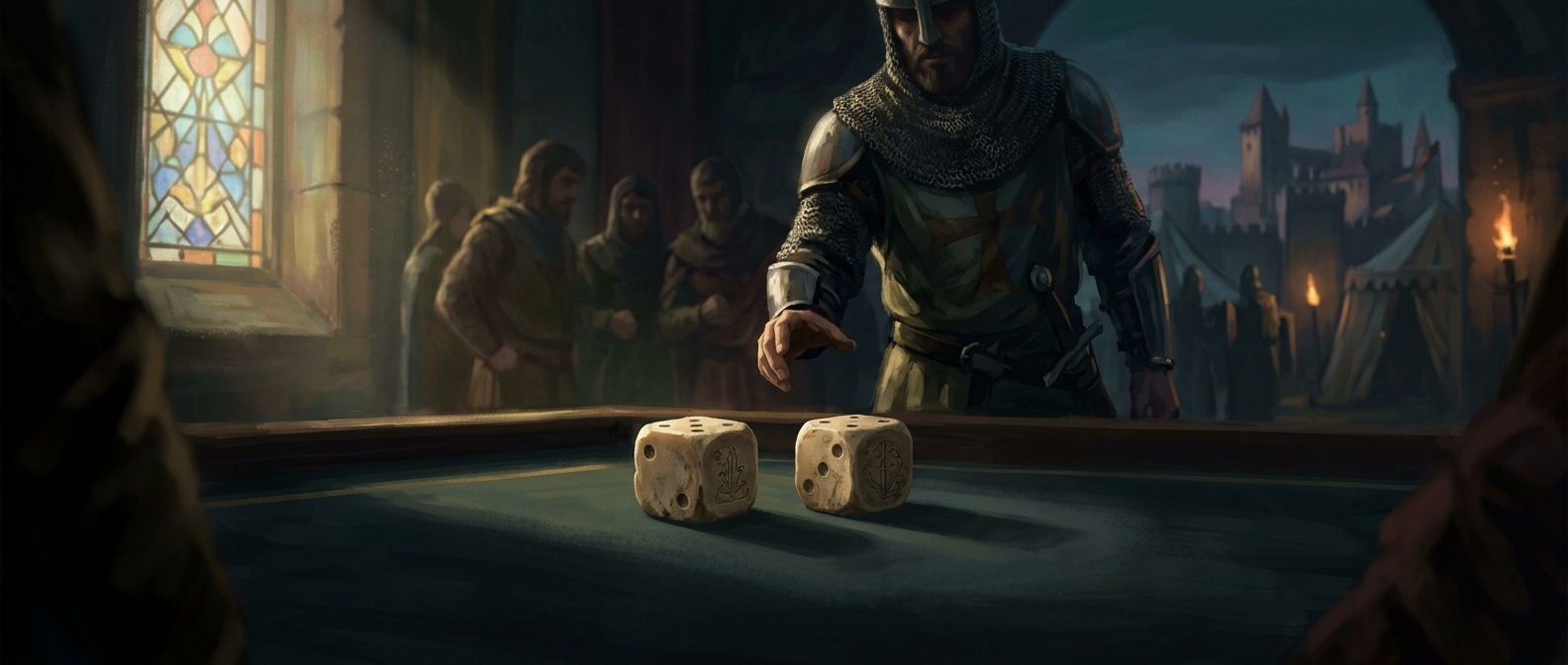
In modern craps, one player—the shooter—rolls two dice, while other players wager on what the roll will do. On the opening roll, a 7 or 11 wins a basic pass-line bet; a 2, 3 or 12 loses it. Any other total becomes the point. The shooter keeps rolling: the point must appear again before a 7 for that bet to win.
That repeating pattern turns a quick dice throw into a sequence the whole table can track. Players can make different wagers, but the central question stays visible: will the shooter repeat the point, or roll a 7 first?
The game’s lasting transformation was therefore not just a change of name or setting. Simplifying the rules made the outcome easier to read in real time—and let a crowd participate in the same unfolding turn.