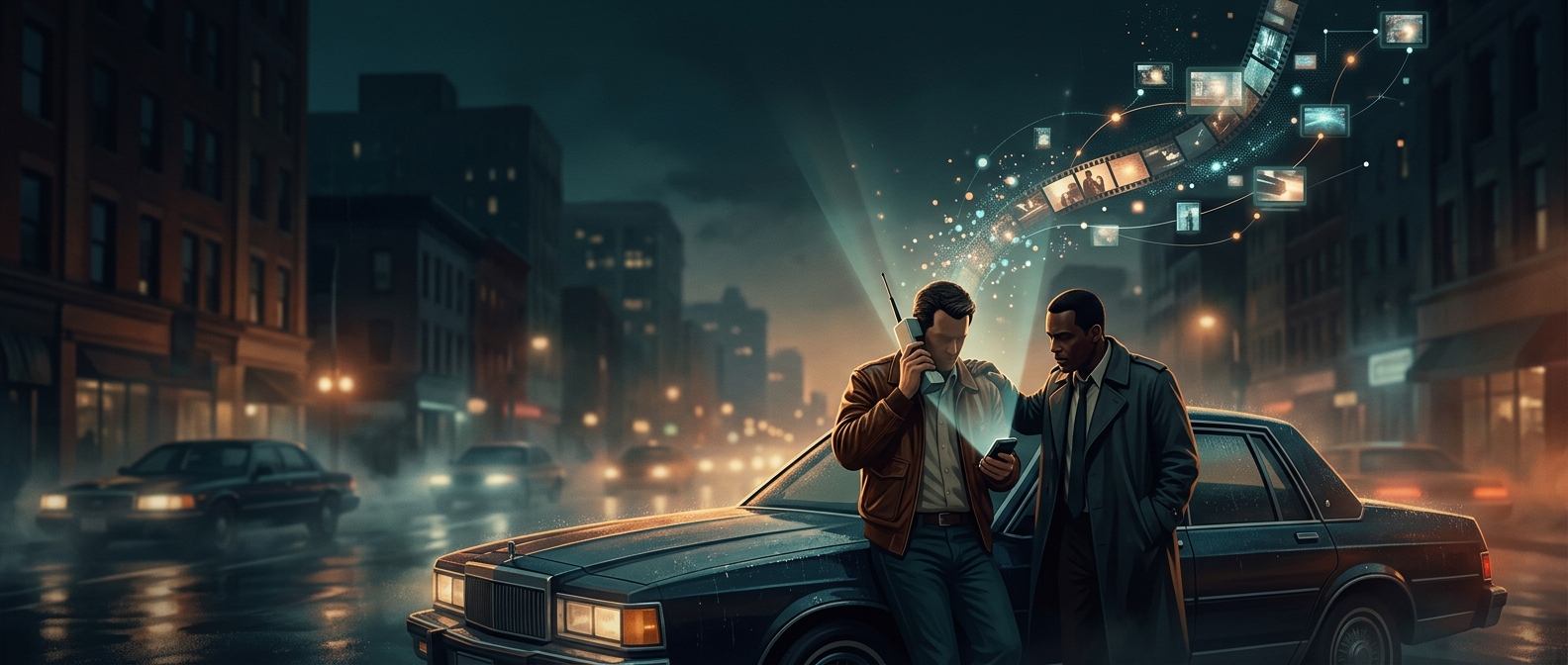
Why the movie phone had to be enormous
In a buddy-cop movie, a phone is more than a way to make a call: it can show that a detective is connected to the city and able to act while away from the station. A large handset made that idea instantly legible on screen. Viewers could see the device, recognize it as advanced equipment, and understand that the character was using communications technology on the move.
That visual shorthand drew on a real shift. Early mobile phones packed a radio transmitter, receiver, battery, and antenna into a portable unit. Because those components were less compact than today’s electronics, early phones could be bulky and awkward to carry. The movie version could enlarge the effect, turning “portable” into a conspicuous piece of gear.
From useful prop to time capsule
The oversized handset also solved a practical filmmaking problem: important technology needed to read clearly in a shot. A small device might disappear in an actor’s hand or be hard to identify at a glance. A chunky phone made the action unmistakable—and gave the prop a distinctive silhouette that audiences could remember.
As phones shrank, that silhouette changed meaning. What once suggested mobility and modernity now looks comically impractical, like a plastic shoe. The prop preserves an era’s idea of the future: not a device that disappears into a pocket, but one whose size announces that a call can happen anywhere.