A stage effect became a real fire
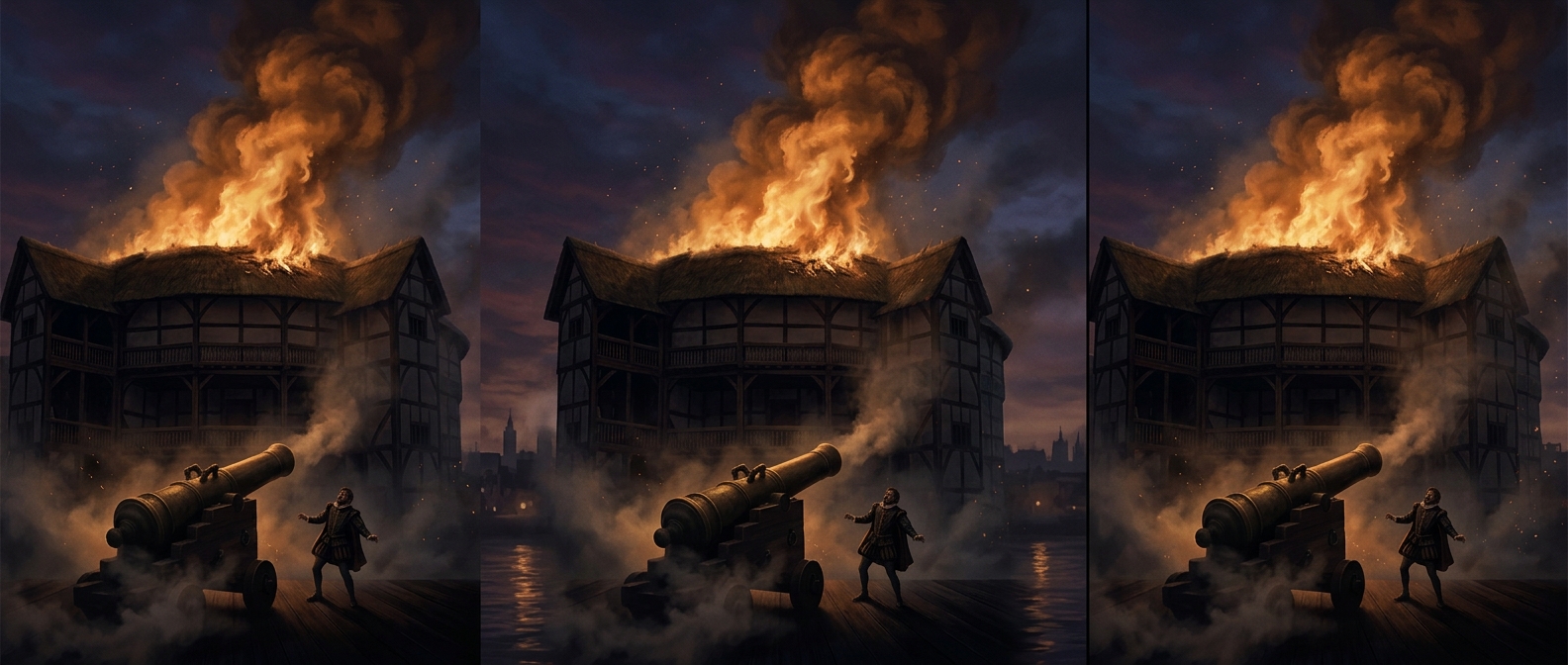
During a performance of Henry VIII in 1613, the company used a small cannon to create a theatrical effect. Its shot was not meant to damage the playhouse, but the burning wad—the material pushed out with the charge—flew into the Globe’s thatched roof. In a timber building, that dry roofing could catch readily; once the fire took hold overhead, it spread faster than people below could put it out.
The Globe was rebuilt with a changed roof
The audience escaped, and the playhouse was rebuilt the following year. The fire exposed a particular vulnerability in the Globe’s construction: a dramatic effect that lasted only an instant could send sparks into a large, highly flammable roof. The rebuilt theater had a tiled roof instead of thatch, a practical change prompted by the disaster. The cannon was meant to make the scene feel spectacular; instead, its stray wad turned the performance into the Globe’s most consequential special effect.