Why the Knight Disappeared from the Deck
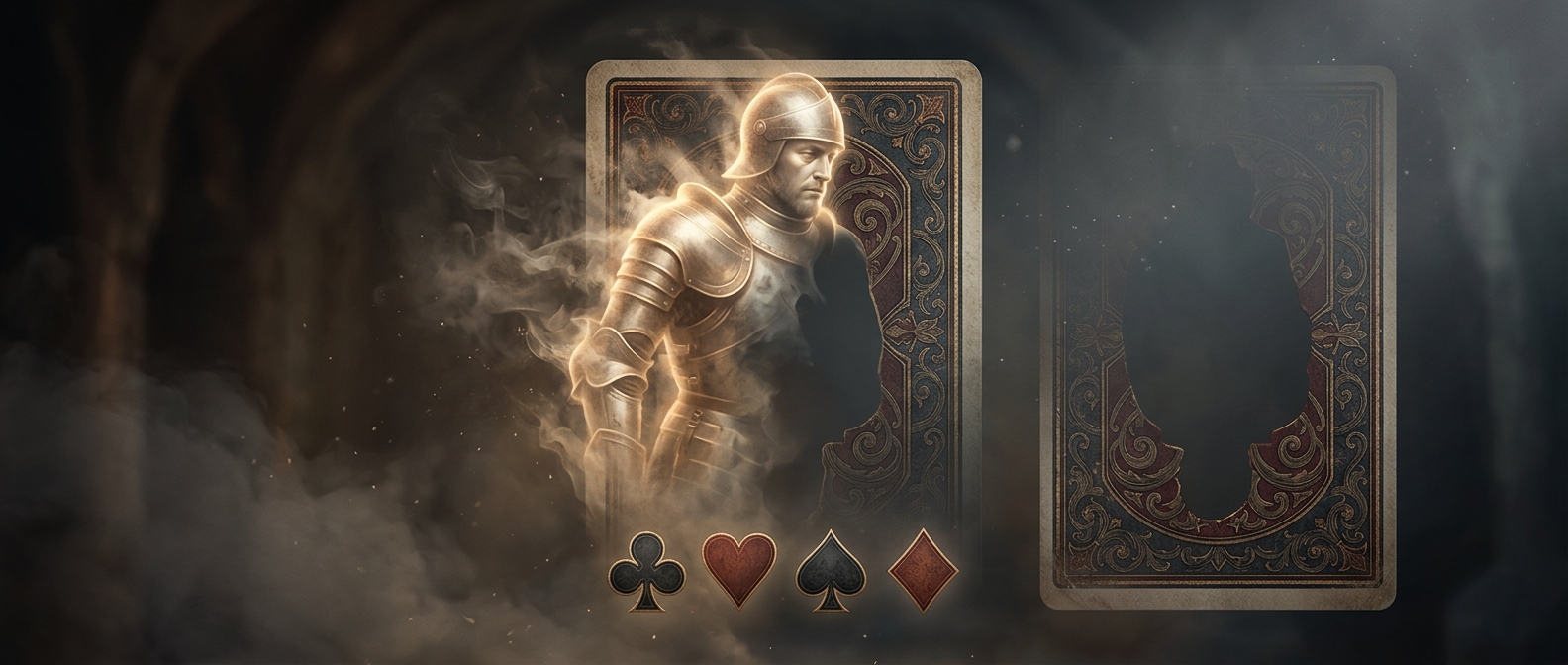
Some early European playing cards included a mounted knight between the queen and the lowest court figure. In later decks, that middle rank vanished, leaving the familiar king, queen, and jack. The change was not simply a matter of trimming an illustration: it reshaped the court-card hierarchy and made the deck easier to produce and use.
A Rank That Was Hard to Keep Consistent
Court cards varied across regions and makers. Some packs used different titles or figures, and the lowest court card was not always the same character. A knight added another rank to represent and distinguish, while printers had to fit the extra figure into a deck whose suits and card counts were also changing.
As three-card court sets became the standard in many European decks, the knight was the rank most readily left out. The surviving king, queen, and jack offered a compact hierarchy that could be reproduced across suits and recognized by players. Standardization mattered: once a format became familiar, printers had reason to follow it, and players had less need to learn local variations.
The Shape of the Familiar Court
The modern deck’s three court cards are therefore a historical selection, not an inevitable royal family. A knight still appears in some traditional card systems, but in the widely used French-suited pack, the missing rank is visible in the gap between queen and jack. The deck’s familiar face cards are the result of printers and players settling on a shorter court—not a rule that playing cards had to contain exactly three.