A 20-card deck made poker a four-player game
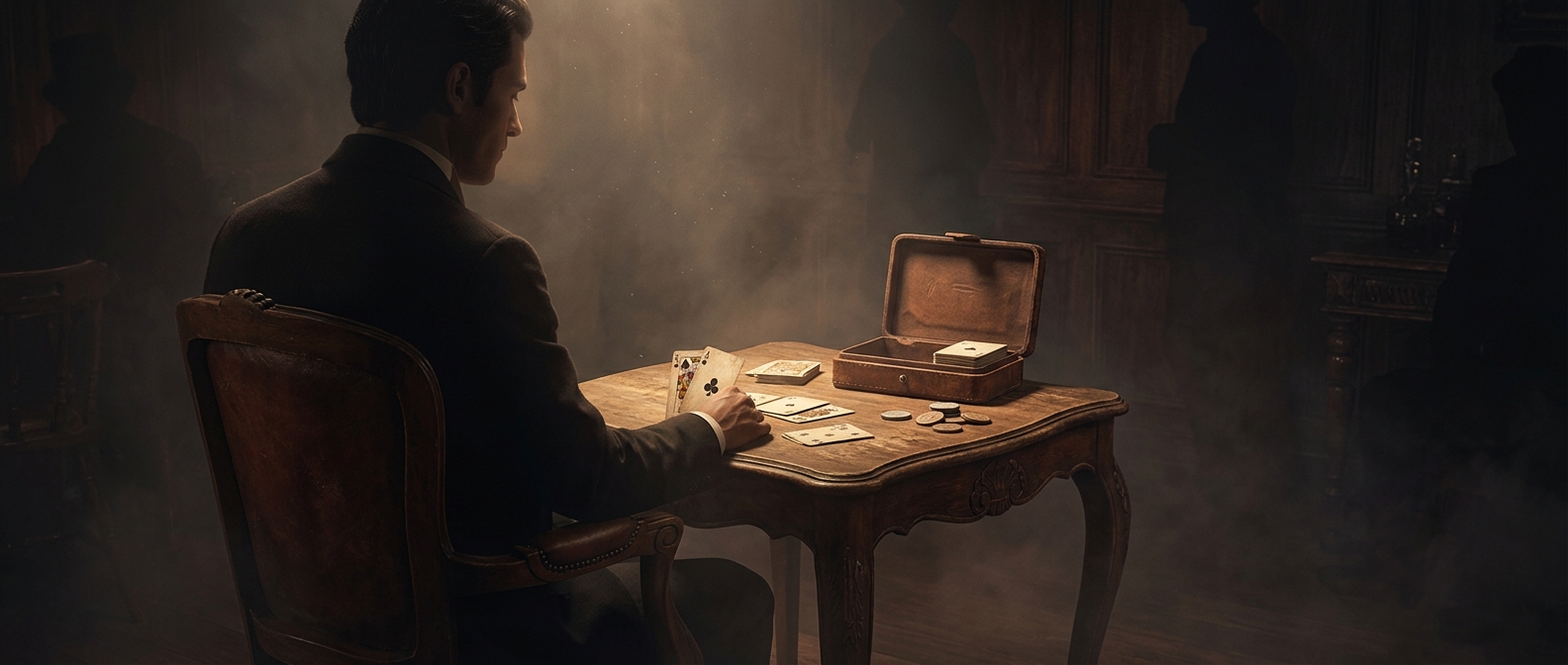
In an early form of poker, the deck contained only the four highest ranks in each suit: tens, jacks, queens, kings, and aces. With four suits, that made 20 cards—exactly enough to give four players five cards apiece. The deal used the entire deck, leaving no undealt cards in reserve.
That small deck shaped the game. A player’s five-card hand could be judged against a much narrower set of possibilities than in modern poker, where a standard deck has 52 cards. The familiar ingredients were already there—private hands, betting, and the contest to hold the strongest combination—but the odds and the feel of the game were different.
Why the short deck mattered
Because every card was dealt, players could reason about the whole supply of cards, even though they could not see their opponents’ hands. If several high cards appeared in one player’s hand, fewer remained available to others. And with only five ranks in the deck, combinations formed differently: there were no low cards, and a straight could use only those five ranks.
The four-player limit followed directly from the arithmetic. Deal five cards to a fifth player and the deck runs out. As poker spread and its rules evolved, larger decks and new ways of drawing cards made room for more players and more varied hands. The original setup was spare by design or circumstance: four people, five cards each, and not a single card left over.