A fashion choice became a sightline problem
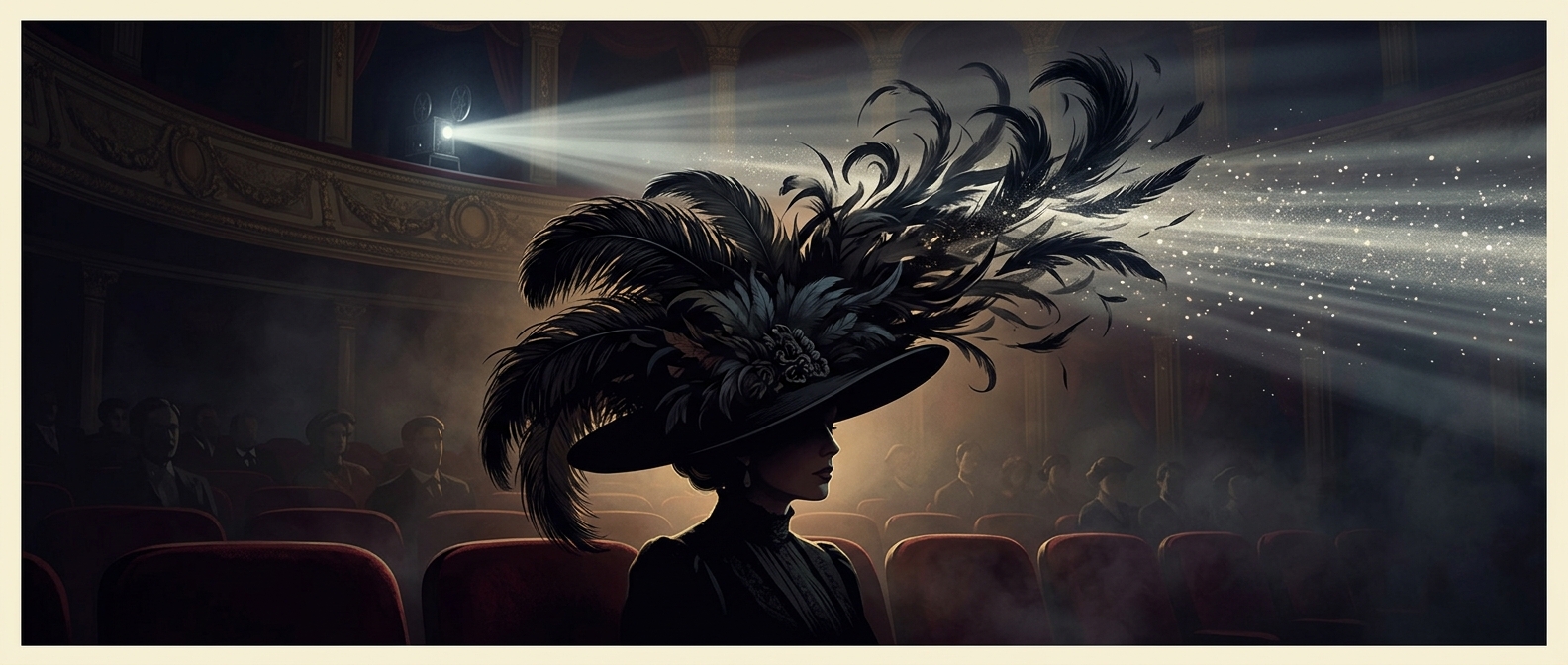
A towering hat did more than inconvenience the person in the seat directly behind it. Feathers and other decorations could rise into the line of sight of several people, turning one patron’s accessory into a small obstruction across a row. In a theater, where the screen was the shared focus and seats were fixed, asking each affected viewer to move was hardly a practical solution.
Theaters instead used the screen itself to make the request. A lantern slide was a still image projected with a device that enlarged pictures onto a surface; before moving pictures became the main attraction, such slides could also carry announcements. A short message asking patrons to remove bird-trimmed hats turned a room-wide etiquette problem into a clear, visible request.
The screen could manage the audience, too
That choice reveals an extra role for the theater screen: it was not only where a story appeared, but also a way to communicate with everyone in the room at once. A notice could address the source of the obstruction without singling out a particular hat-wearer or forcing ushers to interrupt the show repeatedly.
The underlying conflict was simple: fashionable height for the wearer meant a blocked view for someone else. The lantern slide made the theater’s preferred compromise plain—enjoy the hat outside the screening, but keep the view open once the lights went down.