How an Ordinary Hat Became a Stage Prop
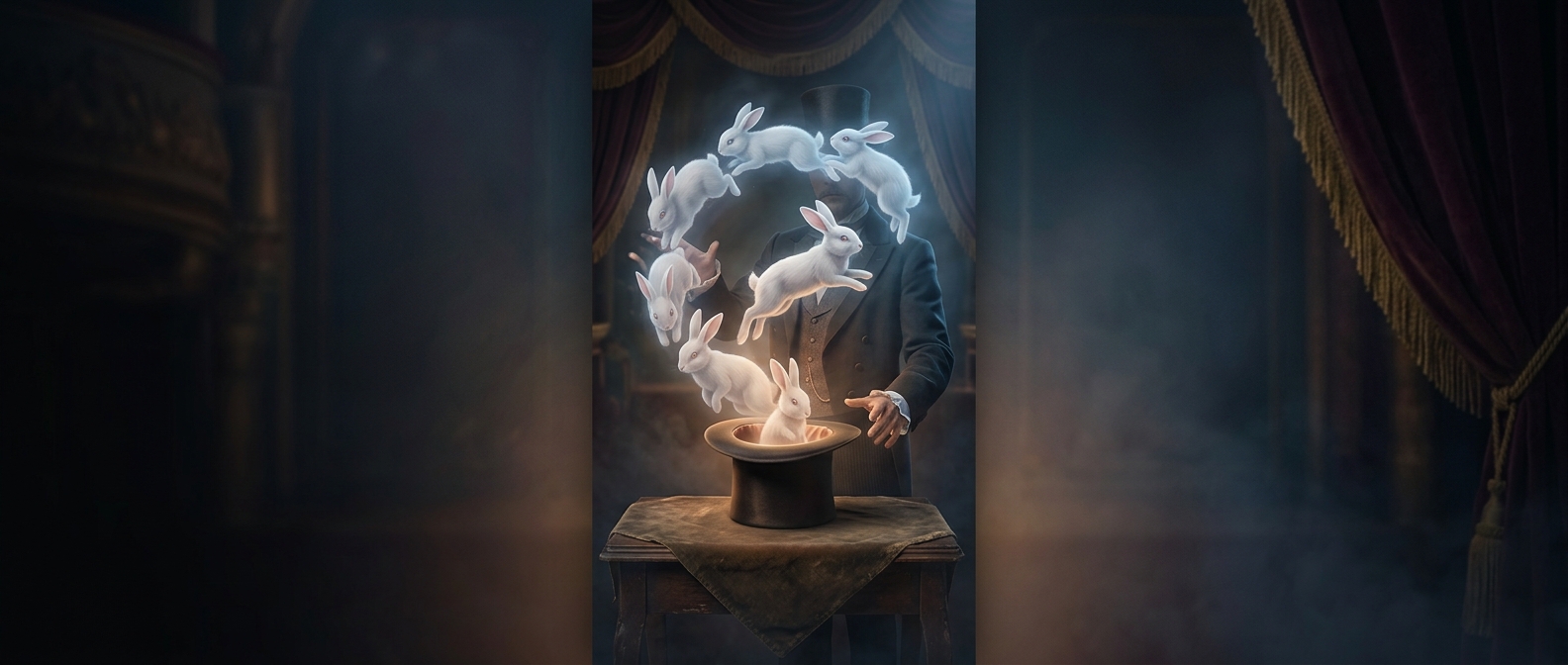
The trick’s appeal depended on a simple mismatch: a top hat looked too shallow to hold a rabbit, yet the animal seemed to appear from inside it. That made the hat more than a container. It became the visible proof of an impossible transformation—empty space, then a living creature.
The French illusionist commonly credited with the feat helped turn that image into a durable piece of stage magic. The important change was not the hat itself, but the way a familiar object could be folded into a performance: the audience recognized it, watched it, and had reason to believe there was nowhere for a rabbit to hide.
The Secret Was in the Handling
As with many conjuring tricks, the audience’s attention mattered as much as the hidden method. A magician could show the hat at an angle that suggested it was empty, then use a practiced movement to introduce the rabbit from a concealed position. The timing had to make the appearance feel like a single, sudden event rather than a sequence of handling steps.
Because the animal was alive, the effect also demanded more care than producing a handkerchief or playing card. It had to be kept secure and still until the reveal, while the magician controlled the audience’s view. The hat’s familiar shape helped sell the illusion; the choreography made it work. That combination is why the rabbit in the top hat became an enduring shorthand for magic, even for people who have never seen the original act.