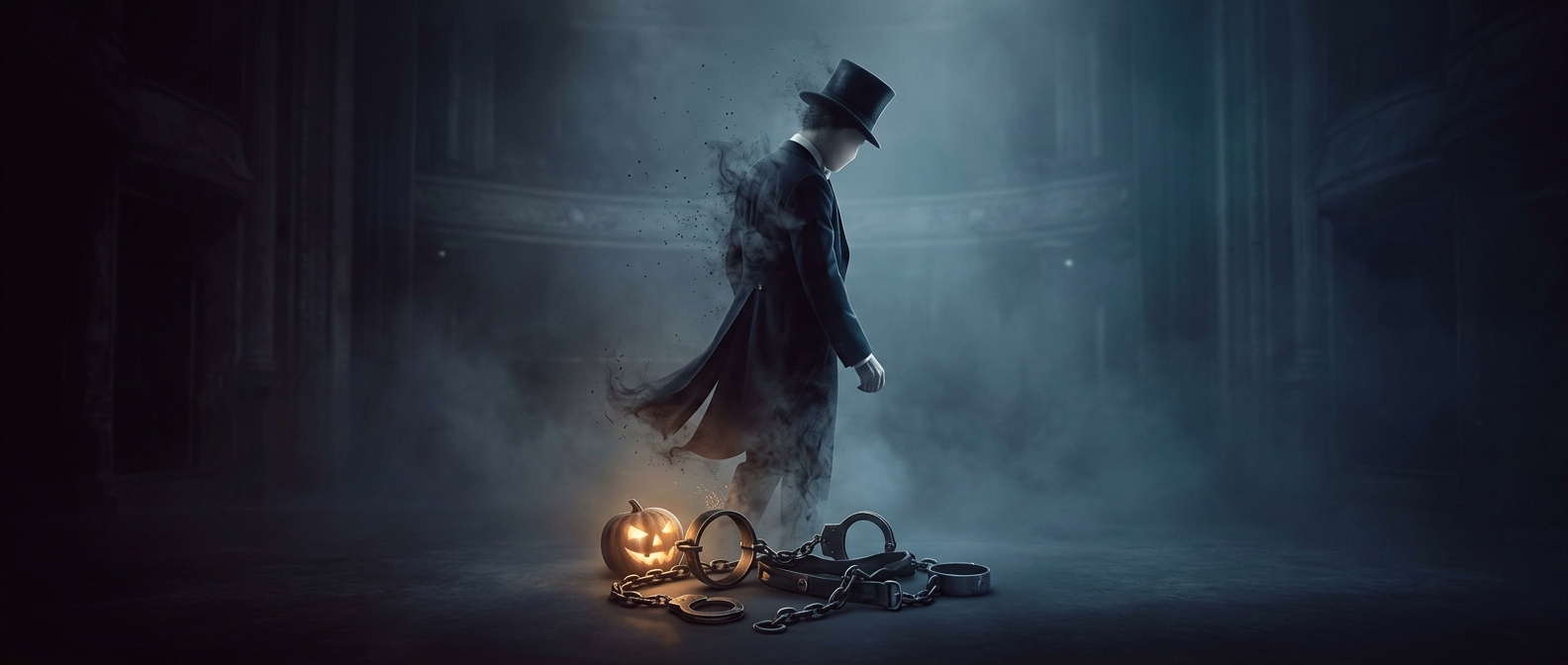
Why Houdini’s Halloween death became a yearly ritual
Harry Houdini died in Detroit on October 31, 1926, after a ruptured appendix led to peritonitis, a dangerous inflammation caused by infection. The date gave later commemorations an eerie natural fit, but the séances grew out of a more personal question: could anyone truly communicate with the dead?
Houdini had spent years exposing mediums whose apparent messages from spirits could be produced through tricks and deception. Yet he left room for a test. He and his wife, Bess, agreed on a secret code that she could use to verify a message from him after his death. The code was meant to distinguish a genuine contact from the vague claims that spiritualists often made.
A private test became a public tradition
After Houdini died, Bess held séances on Halloween, hoping the agreed signal would come through. None did. She eventually stopped the formal annual attempts, but the ceremony acquired a life of its own: magicians and Houdini admirers continued gathering on the anniversary, repeating the question he had made famous.
The ritual is less a claim that Houdini has been reached than a performance of his enduring challenge. A séance places an audience in the familiar setting of spiritualism—expectation, darkness, and ambiguous signs—while recalling a showman who insisted that extraordinary claims should be tested. The empty result is part of the story: each year’s gathering renews the test without resolving it, turning Halloween into a fitting stage for Houdini’s final, unanswered challenge.