How escape acts turned séance restraints into a test of skill
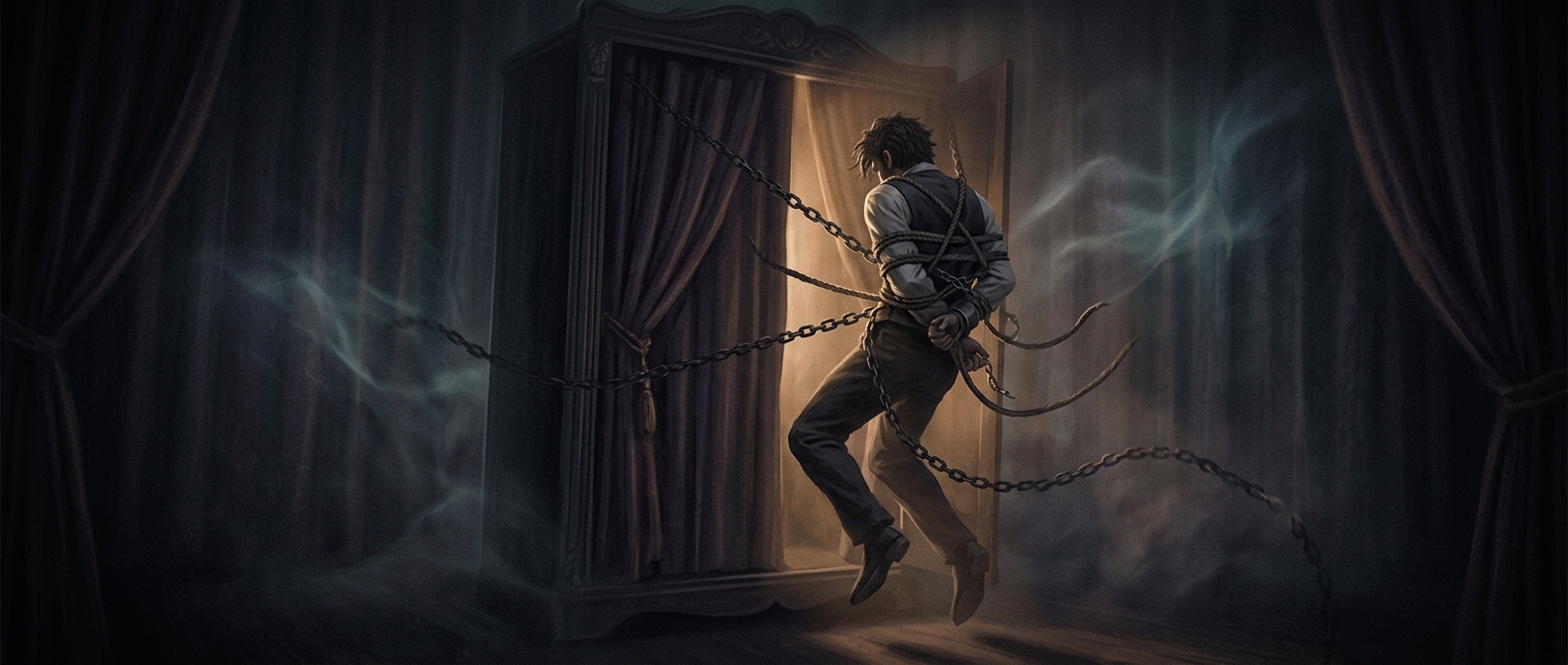
A séance could make a simple claim difficult to check: in a dark room, a medium might say spirits had bound them, then later appear free. The darkness concealed not only the supposed supernatural activity but also the practical question of what had happened to the knots, ropes, or other restraints.
Illusionists approached that uncertainty as a performance problem. If a person could get out of restraints under controlled conditions, then a dramatic release did not by itself prove that spirits had intervened. The escape act made the hidden physical challenge visible—and gave audiences a way to compare a medium’s claim with a feat presented openly as human skill.
The restraint became part of the show
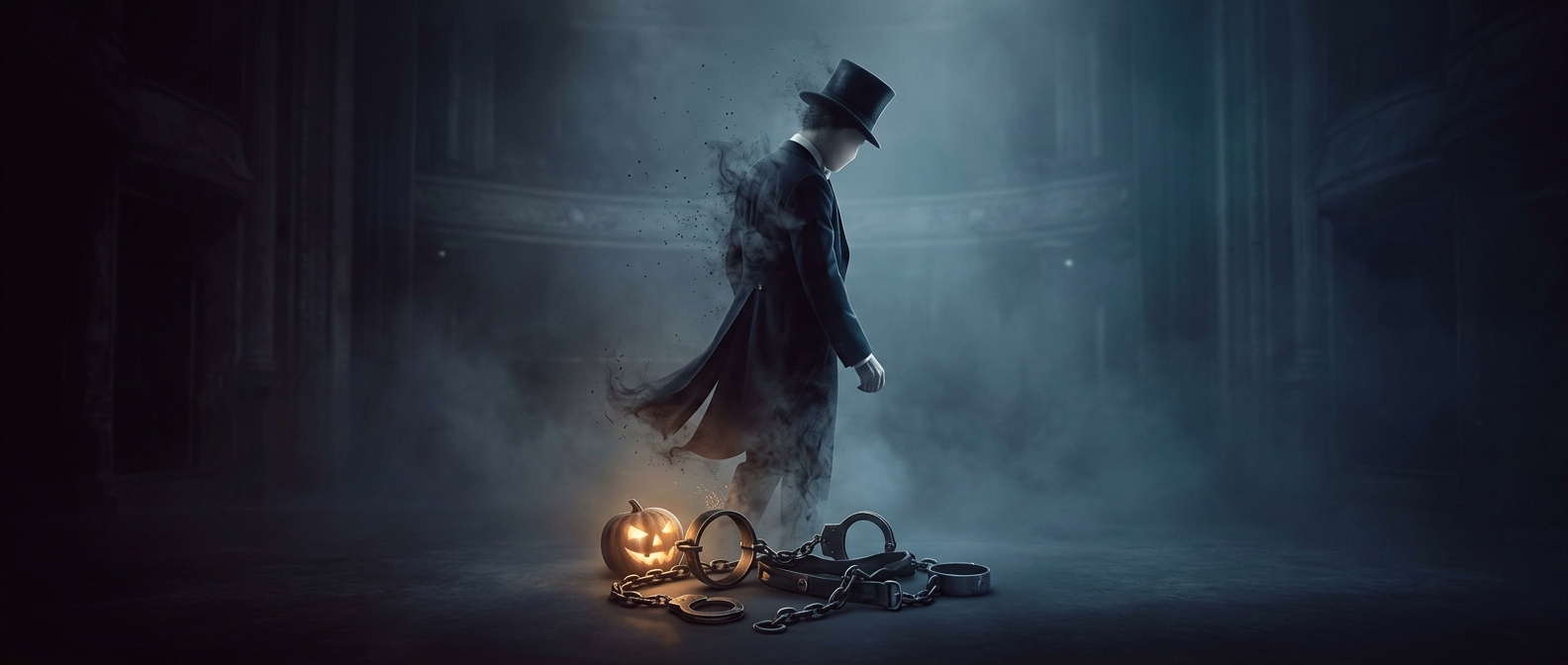
Escape performers built tension around the same constraint that had made séance demonstrations hard to judge: the performer was secured, and the audience waited to see whether they could get free. But onstage, the escape was framed as an illusionist’s act, not evidence of supernatural power. The audience could watch the setup and the struggle, even if the precise method remained concealed.
That distinction mattered. Escapology—performance centered on getting out of restraints or confinement—could expose how a seemingly impossible release might be achieved without endorsing the spiritual explanation attached to similar events. Its appeal came from the gap between what spectators thought the restraints made impossible and what a practiced performer could do.
The result was more than a new stunt. It shifted the question from “Did spirits release the medium?” to “What could a person accomplish while apparently bound?” The restraint, once used to support a mysterious claim, became the central prop in a public demonstration of human dexterity and showmanship.