A sequel built on the original’s momentum
RKO turned Son of Kong around quickly because it could continue a story audiences already knew rather than invent a new world from scratch. The film brings back filmmaker Carl Denham, whose disastrous New York exhibition of Kong leaves him in trouble, and sends him back toward Skull Island. That direct continuation gave the sequel an immediate plot and a familiar lead character.
The production also reunited director Ernest B. Schoedsack with stop-motion animator Willis O’Brien, whose painstaking animated creatures had helped make the first film’s giant ape feel alive. Stop-motion works by photographing a model, moving it slightly, and photographing it again; hundreds of tiny adjustments can create the illusion of motion. Repeating that demanding process meant the sequel had a production challenge of its own, even with an established story and creative team.
A smaller Kong, and a different mood
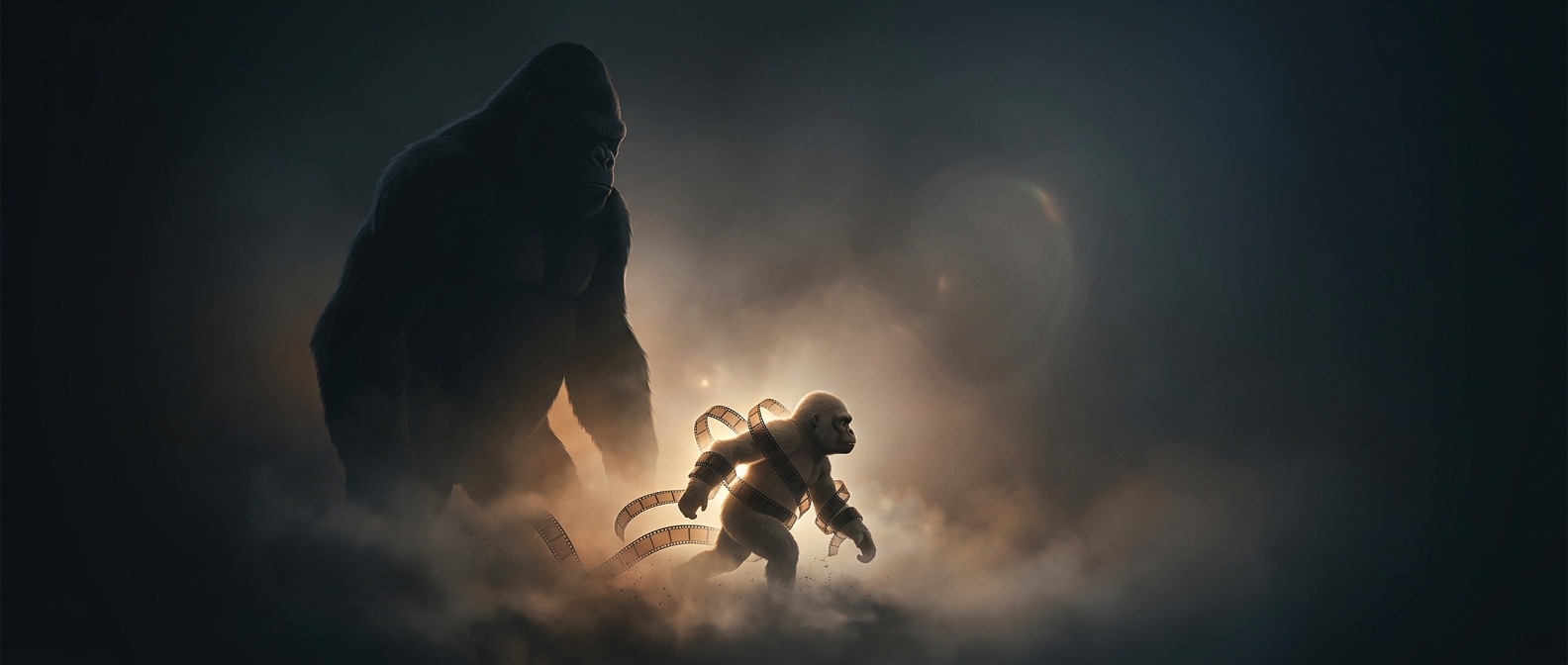
The new ape—often called Little Kong—was not simply a miniature version of the original’s menace. His lighter coloring and more playful behavior shifted the sequel toward adventure and comedy. That contrast let the filmmakers revisit the world of the first film without trying to make every scene bigger or more frightening.
The result reached theaters on December 22, 1933, less than nine months after King Kong opened. The unusually short gap reflects both the commercial urgency of following a hit and the practical advantage of having a ready-made story, returning characters, and experienced effects artists.